Dr Catherine Conlon: How can we get cars out of our cities?
The challenge is to make our urban environment more livable — and the solutions are well within our reach. Congestion charges, parking controls, and ‘gamification’ of travel must be considered, writes Catherine Conlon
Dr Catherine Conlon: How can we get cars out of our cities?

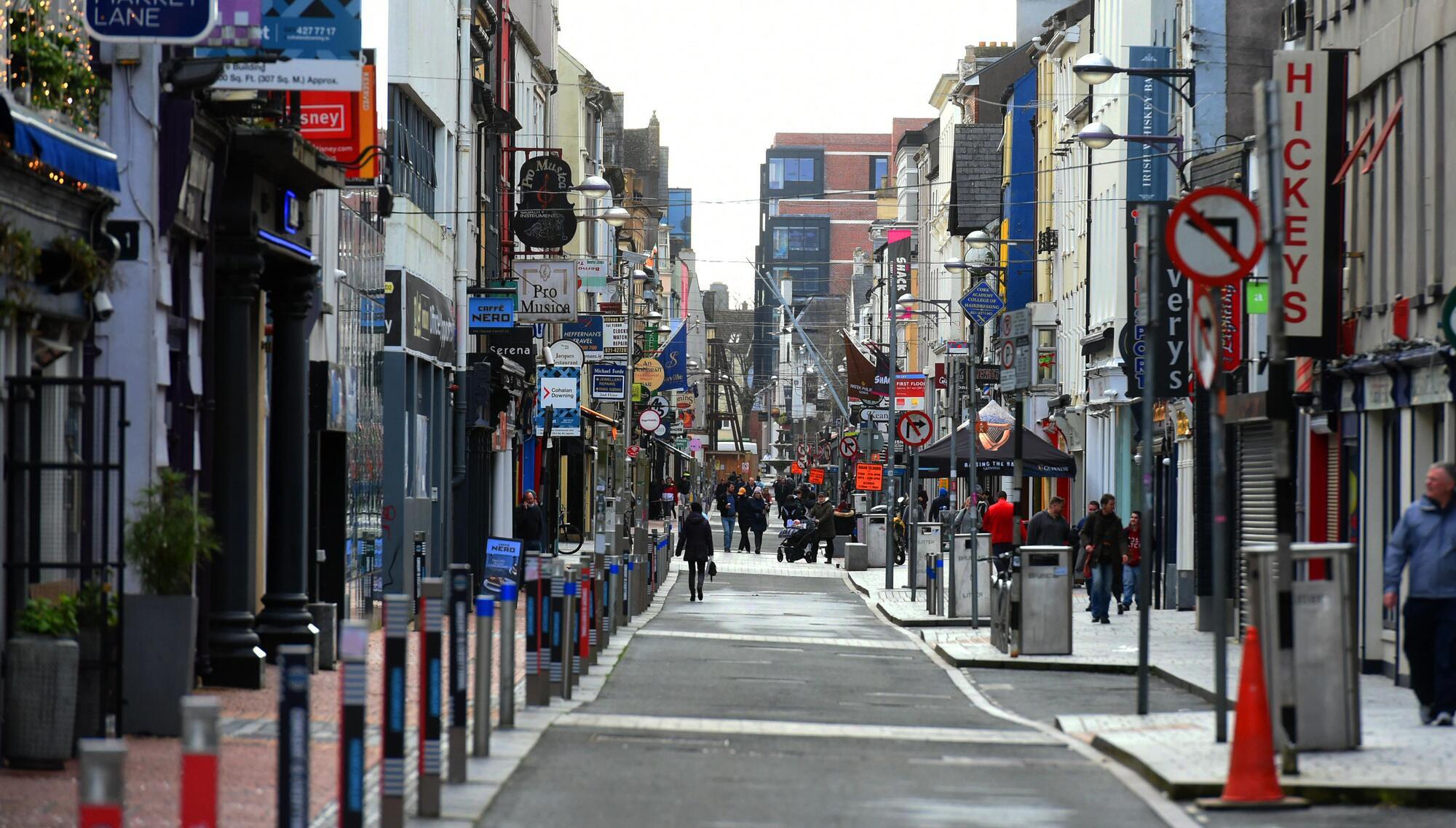
Cork City has been leading the charge to remove or reduce cars with a programme of pedestrianisation including here at Oliver Plunkett St. File picture: Larry Cummins

THE research is now clear. To improve health outcomes, meet climate targets and create more liveable cities — reducing car use should be an urgent priority.

Ireland has the fourth-highest level of transport emissions per capita in Europe and the transport sector is responsible for around 20% of our overall carbon dioxide emissions, with private cars accounting for 41% of emissions in the transport sector. The sale of fuel-hungry SUVs continues to grow rapidly: 55,000 were sold in 2021 (nearly 55% of all new cars), while 8,600 electric vehicles (EVs) were sold during the same year.

While EVs are an important part of the solution to greenhouse gas emissions, what we need is fewer cars and less driving, efficient transport alternatives and more liveable cities. Sports stars and celebrity owners of plug-in hybrid electric vehicle (PHEVs) have been prominent in the news, promoting the ability of these cars to reduce their carbon footprint. 

Diarmaid Ferriter, writing in the Irish Times, criticised Land Rover Ambassadors Donal Skehan, Diarmuid Gavin, Brian O'Driscoll, and Kathryn Thomas for promoting these vehicles, some of which weigh well over two tonnes, as being sustainable alternatives.

Kathryn Thomas, by promoting her Range Rover Evoque plug-in hybrid, is telling well-off young mums that this is a cool car to drive. What would make a huge difference to the culture of hybrids and SUVs as cool cars would be for popular celebrities and sports stars to hand in their car ambassador badges and promote active travel instead — cycling to work and school, and pedestrianisation and greening of cities as good for kids, good for families, good for the environment. 

CLIMATE & SUSTAINABILITY HUB

Rugby stars, fond of promoting top-of-the-range cars to their impressionable fans (young and not so young), could have a real impact in altering the culture around the Irish passion for hulking big unsustainable cars, hybrid or otherwise.

Recent research from the Lund University Centre for Sustainable Studies found that the most successful measures for reducing cars in cities included measures such as congestion charges, parking and traffic controls, and limited traffic zones.

Congestion charges

The single most successful measure to reduce cars in cities is congestion charges where drivers must pay to enter the city, with the revenue generated going to alternative means of sustainable transport. London has reduced city centre traffic by a whopping one third since congestion charges were introduced in 2003. Other cities have followed suit with similar success rates in Milan, Stockholm, and Gothenburg.

Congestion charging was acknowledged as an effective way to reduce traffic by Dublin city manager, Owen Keegan, setting out his vision for Dublin city traffic last month. 

He suggested that a heavy toll could be applied for driving at rush hour with the charge set high enough to ensure only a manageable level of traffic in the daytime, resulting in quicker and more reliable bus transport on less cluttered roads. Late at night with fewer cars on the road, it could be free to drive. Fewer cars on the roads would free up space for wider footpaths, and segregated cycle corridors, all of which would enhance the liveability of the city.

Oslo has replaced parking spaces with walkable car-free streets and bike lanes — this reduced car usage in the centre of the Norwegian capital by up to 19%.

Half a century ago, Copenhagen was dominated by cars. But following grassroots campaigns to change policies and streets, including replacing car parking with safe, separated bike lines, Copenhagen has increased its biking share of all trips from 10% to 35% today. In 2016, for the first time, more bicycles than cars made journeys around the city over the course of that year.

One very effective carrot identified by the review was a campaign to incentivise the use of public transport in Utrecht, the Netherlands. Local government collaborated with private companies to provide free public transport passes to employees, combined with a private shuttle bus to connect transit stops to workplaces. This programme, promoted through a marketing and communication plan, achieved a 37% reduction in the share of commuters travelling into the city centre by car.

Introducing workplace parking fees is another effective method. Car travel to work reduced by 20%-25% in Rotterdam in a scheme that charged employees to park outside their office, while also offering them the chance to “cash out” their parking spaces and use public transport instead.

Similar travel programmes have been effective in reducing car use in universities by promoting public transport and curtailing campus parking.

Car sharing

Car sharing has been a successful measure in some cities over others. Where members have access to easily rent a car for a few hours, promising results have been shown in cities such as Bremen in Germany and Genoa, Italy, with each shared car replacing between 12 and 15 private cars. 

The approach is successful, with increasing numbers of shared cars and stations that are integrated with residential areas, public transport, and bike infrastructure.

Other measures that are effective include personalised travel plans — providing journey advice and planning for residents to walk, bike or use public transport; and programmes to encourage parents to walk, cycle and carpool to school.

Mobile technology

Mobile technology is a growing aspect of strategies to reduce car usage with apps being developed for teams of employees to track their commute and gain points for walking, biking, and using public transport to work, with rewards offered by businesses for achieving point goals. This “gamification” of active travel could be popular in Ireland, underpinned by incentives from multinational corporations as well as the public sector.

Cars are inherently inefficient and inequitable in their use of land and resources. On average, they spend 96% of their time parked, taking up valuable urban space that could be put to more beneficial uses such as housing, public parks, pedestrian paths, and cycle lanes.

Electric cars are necessary, but they are not a panacea. However a car is powered, can it ever be an efficient use of resources and space to spend up to 95% of that energy moving the weight of the vehicle itself rather than passengers and goods?

Cork City is leading the field in getting cars out of cities, with 18 city centre streets pedestrianised and the recent declaration of the city centre as a clean air zone — simultaneously tackling air pollution, active travel and a reduction in greenhouse gas emissions from the transport sector.

The evidence is clear. We have got used to travelling in a way that is a whopping waste of resources and contributes significantly to poor physical and mental health by cutting out the alternative of active travel, is hugely expensive and liable to get more so, as well as contributing to global insecurity and a climate crisis.

We know exactly what works in getting people moving and getting cars of cities. All we need is the political will to make it happen.

  • Dr Catherine Conlon is senior medical officer in the Department of Public Health, St Finbarr’s Hospital, Cork, and former director of human health and nutrition with Safefood. Her book Modern Culture and Well-being: Towards a Sustainable Future was published by Veritas in 2020. 

More in this section

Revoiced

Newsletter

Sign up to the best reads of the week from irishexaminer.com selected just for you.

Cookie Policy Privacy Policy Brand Safety FAQ Help Contact Us Terms and Conditions

© Examiner Echo Group Limited