Time to get moving, for the sake of our health and our environment
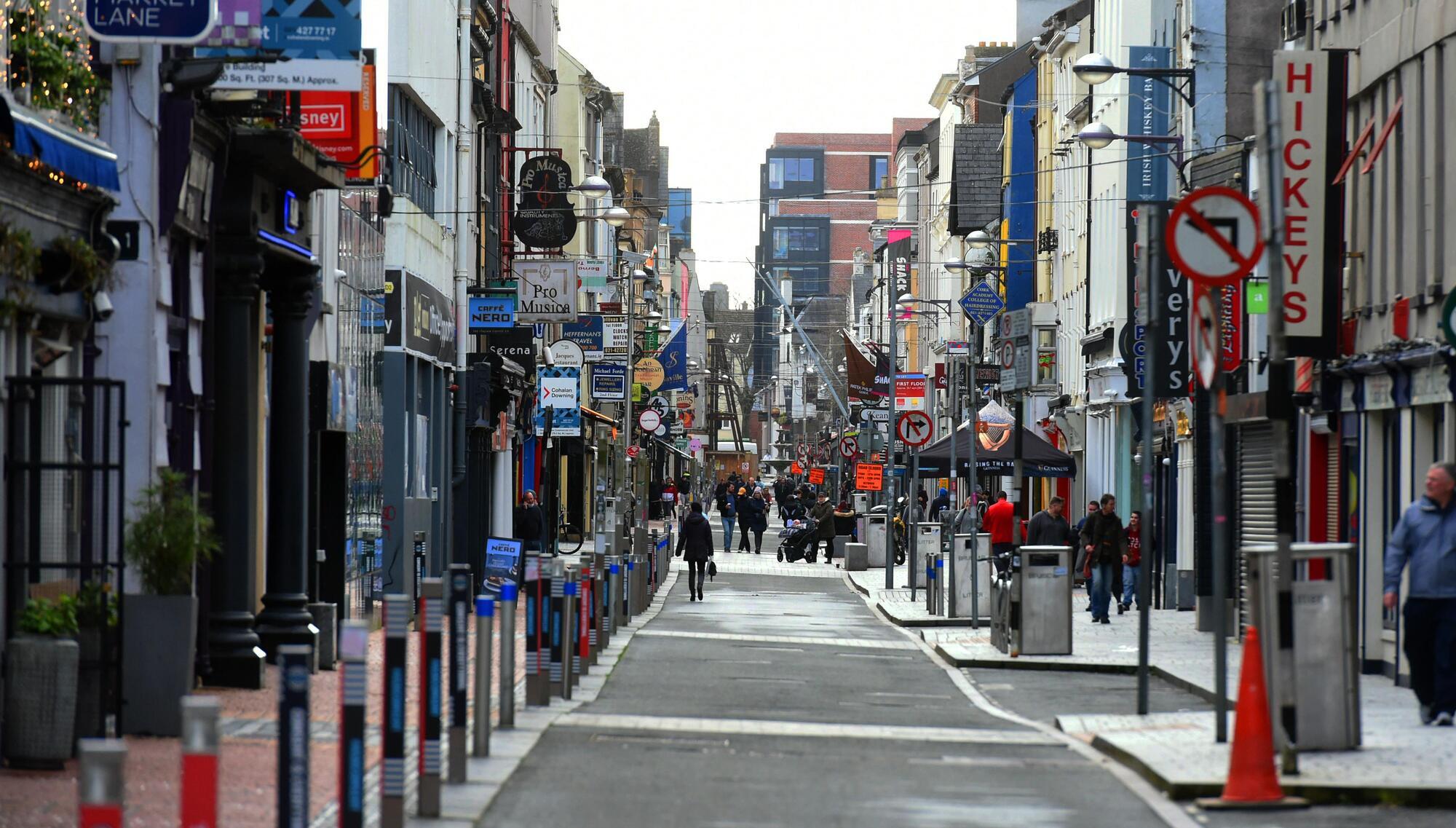
Oliver Plunkett Street is seen as an example of successful pedestrianisation and clean air. The Government has set a target of a reduction of half a million car journeys per day by 2030.
The Government has set a target of a reduction of half a million car journeys per day by 2030. How is that even possible? Yet, on a week when schools are closed for the Easter holidays, the roads have an eerily quiet feeling compared to the usual suburban mayhem at eight-thirty in the morning. How many of these car journeys could be replaced by active travel — parents walking their children to school, cycle buses or safe-route-to-school initiatives?
And if parents get into the habit of walking or cycling children to school, how many of them would continue their journey to work on foot or on two wheels? Before anyone mentions the rain, I have had to drive to work less than a handful of times since I started working in St Finbarr’s Hospital in Cork, about three kilometres from my home, six months ago.
Apart from the fresh air, peace and quiet and opportunity to oxygenate my brain before I start work, here is another few reasons why walking to school and / or work is a good idea.

Only a small minority of children in Ireland get enough exercise. National physical activity guidelines recommend moderate to vigorous activity for children of at least 60 minutes a day. A study undertaken by the all-island Children’s Sport Participation and Physical Activity (CSPPA) research team in 2018, found that just 13.5 per cent of students meet these guidelines. Taking part in sport helps but is not enough – only about one third of children who take part in sport four times per week, meet the guidelines for physical activity.
Less than half of adults meet national physical activity guidelines of 30 minutes of physical activity, five times per week. On average, adults are sedentary for about 5 hours a day during the week, only slightly less at weekends.
Physical inactivity has been identified as one of the leading risk factors for poor health – in terms of increased risk of heart disease, diabetes, breast, and colon cancer as well as being a shared risk factor for dementia and mental health issues.
Inactive children are at risk of poorer self-esteem, higher anxiety, and higher stress levels. They are more likely to smoke, use alcohol and illegal drugs than active children.
There are economic costs too. World Health Organisation (WHO) data costs physical inactivity at €150 to €300 per citizen per year (up to €1.5 billion per year).
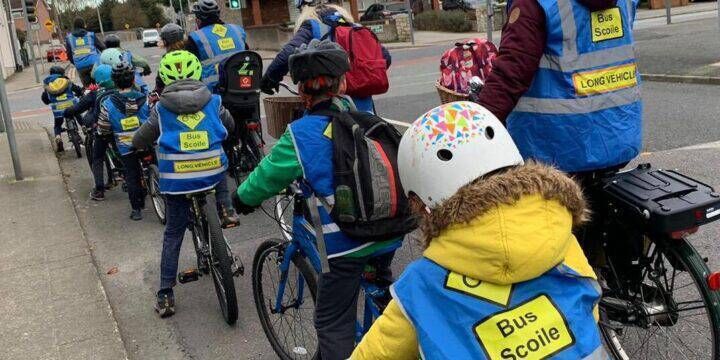
Active travel to school has been endorsed by leading public health organisations including the WHO, as a highly effective way to increase children and young people’s physical activity.
The Government introduced an initiative in March 2021 to support walking and cycling infrastructure to school which aims to tackle traffic congestion at school, create safer paths and bike lanes and encourage more kids to walk and cycle.
However, evaluation of active travel to school programmes has found them to be most effective when they form part of a package of policy measures for substantial and sustained shifts in active travel. These include good walking and cycling infrastructure, policies that address the needs of all road users including good links with public transport; policies that improve safety for pedestrians and cyclists; and programmes that promote active transport and disincentives for car use — including less car parking facilities, lower subsidies for car purchase, operating and parking.
Key to success is the recognition that active travel is a key risk and protective factor for all chronic diseases. To be successful, active travel policy is best aimed at population level and at all sectors of the community.
Increased levels of active travel have the dual benefit to our health of both increasing levels of physical activity and leading to reduced air pollution because of the reduced need to travel in cars.
Air quality in Ireland is generally good and compares favourably with other European countries. Significant reductions in emissions of key pollutants have already been achieved through a range of policy measures and other developments.
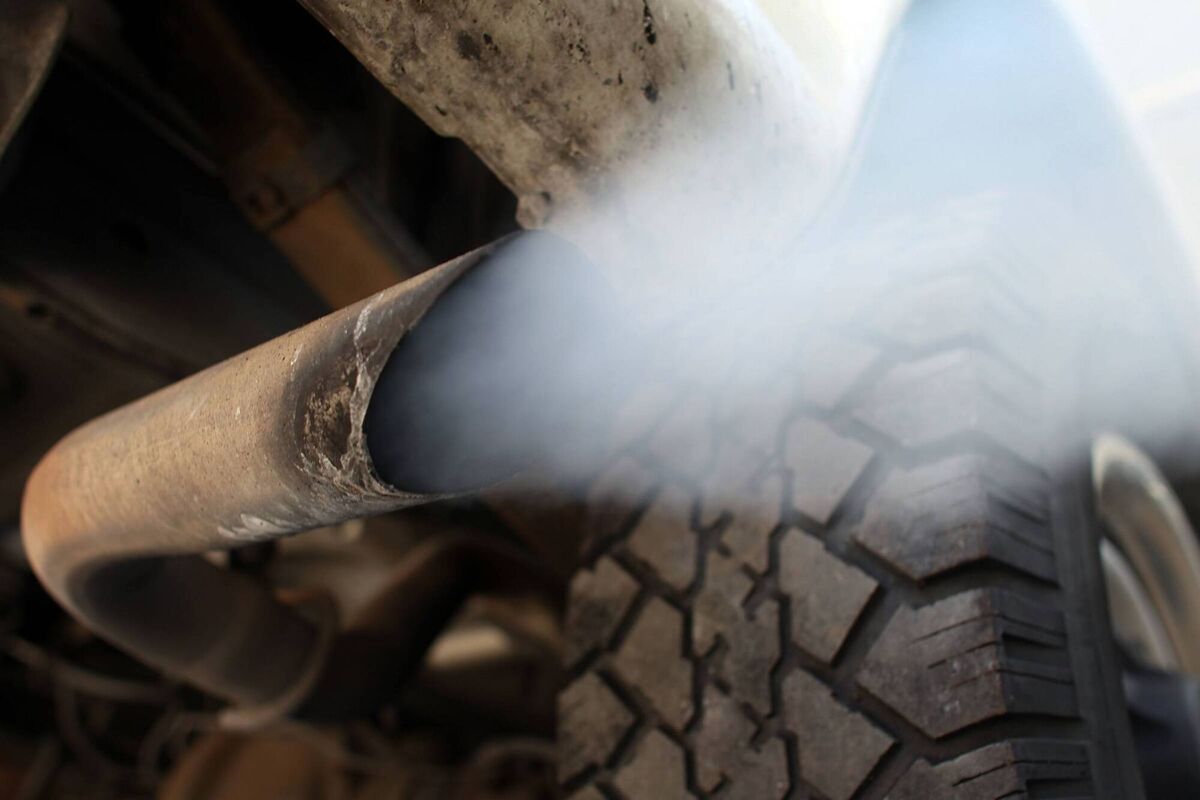
Despite this, The European Environment Agency, ‘Air Quality in Europe Report’ (2020) indicated that 1,410 premature deaths in Ireland in 2018 were due to air pollution. In addition to premature deaths, air pollution causes absence from work, reduced productivity, and increased hospitalisation. For Ireland, the economic costs of air pollution have been estimated by the WHO at around 1.3% of GDP or €2.3 billion per year.
The understanding of the link between air quality and health has led to increased awareness of the need to tackle air pollution. In line with this, the Lord Mayor of Cork has recently declared a Clean Air Zone (CAZ) in the heart of Cork city centre — the first designation in an Irish city.
Denise Cahill, Cork Healthy Cities Co-Ordinator says that improving air quality and reducing the noise and threat from traffic ‘makes the whole city better for everyone, especially the children and the elderly. Oliver Plunkett and surrounding streets are always buzzing with people because the area feels safe and welcoming to young and old alike.’ Along with the permanent pedestrianisation of 18 streets in the city, which was introduced during the Covid pandemic, Cork City Council has demonstrated an ability to surge forward in turning the city into both an Active Travel as well as a Clean Air Zone. It remains to be seen if other cities, including the capital, follow its example in terms of both advocating pedestrianisation and active travel as well as tackling air pollution and greenhouse gas emissions from the transport sector.
With the prospect of soaring prices for petrol and diesel due to the burgeoning crisis in Russia and Ukraine, along with the critical window over the next eight years to cut carbon emissions by half, now is the time to be proactive about active travel policy at population level. This has the potential to significantly reduce our carbon emissions and air pollution and to transform our physical and mental well-being as we finally challenge the norm in terms of the way we move about and live our lives.
- Dr Catherine Conlon is Senior Medical Officer with the Department of Public Health, St Finbarr’s Hospital, Cork and former Director of Human Health and Nutrition, safefood. Her book, ‘Modern Culture and Wellbeing,’ was published by Veritas in 2020.
CONNECT WITH US TODAY



Be the first to know the latest news and updates