Graham Clifford: We must reach out to Polish groups in Ireland to best help arriving Ukrainians
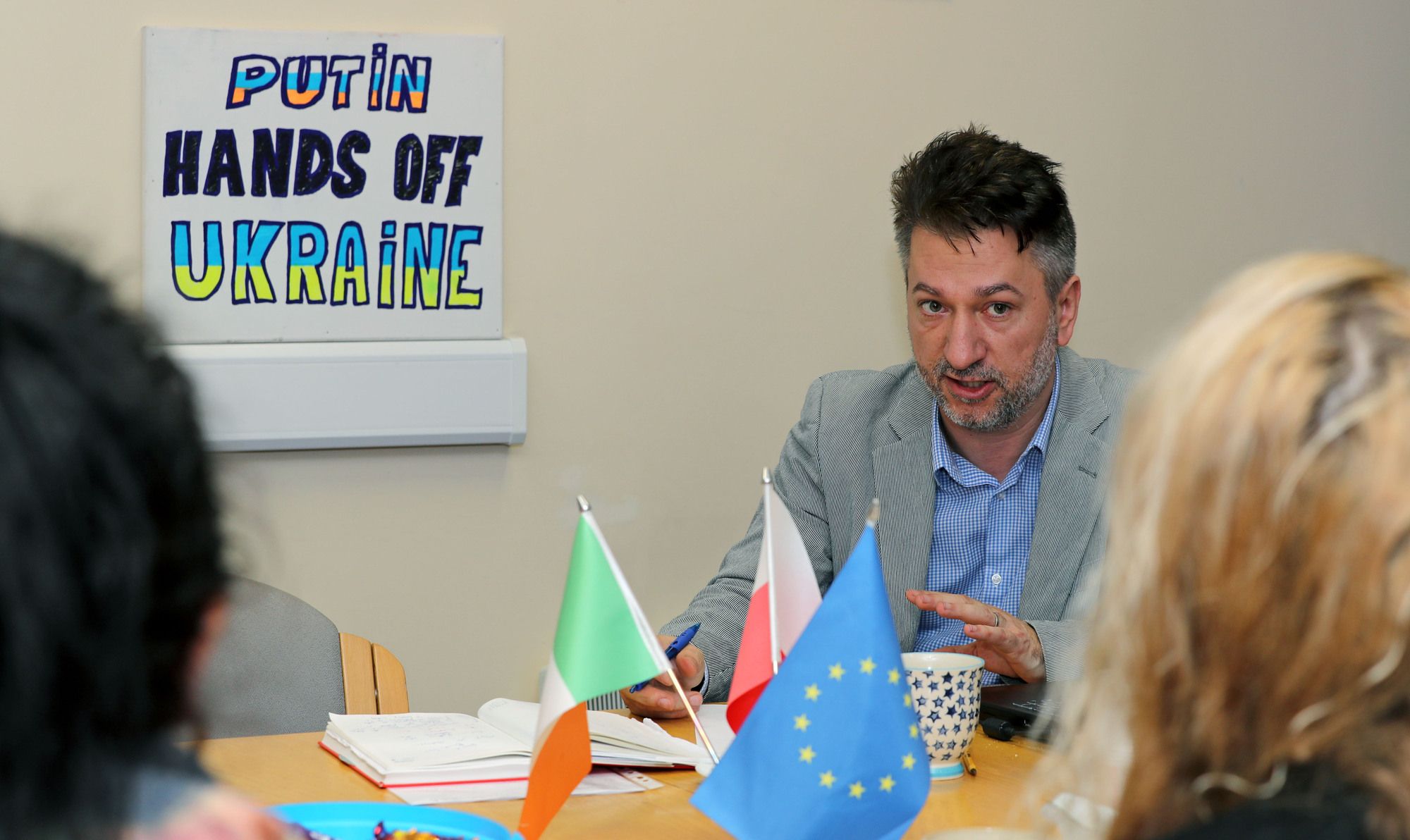
Voyteck Bialek of Together Razem Centre in Cork hosting a meeting between Polish and Ukrainian volunteers to decide on supports to aid Ukrainians. Picture: Jim Coughlan.
The sight of rows and rows of empty buggies on the platform of a border train station between Ukraine and Poland earlier this week was a thing of absolute tragic beauty. Polish mothers left the little carriages there for Ukrainian mothers to use when they crossed the border to safety.
Since this barbaric war erupted, the people of Poland, Romania, Hungary, and the Slovak Republic have opened their arms to the hundreds of thousands fleeing — the traumatised, the shaken, the inconsolable, the young.
Well in excess of 1m people have crossed from Ukraine into Poland since the rockets started falling from the sky. And here in Ireland, the Polish community, which at the last census numbed 122,515 people, have rallied to do what they can for a people they feel a kinship with.
The Polish mothers left prams at the train station for Ukrainian mothers who may need them when they arrive in Poland with their children. 🇵🇱🇺🇦 @UKRinIRL @PLinIreland @irishredcross @immigrationIRL @Refugees @refugeecouncil @ForumPolonia pic.twitter.com/pxJu1mZDH4
— Together-Razem (@TogetherRazem) March 6, 2022
One Polish friend explained to me recently: “It’s like the relationship between Irish people and Scottish people.”
And as I gathered in a car park on Saturday evening on the Blackpool Road in Cork with Ukrainian and Polish people carrying yellow and blue flags along with red and white ones, I could see that shared pain and shared resilience.
The Polish community in Ireland will be absolutely intrinsic in helping cater for the tens of thousands of Ukrainian refugees who will arrive here in the days and weeks to come.
That is why it is so disappointing and short-sighted that they do not feature when our politicians take to the airways to talk about plans for hosting Ukrainians in Ireland.
It’s like there’s a complete inability to join the dots. So let me help.
Ukrainians I’ve spoken to in Ireland tell me that given the choice, people fleeing their home country (who can’t go to another Ukrainian home) would prefer to go to the home of a Polish family because of cultural, dietary, and linguistic similarities. It makes complete sense.
Indeed, you could expand that to include Romanians and Lithuanians too. And migrants from those countries living in Ireland are already doing all they can to help.
According to the census of 2016, there are about 190,000 people in Ireland from Poland, Lithuania, and Romania alone. A conservative calculation might see that translate into about 50,000 households.
And while many of that cohort might be living in rented accommodation, or homes which are smaller than the average size of a house owned by an Irish family, it's still a large population that could play such a pivotal role in Ireland’s response.
But the likes of Together Razem, an excellent and resourceful NGO for the Polish and Eastern European communities based in Cork, were still waiting for the phone to ring earlier this week.
“We are invisible,” Wojciech Bialek of Together Razem told me this week as he led a group through the streets of Cork to highlight the plight of the people of Ukraine and support for them by their Polish brothers and sisters.
It is time to end that invisibility. Time to support, value, empower, respect, and fund groups like Together Razem and realise that without their support, and that of Polish, Slovak, Romanian, Moldovan, Latvian and Lithuanian people all across Ireland, the Ukrainian resettlement programme cannot work.
Indeed Russians and Belarussians in Ireland too are horrified by the actions of their home states.
Together Razem and others have the expertise we need to get this right.
And consider this. If the number of Ukrainian refugees who end up coming to Ireland exceeds the 100,000 figure, it will easily become the second largest migrant grouping in the country — and the combination of the Polish and Ukrainian communities will number more than a quarter of a million (about the population of Cork City and Waterford City combined).
Not only do we need to consult the Polish community at every turn now but we need to harness their expertise and seek their leadership.
Our Polish neighbours and friends can help calm the uncertain waters that lie ahead — they want to step forward and should be enabled and encouraged to.
Proper multilingual engagement is what is needed, not modular homes, converted army barracks or long stays in hotels for traumatised and heartbroken families.
There is a way to get this right, but only if we open our eyes and embrace the Polish community and others from Eastern and Central Europe who can help us understand what is needed.
Fail to understand that and we will fail altogether.
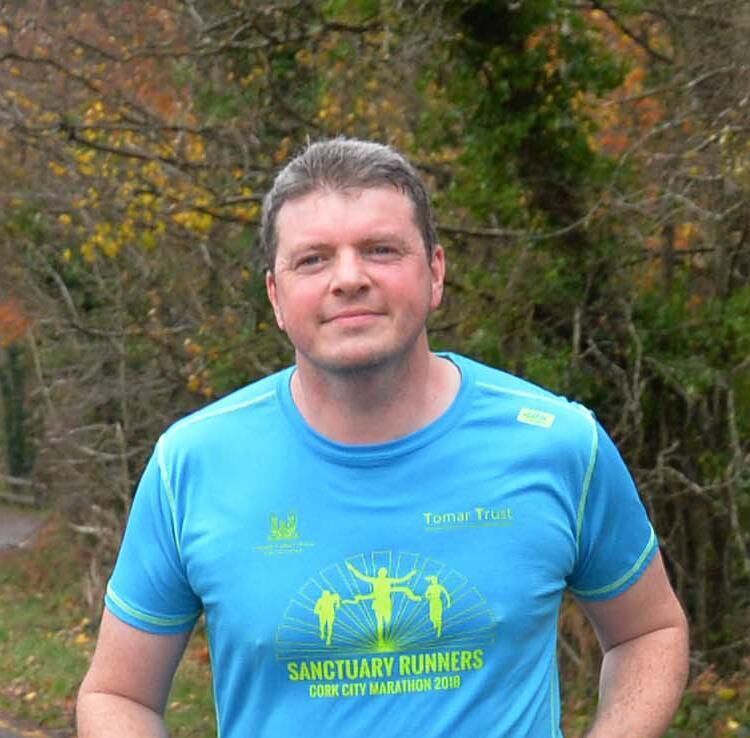
- Graham Clifford is chief executive and founder of the Sanctuary Runners and chief executive of Translate Ireland Multilingual Video Messaging.
To find out more about the work of Together Razem go to: Together-Razem.org

CONNECT WITH US TODAY



Be the first to know the latest news and updates