Vittorio Bufacchi: Can war ever be justified?
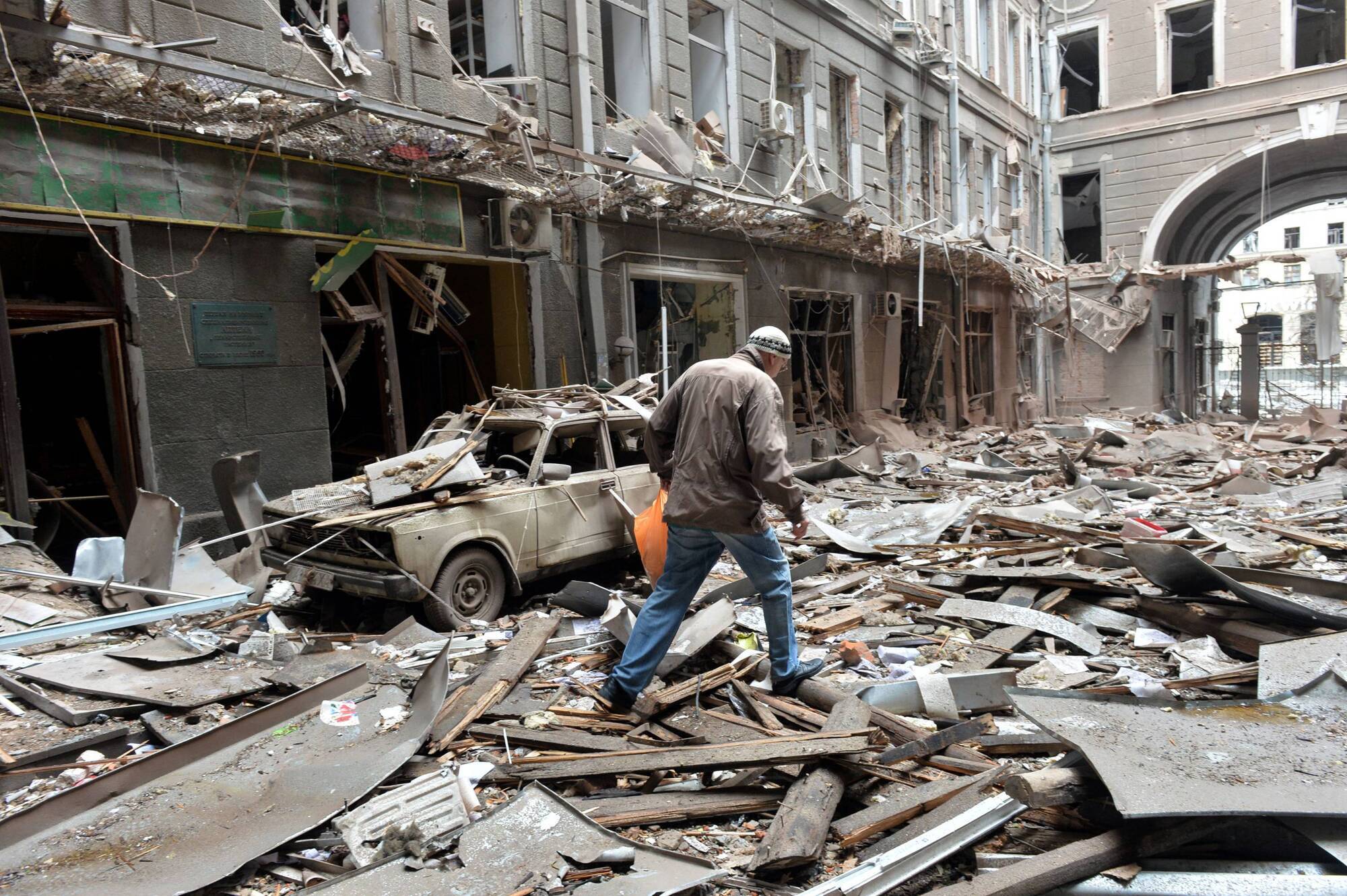
Damaged building following a shelling in Ukraine's second-biggest city of Kharkiv olast week. Picture: Sergey Bobok/AFP/Getty Images
There are two truths about war: All wars are intrinsically evil, and it is neither sweet nor honourable to die for one’s country.
And yet, recent events in Ukraine compel us to ponder the ethics of entering the theatre of war.
The justification of war on moral grounds, also known as Just War Theory, has a long tradition in Western philosophy going back many centuries.
Apart from the principles of just and fair conduct in war (Jus In Bello), and those that apply during the transition from war to peace at the end of the conflict (Jus Post Bellum), Just War theory must also determine the conditions the makes resort to armed force justified (Jus Ad Bellum).
At the risk of oversimplification, four key rules or principles govern the justice of going to war.
The first principle is whether war has a just cause. Bar a few exceptions, the only just cause that is admissible is for defensive reasons.
In other words, a war of territorial expansion cannot be justified, but a state is justified to defend one’s territory if a foreign force invades.
The second principle is whether one enters war with the right intention: self-interest or aggrandisement are not valid intentions, instead one must be motivated by a sense of justice.
Also, it is imperative that war is the last resort, and that all other non-belligerent ways of resolving conflict have been exhausted.
The third principle is that the end must be proportional to the means used.
If a nation is being invaded, they may defend themselves and their border, but not use war as an excuse to grab land from the aggressor.
Also, military action must be proportional to the threat; it is morally wrong to open fire against someone who has thrown a stone.
The fourth principle is whether one has a reasonable chance of success.
This principle aims to avoid the unnecessary loss of life; to prevent pointless bloodshed of both soldiers and civilians being sacrificed merely for the sake of claiming the moral high ground.
A cursory glance at the conflict between Russia and Ukraine suggests that there are no plausible justifications for Putin’s actions.
As for Ukraine, they clearly meet the conditions set by the first three principles: Ukraine is responding to an aggression, not initiating it; they are doing so for the sake of self-defence; and considering that Ukrainian military capabilities are almost insignificant compared to Russia’s, Ukraine cannot be faulted.
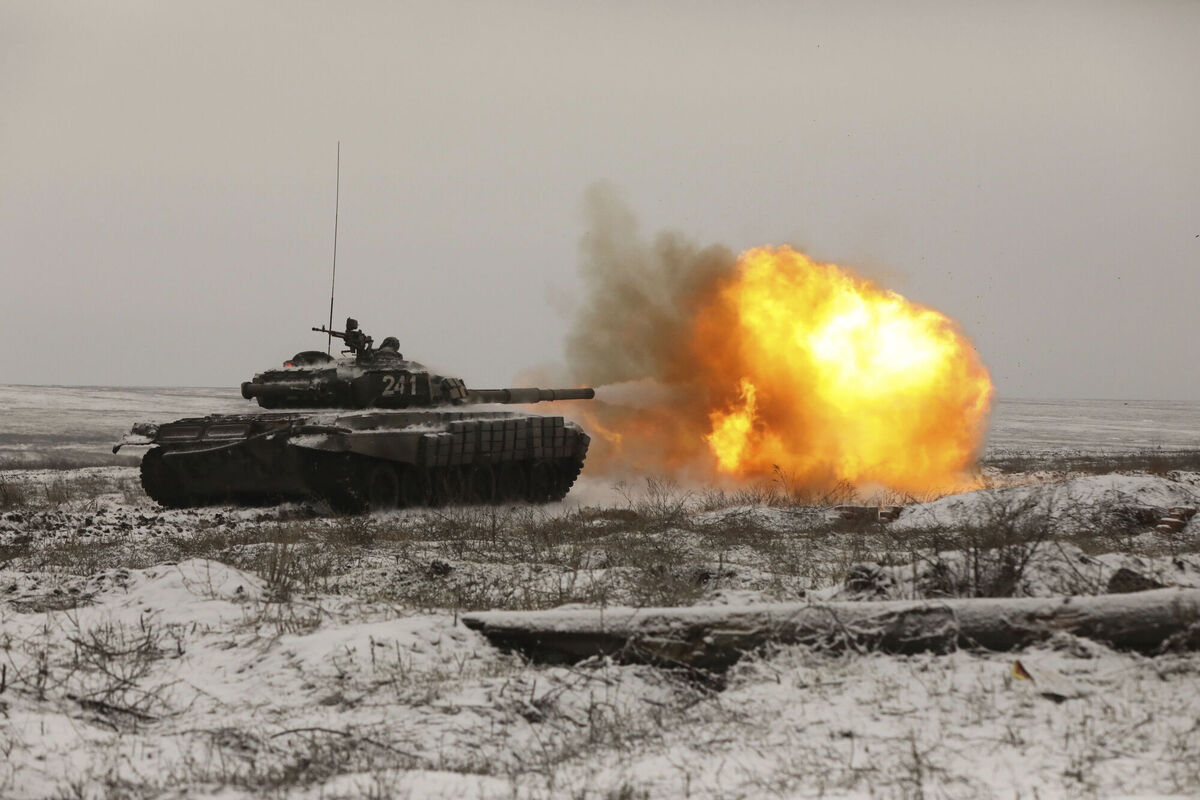
One remaining doubt is that perhaps not all alternatives to war have yet been exhausted, that there is still scope for a diplomatic solution, but after Russian tanks crossed the Ukrainian border one must question the efficacy of diplomacy on Putin.
We may not have reached that point yet, and perhaps some stones are yet to be turned, but we are getting ominously close to the end of that particular road.
Regarding the last principle the question is more complex. The overwhelming might of the Russian army makes this conflict almost a foregone conclusion, and for Ukraine to send troops into war against the Russian army could be the catalyst for an avoidable but imminent carnage.
Although Ukraine could not justify going into all-out war on its own, it is a different question for European and Nato countries.
No one can be naïve about war, and its unimaginable horrors. War is arguably the vilest manifestation of human maliciousness, and on ethical grounds it must be avoided at all costs.
On that basis, what motive could possibly justify a war against Russia? For Ukraine, it is a question of defending their territorial sovereignty and national self-determination. For the West, something else is at stake.
“In times of war, the law falls silent”.
So said philosopher Marcus Tullius Cicero in 44BC. He was referring to Natural Law, or the Moral Law, but for us today there is another type of law that also falls silent: international law.
The military aggression by Russia is a flagrant violation of international law.
In fact, Putin is treating international law as if it were nothing more than a paltry nuisance, like a persistent fly to be ignored or thumped as one may wish.
Russia’s invasion of Ukraine is worrying because it exposes the weak underbelly of international law.
The irrefutable reality is that international law is founded on goodwill, but as soon as goodwill is in short supply the feebleness of international law is exposed.
In the Just War tradition, to the extent that war can be justified, moral principles operate within the logic of self-defence and territorial sovereignty.
However there is another way to think about war, and its justification. What is at stake here is not just a border, or a piece of land, but the rule of law itself, and the authority of international justice.
Unless Europe takes the strongest stand against Putin, immediately, by providing both humanitarian and military aid to Ukraine, the consequences for the international order could be devastating.
Paradoxically, war may be justified to prevent humanity from sliding into a lawless, blood-drenched state of nature where might makes right.
- Dr Vittorio Bufacchi is Senior Lecturer in Philosophy at University College Cork, and author of (Palgrave).


CONNECT WITH US TODAY



Be the first to know the latest news and updates