Dorcha Lee: Russia is experienced in consolidating control
Dorcha Lee: Russia is experienced in consolidating control

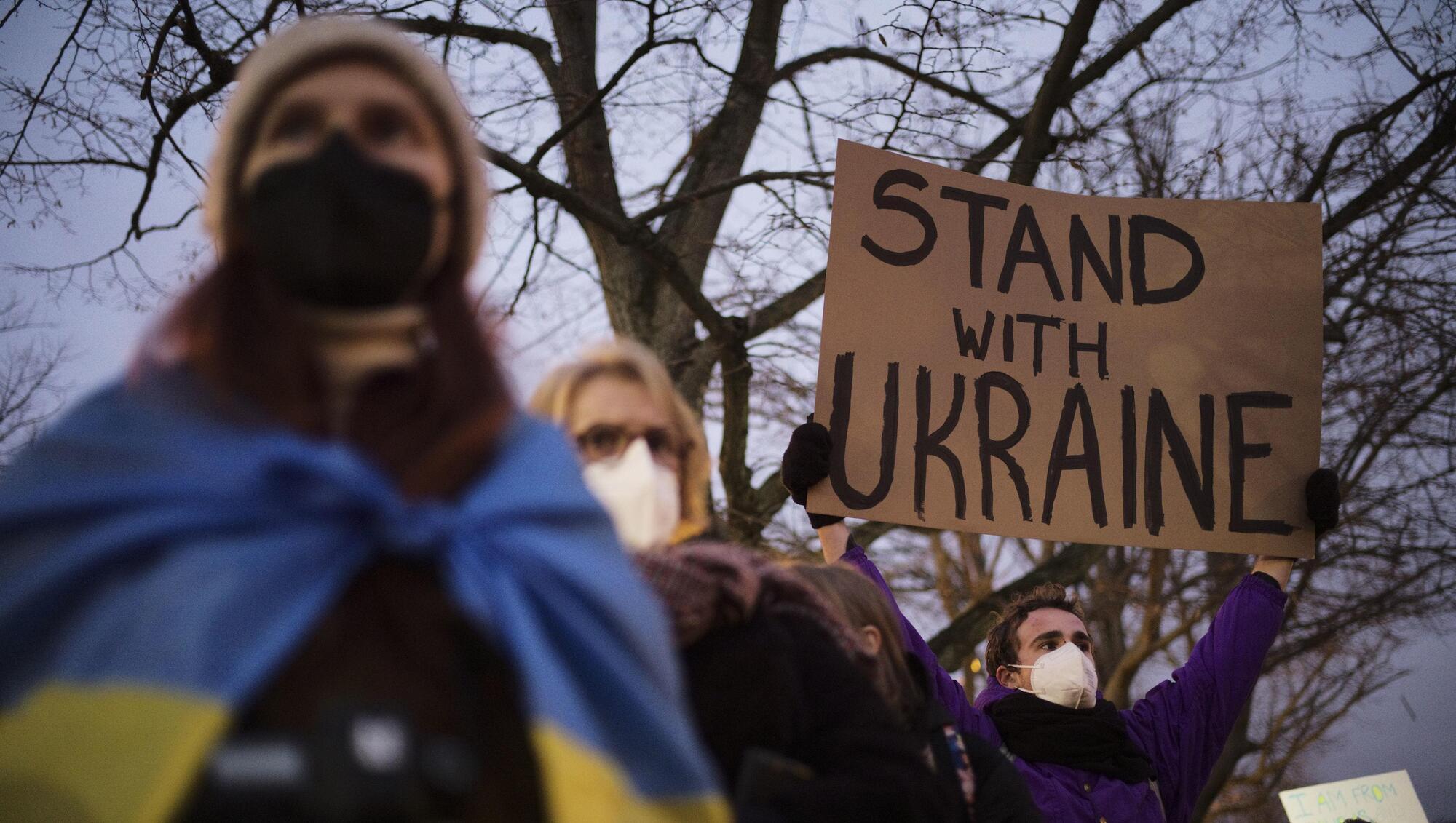
A man shows a poster in support of the Ukraine as he attends a demonstration along the street near the Russian embassy to protest against the escalation of the tension between Russia and Ukraine in Berlin, Germany.
The Russia-Ukraine crisis has entered a new and dangerous phase after Russian president Vladimir Putin signed a decree recognising the two separatist-controlled areas in the Donbas districts of Luhansk and Donetsk as independent republics.

Just before Putin’s address to the Russian nation on Monday evening, he held a cabinet meeting which was also broadcast on Russian TV. Each member of the cabinet individually called on the president to sign the independence decree. The choreography of the meeting sent a powerful message across Russia and around the world. The image of the cabinet evoked the memory of the Central Council of the Supreme Soviet, while Putin presided over the scene just like a czar. In drawing together two strands of Russian history, Putin has placed himself at its very centre.

For the past few weeks, Putin has been creating a pseudo-legal scenario to cover his invasion of Ukraine. He needed a plausible ‘casus belli’ or ‘reason for war’. Under modern international law, there are three lawful justifications for waging a war. These are “in self-defence, in defence of an ally as required by the terms of a treaty, or a war approved by the UN”.

Growing violence

Over the past 10 days, in Luhansk and Donetsk, there have been major flare-ups of violence along the so-called ‘Line of Contact’ between the Ukrainian army and the Russian-backed separatist forces. The area under the latter’s control is only about 40% of both districts of Luhansk and Donetsk, but includes both cities.

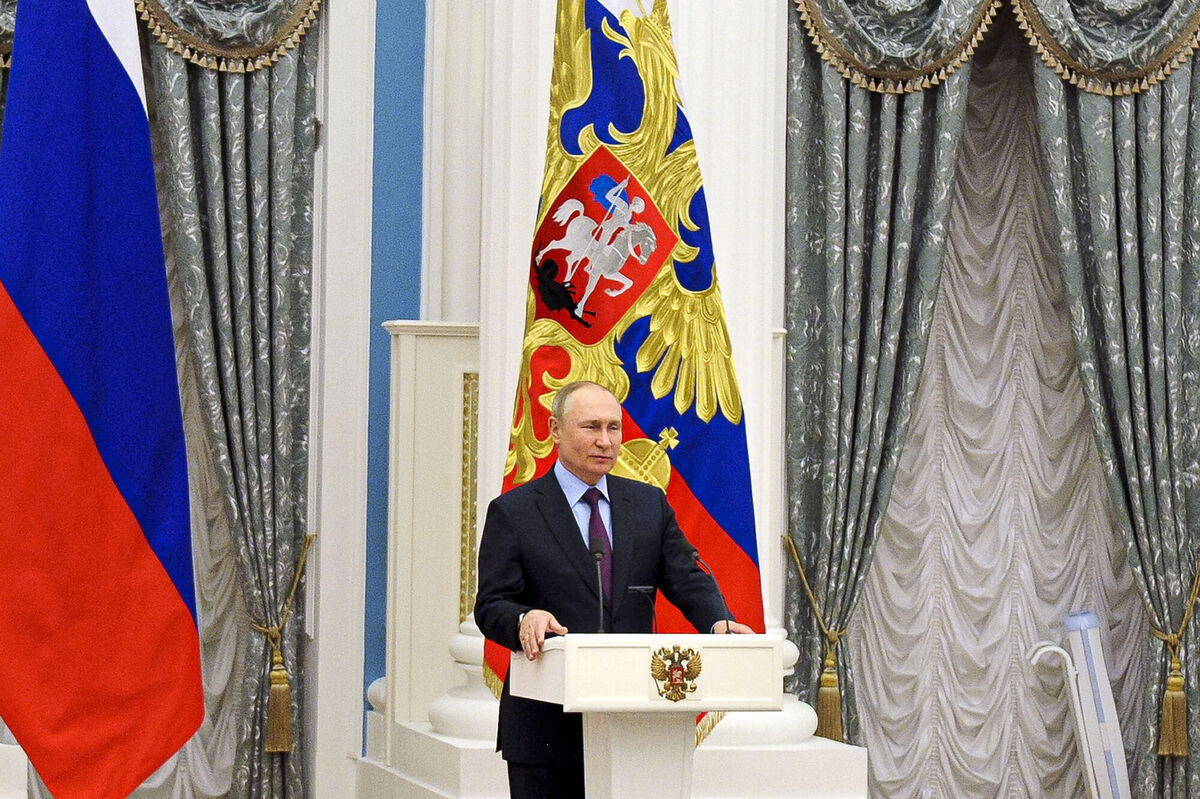
Russian President Vladimir Putin speaks in the Kremlin in Moscow, Russia.

This area is currently being monitored by the OSCE’s (Organisation for Security and Co-operation in Europe) Special Monitoring Mission (SMM) in eastern Ukraine. On February 18, the SMM’s daily report, covering the previous 24-hour period, recorded 222 ceasefire violations and 135 explosions in the Donetsk region, and 648 ceasefire violations and 519 explosions in the Luhansk region.

Leaders of both these separatist areas have said they are moving civilians from the affected areas to Russia for their own protection.

Whatever the legal ramifications, the context for a ‘casus belli’ has been created already. In Putin’s view, the two new republics are allies who have called for Russia to protect them from Ukrainian aggression.

Putin's tactics

Putin has directed the Russian armed forces to enter ‘as peacekeeping forces’ to protect the population in the area of the two new states. It is unclear whether they will remain within the current areas under the separatists’ control, up to the Line of Contact, or whether they will advance to include the remaining 60% of both districts under Ukrainian control.

There are similarities in the present situation in Eastern Ukraine with the August 2008 Russo-Georgian War. It is important to note that president Putin’s main demand is that both Ukraine and Georgia would not be allowed to join Nato. All Georgians know that their future independence is at stake in the current Ukraine crisis.

Russians can be very sentimental about Georgia. In the days of the USSR, there was an old saying: “There is no God, there is no Heaven, but there is Georgia.” Spared the ravages of the Great Patriotic War (the Second World War), the country became a welcome destination for the old Soviets seeking a break from the eternal revolution and the Cold War.

Similar to the present situation, Russian forces ‘happened’ to be on exercises at the time just north of the Caucasus mountains. Then, just as now in Ukraine, a ‘casus belli’ was required, before the Russian forces could intervene.

This came when Georgian president Mikheil Saakashvili ordered the Georgian army into South Ossetia, a disputed district of Georgia since 1991, and used artillery fire against populated targets. The Russians drove the Georgian Army out of South Ossetia and headed towards the Georgian capital, Tbilisi.

The people of Tbilisi know exactly how the people of Kiev must feel today. In the early days of the 10-day war, the Russian Air Force did a number of bombing runs, destroying centres of communication near Tbilisi and other areas. One target destroyed was a key bridge on the national highway, about a 40-minute drive from Tbilisi. This effectively cut the main link between the capital and the West.

Then, suddenly, the Russian forces stopped at the town of Gori (Stalin’s birthplace), but did not advance to Tbilisi. Some weeks later, on visiting the destroyed bridge, I realised that, had the Russians intended on moving to Tbilisi, they would have needed this bridge for a secure resupply route for their forces. In other words, the Russians had no intention of taking Tbilisi.

Negotiations

The EU took on the task of conducting negotiations between both countries. France held the EU presidency at the time, and president Nicholas Sarkozy took the lead role dealing directly, but separately, with Georgian president Mikheil Saakashvili and Russian president Dmitry Medvedev.

Putin was prime minister, but unquestionably the man in power. Nevertheless, Medvedev conducted the negotiations, which was pragmatic and flexible. Agreement was reached to withdraw all forces to their original positions. The EU agreed to deploy a civilian monitoring mission, EUMM Georgia, to supervise the withdrawal and monitor the ceasefire.

A woman holds up a sign in support of Ukraine during a demonstration in front of the Russian embassy in Paris, France.

Since the war, Russia has consolidated its control over South Ossetia and Abkhazia, a district over which Georgia lost control in 1993. Both territories are now recognised by Russia as independent states. This week, the Luhansk People’s Republic and the Donetsk’s People’s Republic have joined the club.

President Putin has held the initiative ever since the Russian military exercises were held in the western border areas last April. It was clear to some defence analysts at the time that these exercises were a rehearsal for the invasion of Ukraine, that Belarus could most likely be drawn in, and that the West was not doing enough to support Ukraine, either politically or militarily.

Nato will reinforce its frontline member states, but not to the extent of changing the current balance of power, which is in favour of Russia. The EU has started imposing sanctions incrementally in response to the extent of Russian operations. The brief hope that president Macron’s initiative last Sunday to get a summit between presidents Biden and Putin seems to have receded. Yet, when the fighting has stopped, the EU could still emerge as the broker to get talks going again.

President Putin does not control the weather, and his military commanders will be reminding him that ground operations should be well over before the frozen-hard ground of eastern Ukraine melts in a muddy quagmire.

In the meantime, US president Joe Biden has been accused of giving Putin the ‘green light’ to invade. On January 19, at the end of a conference, Biden casually remarked that if there were just ”minor incursions” he could have a talk with allies about how they would respond.

Perhaps Putin would like to know more about that too.

Colonel Dorcha Lee (retd) defence analyst

x

More in this section

Revoiced

Newsletter

Sign up to the best reads of the week from irishexaminer.com selected just for you.

Cookie Policy Privacy Policy Brand Safety FAQ Help Contact Us Terms and Conditions

© Examiner Echo Group Limited