Laurence Tibuana: Europe's Time to Shine
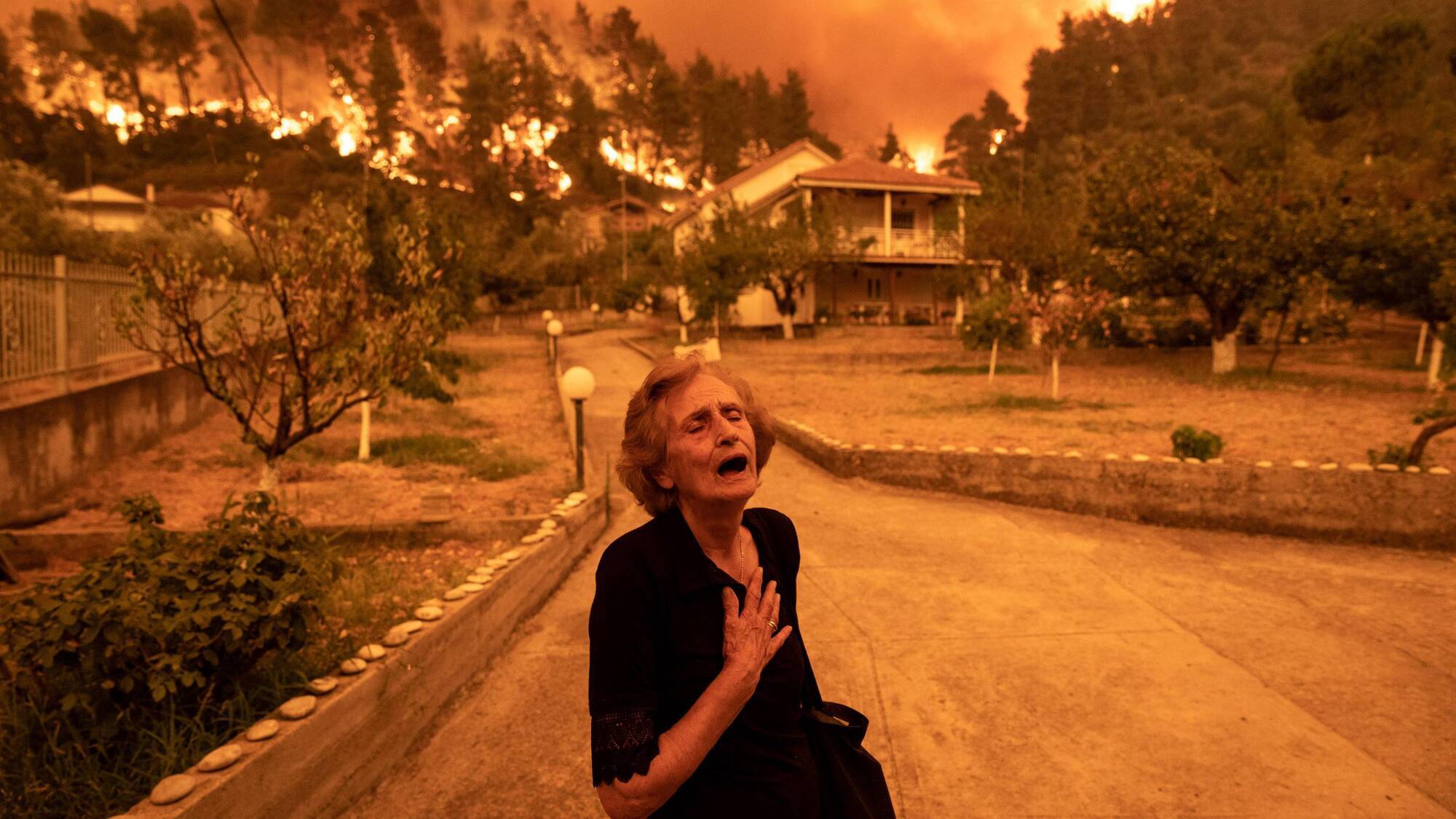
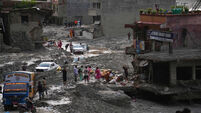
A resident flees the village of Gouves, on the island of Evia, Greece, this summer. The European Commissionâs Fit for 55 plan offers a bold blueprint for reducing greenhouse-gas emissions by 55% by 2030.
Having done so much to elevate the global climate debate to the highest levels of diplomacy, the European Union and key member-state governments will soon be confronted with a fundamental paradox.
The worldâs prime-mover and norm-setter on climate change is heading into a year of bruising and protracted political struggle to realize its own climate ambitions.
On July 14, to little fanfare, the European Commission unveiled one of the most important climate-policy responses since the signing of the Paris agreement in 2015. The Commissionâs Fit for 55 plan offers a bold blueprint for reducing greenhouse-gas emissions by 55% by 2030, on the way to reaching net-zero emissions by 2050. With a precise set of policy proposals adapted to different geographies, social systems, energy mixes, and wealth levels, the plan is truly impressive, demonstrating clearly how the EU Green Deal will work in practice.
Much to its credit, the Commission has managed to mobilize the necessary technocratic and legislative expertise faster than any other institution in the world. And because the EU Green Deal will define economic policy in the worldâs largest single market, it has the potential to establish new norms globally, shaping the contours of the future net-zero economy.
The EU has exerted this kind of soft power for years in areas such as vehicle emissions, appliance efficiency, and many other critical areas. As the EU Green Deal continues to take shape, this âBrussels effectâ could plausibly extend to other technical issues such as electric-vehicle standards, thereby hastening the worldâs move away from the internal combustion engine (ICE), in conjunction with Europeâs targeted 2035 phaseout for ICE vehicles.
The Fit for 55 packages is both concrete and already funded, at least in its early stages. Together with the EUâs goal of achieving a 40% share for renewables in its energy mix by 2030, the planâs emissions targets send a clear signal to other advanced economies: they, too, must think bigger and raise their ambitions.
The EU is also a global leader in sustainable finance. Its Taxonomy for Sustainable Activities will provide urgently needed clarity on what counts as a âgreenâ investment. By codifying new standards, the EU taxonomy is likely to influence capital markets globally.
European diplomats have long excelled at encouraging other major powers to step up their own climate ambitions. In this sense, implementing the Green Deal will be a major test for Europe. With Sino- American tensions at all-time highs, it remains to be seen precisely what role Europe will play in the next phase of climate diplomacy. Much will depend on whether it can muster a single, integrated European voice, rather than passively relying on its member statesâ existing bilateral and trade ties. To use its weight on the world stage, Europe must act as one bloc. But can it?

The Challenge Ahead For the first six months of 2022, France will hold the European Council presidency (coinciding with its own presidential and legislative elections in April and June, respectively). Its success will require a delicate touch to balance different interests and to adjust to outgoing German Chancellor Angela Merkelâs departure from European politics. Among Franceâs top duties will be to champion the Fit for 55 package at home and among member states. To âbring the Green Deal home,â it must help translate the Commissionâs targets across a broad array of domestic political contexts.
Because it calls for legislation, it represents an opportunity for open debate on critical issues of social justice and equity. Meanwhile, the tide of support for climate action only keeps swelling. Tellingly, a recent poll in France showed nearly nine in ten right-wing voters believe the environment is a cross-party issue, adding to a cascade of similar findings across the continent.
One model to be considered is Franceâs Citizens Convention on Climate, which was organized as a response to the gilets jaunes (yellow vests) protests in 2018. While the French governmentâs commitment to the conventionâs proposals has been uneven, polls show that virtually all of them are supported by most of the country. In this outcome, we see the obvious institutional obstacles that must be overcome, but also the untapped potential. Other like-minded efforts, including in Ireland, Scotland, and beyond, as well as a forthcoming global initiative, are further signs of momentum for democratic innovation.
As the energy crisis ensnaring much of Europe has shown, anxiety about carbon pricing is already high, even when it has contributed only marginally to the problem. The implementation of Fit for 55 will raise these issues time and again. Policymakers will be confronted with hard questions and trade-offs whenever higher carbon prices are extended to sectors that affect citizensâ wallets directly, such as transportation and heating. Combine these challenges with the task of reskilling entire segments of the European workforce, particularly in more fossil fuel-intensive economies, and one can already see the contours of Europeâs coming political battles.
At the heart of the issue is the debate over-borrowing and debt. Managing common debt and member-state sovereign debt will remain one of the most important â and difficult â political issues on the European agenda. As the clouds of the pandemic begin to part in Europe, there will be pressure to return to the previous fiscal rules limiting member-state debt-to-GDP ratios. The battle lines have already been drawn.
At any rate, continued economic growth in Europe will need to look quite different from what is envisaged in todayâs models. A net-zero model raises many important questions. What will the new growth path look like? Will private consumption have to fall? Will investment, especially public investment, play a larger role? If so, where will those resources come from?
Clearly, European governments will have to reconcile an investment program capable of implementing the Green Deal with a viable plan for deficit consolidation. That means we will need to reconsider the very meaning of borrowing and debt â starting in the year to come.
At the height of the Covid-19 crisis, EU member states showed true solidarity with one another in their commitment to boosting public spending, much of it financed with mutualized debt. The recovery fund was a historic breakthrough. But the political contest ahead will test Europe further â by orders of magnitude.
There is an obvious case to be made for excluding climate investments from the debt-to-GDP calculation, and for rethinking short-term fiscal rules when the real priority is to preserve the planet for future generations. The net-zero transition is an extraordinary challenge. But it is also Europeâs moment to shine. Let us make the most of it.
CLIMATE & SUSTAINABILITY HUB