Niamh Griffin: The case for vaccinating young children
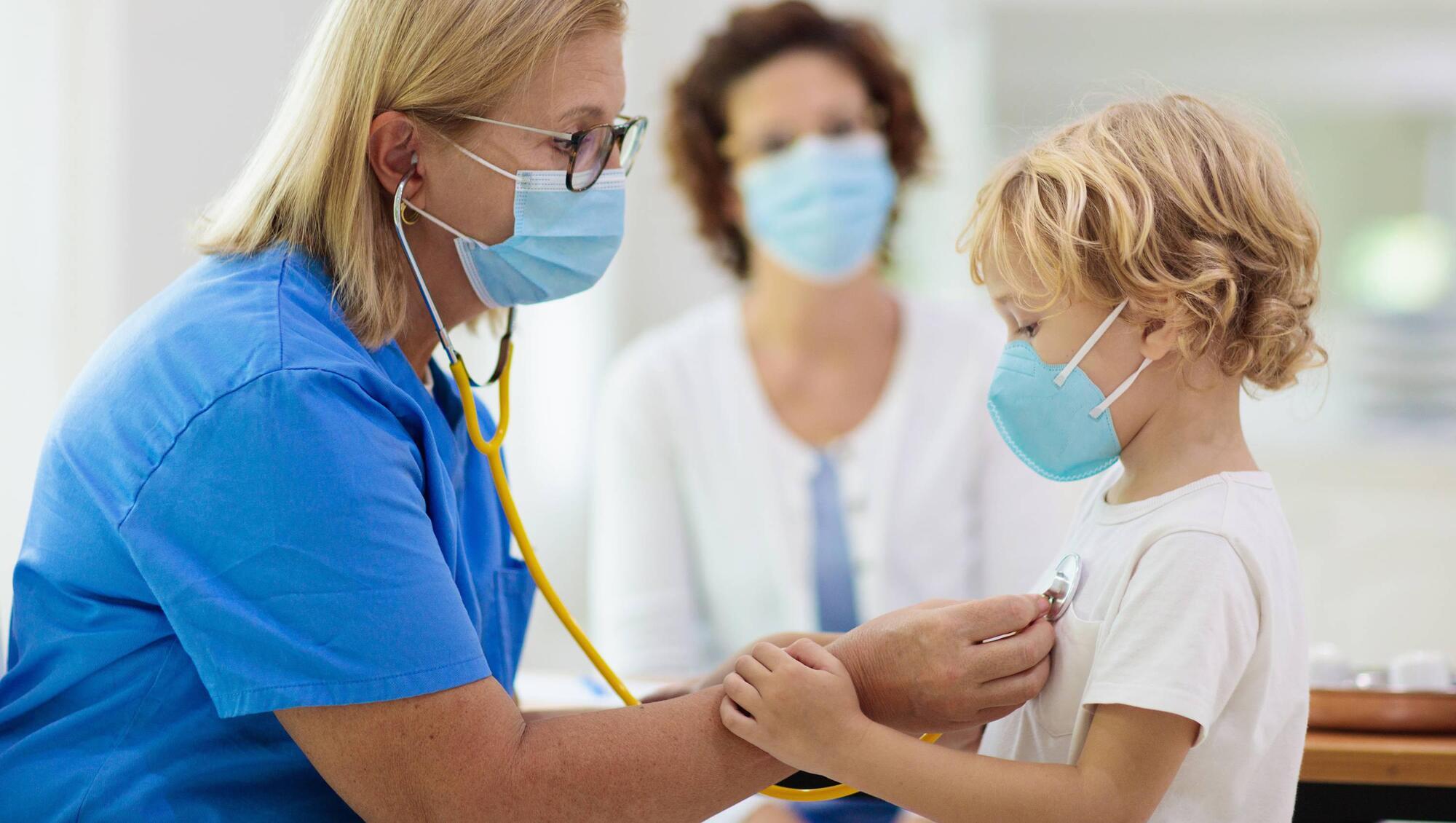
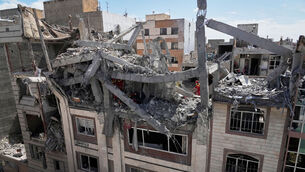
Last week in Ireland, children aged five to 12 made up 21% of all cases of the coronavirus. Stock picture
Rising Covid cases among young children in Ireland are driving changes in how they are protected, but some say itâs too little too late.
Public health measures tend not to vary across the EU but what does change is the emphasis on certain measures at different times, and the speed at which changes are introduced.
As everyone watches the Omicron variant, Ireland, like other EU countries, leans on the European Centre for Disease Prevention and Control (ECDC) for guidance on keeping children safe.
Their latest publication says severe disease remains ârareâ in children. Out of 65,000 cases across 10 countries, 0.61% of children were hospitalised and 0.06% needed intensive care.

In giving advice on vaccinations, they recommended taking into account âanxiety and distressâ that children experience caused by disruptions to society and education in the last two years.
The ECDC advised weighing up concerns about physical health and wellbeing, indicating the risk of severe disease should not be the only consideration.
Indeed, last week in Ireland, children aged five to 12 made up 21% of all cases, and the World Health Organization warned that the number of cases among children aged five to 14 is the highest for any age group in Europe.
Children as young as five will shortly be offered a vaccine here â some before Christmas, the majority from January.
It follows approval by the European Medicines Agency in late November for a modified vaccine from Pfizer. This contains just 10mg of the vaccine, one third of the dose given to adults and older children.
âI would be more than happy to give it to my child or my grandchild in that age group,â said Professor Karina Butler, chair of the National Immunisation Advisory Committee (NIAC):Â
Details of the rollout are not yet clear, but itâs expected to involve separate child-friendly clinics.
Older children are already accessing Covid vaccines in huge numbers, with 394,300 now vaccinated here, over 76% of the total.
In contrast, in the , only over-12s are being offered vaccination, but this is continually under assessment.
So far, 48.2% of children aged 12 to 17 are vaccinated, and they expect to approve a vaccine for younger children early in 2022.
In , over 76% of teenagers are already vaccinated; the high rate has been linked to the requirement teens use the digital Covid certificate.
Guidelines around mask-wearing for under-18s are also in flux in Ireland and across Europe.
Here, secondary school children have been wearing masks since last September, and this was extended recently to children aged over nine, reflecting the rising number of cases. They should also wear masks in shops and on public or school transport.
Advice given earlier in the pandemic to the National Public Health Emergency Team (Nphet) was that this was not necessary. Divisions have emerged among parents, with the majority supportive of the move, but some vocally resisting it as being unnecessary.
In France, all students over 11 have been wearing masks, starting from September last year. In October this year, primary schools in regions with a low level of Covid cases were allowed to halt this.
However, by mid-November, children in 47 of the 101 administrative regions were back wearing masks as cases spiralled, and this continues to change.
Secondary school children in the North are required to wear masks on public transport and school transport as well as in school. Primary school children are âstrongly recommendedâ to wear them on transport only for now.
There is also an antigen testing programme for teachers, and for children aged 11 and upwards across all levels in the North. The public health advice states testing for asymptomatic pupils along with âventilation, distancing, cleaning, and wearing masksâ can help prevent spread of the virus.
An ECDC review over the summer found six countries using antigen tests in schools.
However, it is worth noting this includes Austria, which went back into a temporary lockdown in November, indicating that no single measure on its own can stop the virus in its tracks.
Antigen testing has proved controversial in Ireland, with parentsâ groups and teachers calling for access to regular testing before the start of a programme on November 29.
Public health advice has focused more here on the use of PCR tests as being more reliable, although anecdotally many parents found delays in getting results at busy times quite stressful.
The HSE said this week 40,312 kits each containing five antigen tests have been sent to primary schools so far. These only go to children who are in the same pod as a child with a confirmed Covid-19 result.
These high numbers of children with Covid-19 here seem ever more stark as vaccinated older people start to drop out of the statistics.
Vaccination is now being offered as one way to address this, but it seems all other public health measures here as across the EU are also expected to be needed for some months to come.