Time for system-level responses to a changed world
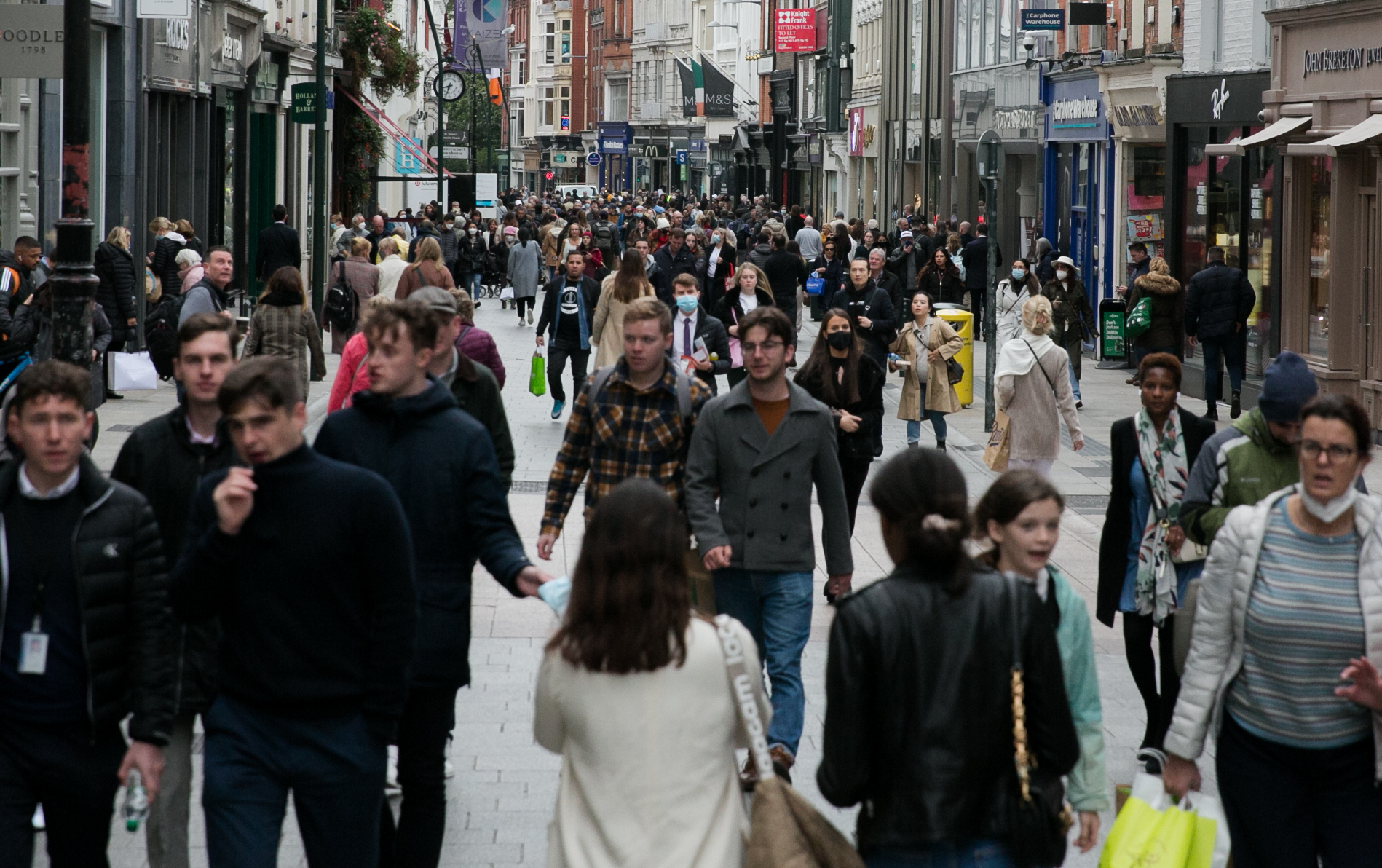
In the current phase of the pandemic, Government policy has been too reliant on vaccination combined with a focus on personal responsibility. File picture: Gareth Chaney
Europe is again at the epicentre of the Covid-19 pandemic, with the World Health Organization projecting up to 500,000 additional deaths by early 2022.
In Ireland, cases of Covid-19 have increased sharply over the past two weeks and are currently among the highest in Europe despite our very high vaccine uptake rates.
As the pressure on our hospital system has increased in recent days, the Government is again advising employees to work from home and has reimposed some restrictions on the nighttime economy.
There is an understandable clamour to roll out the vaccine booster programme to healthcare workers, the medically vulnerable, and people aged 50 years or older as quickly as possible. This needs to happen and it will make a difference.
However, even in the best-case scenario of an efficient national rollout of the vaccine booster programme with high uptake in the target groups, the effects on case numbers and hospital admissions will not be seen until early 2022.
In the interim period, further restrictions on social interactions can be anticipated in the run-up to Christmas.
How should we respond to this latest setback in our efforts to manage the pandemic?
In recent months, there has been a sense of uncertainty and drift in relation to Covid-19 and the Government urgently needs to spell out a detailed and coherent medium-term national strategy informed by core principles of infectious disease control — a vaccine-plus strategy designed to harness all of the infectious disease control tools at our disposal while keeping social restrictions and economic disruption to a minimum.
In the current phase of the pandemic, Government policy has been too reliant on vaccination combined with a focus on personal responsibility.
Even though vaccination has greatly reduced the human costs of death and severe illness, it has been clear for some time that vaccination alone (even with a successful booster programme) will not reduce virus transmission in the community to the level required.
It is also clear that we can no longer rely on mass behaviour change in response to rising case numbers.
There is now evidence from ESRI national surveys that the more cautious behaviour normally associated with higher case numbers has not materialised with this most recent surge.
While personal discretion and responsibility are undeniably important, we need greater emphasis on societal or system-level strategies addressing a range of interconnected issues, including government endorsement and support for home working insofar as possible, the standard of ventilation in public buildings, access to masks that meet minimum standards of effectiveness, the enforcement of regulations in relation to vaccine certificates in a wider range of settings, and the urgent need to resource our regional public health medicine departments.
Covid-19 is a preventable disease caused by an airborne virus. Thus, the need to minimise our exposure to crowded workplace settings should be self-evident.
Similarly, it should now be abundantly clear that we need to develop, implement, and enforce minimum air quality standards for all public venues, including schools, bars, and restaurants, with support from local environmental health officers.
This means wider use of CO2 monitors, to determine the adequacy of ventilation and the deployment of appropriate air filtration and purification systems where ventilation is inadequate.
We also need a national, system-level response, led by Government, on the supply, cost, and availability of face masks that meet minimum standards of effectiveness (N95, FFP2 masks or equivalent), ideally washable and reusable.
Eighteen months into the pandemic and dealing with the highly transmissible Delta variant, we should now have moved well beyond recommendations to use “face coverings”.
Having spent approximately €1bn within the health sector on personal protective equipment in 2020 alone, we should now have developed the capacity to insist on FFP2 masks or equivalent on public transport, in secondary schools, colleges, and retail settings.
The policy not to require masks in primary schools also needs urgent review in the context of international practice and guidelines and current high rates of infection in school children.
While there is currently an understandable focus on intensive care bed capacity, the need to adequately resource our regional public health medicine departments remains under the radar.
Within these departments, led by public health consultants, resides the core expertise that is required to respond appropriately with the required level of intensity to local outbreaks, include outbreaks in complex settings such as schools and factories.
These system-level measures will reduce viral transmission in the community if rigorously implemented and combined with investment in our public health departments.
Rapid antigen tests also have a role to play in Covid-19 control, provided it is understood that they are only helpful when positive; in essence they provide a red light but not a green light signal.
The emergence of effective anti-viral drugs provides further grounds for hope, although we must not lose sight of the imperative (both moral and pragmatic) to do all that we can, as a wealthy developed country with considerable soft power, to promote the distribution of both anti-viral drugs and vaccines to lower and middle-income countries.

BLACK FRIDAY
Already a subscriber? Sign in

CONNECT WITH US TODAY



Be the first to know the latest news and updates