Mick Clifford: Jailing Assange would be a blow to democracy — and it may never recover
The vagaries of Assange’s character are irrelevant in a case where the US government is attempting to curtail the freedom of the press
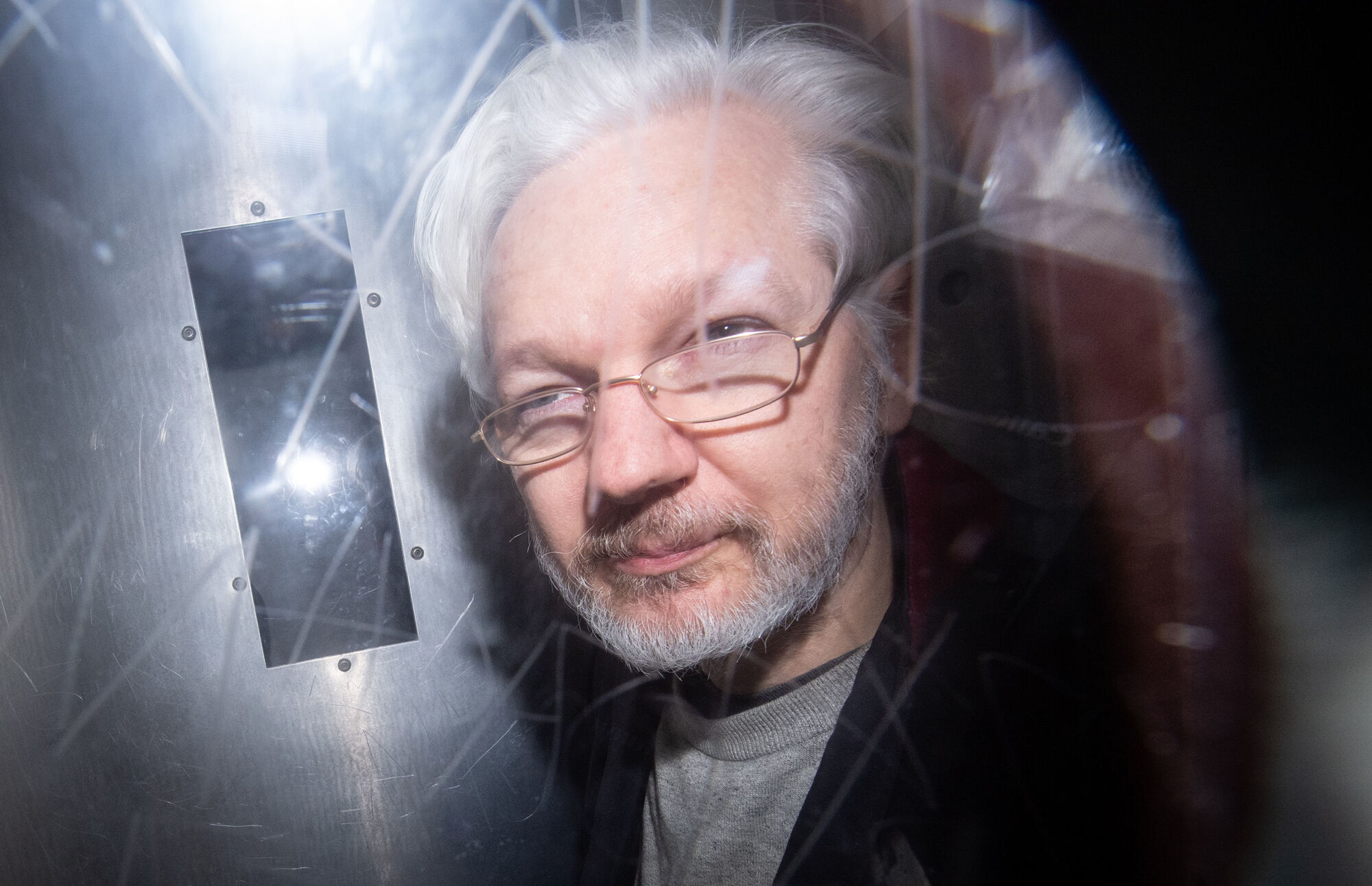
Julian Assange faces 18 counts of espionage and a possible sentence of 175 years in prison. Photo: Dominic Lipinski/PA
Julian Assange faces 18 counts of espionage and a possible sentence of 175 years in prison. Photo: Dominic Lipinski/PA

THE next two days could well decide whether Julian Assange spends the rest of his life in prison. 

How long that life would last were it subjected to the privations of the US prison system is open to conjecture. The hearing in London opening today is an appeal by the US government against the refusal of the British high court to extradite Assange for alleged spying.

In total, he faces 18 counts of espionage and a possible sentence of 175 years in prison. Assange’s alleged crime is that he published copious material on the WikiLeaks website in 2010 that exposed war crimes by the US and its allies in Iraq and Afghanistan.

The initial application by the Americans was rejected by the British high court last February. Judge Vanessa Baraitser ruled that if extradited, Assange would in all likelihood be held in isolated conditions in a so-called supermax prison and would be in danger of taking his own life.

“I find that the mental condition of Mr Assange is such that it would be oppressive to extradite him,” she said.

The judge did not accept that his actions were political and, therefore, protected from extradition. Neither, crucially, did she accept that he was protected on the basis that he was practising not espionage but journalism.

The ruling allowed the judge to wash her hands of the issue, secure in the knowledge she would not be responsible for his extradition, yet left the grounds for appeal wide and vast. If every extradition to the US was based on the conditions of its prisons, precious few would be granted.

Last Saturday, in around 20 locations in this State, small groups came together to attempt to marshal support for Assange ahead of his appeal. He has been held in Belmarsh high security prison for the last two-and-a-half years under conditions normally reserved for highly dangerous criminals.

Assange’s alleged crime amounts to publishing online a journalistic scoop acquired through leaked classified documents. The material was also published in newspapers around the world, including The Guardian in Britain and The New York Times

There are no criminal charges pending against those who edited or ran those newspapers at the time. Yet Assange is being treated like a captured drug lord.

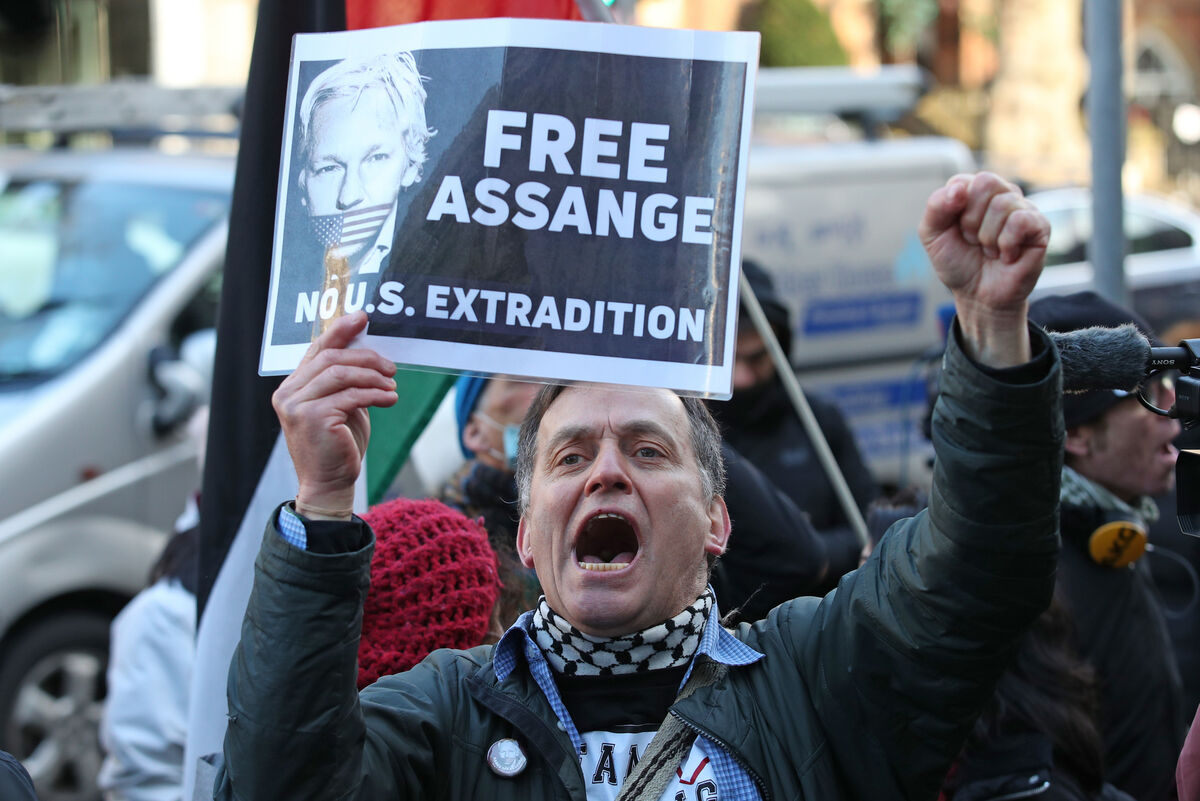
In Temple Bar’s New Theatre last Saturday, a crowd of about 50 gathered to hear a plea for feet on the street to support Assange. It was organised by Clare Daly and Mick Wallace and featured contributions from former UN senior official Denis Halliday and filmmaker Peadar King, known for his work on the Where In The World series on RTÉ television.

Halliday and King both recounted the human devastation visited on ordinary families in the countries where the US pursued war after 9/11. King’s account was particularly moving as he detailed the complete destruction of families as a result of bombing campaigns in Afghanistan that had absolutely no regard for the loss of civilian life.

Clare Daly last Saturday said: “If this case was taken against him 10 years ago, there would have been people on the street.”

Daly made a point that if the espionage charges had been pressed at the time the exposé was published, the public would not have been apathetic about Assange’s plight. “If this case was taken against him 10 years ago, there would have been people on the street,” she said.

In different circumstances, Assange’s case would be a cause celebre today. That it is not is, to a certain extent, down to the man himself. When WikiLeaks was functioning at full tilt, he constantly fell out with collaborators, including fellow journalists and editors. 

He gained a reputation for arrogance. There were credible allegations that he fed into Russian attempts to discredit Hillary Clinton in the 2016 US presidential election.

His seven-year stay in the Ecuadorian embassy in London between 2012 and 2019 was as a result of seeking asylum when there were attempts to extradite him to Sweden to face sexual assault charges. Assange claimed it was a ruse to get him to a country from which the Americans would find it easier to get their hands on him. The charges were dropped in 2015, lending weight to his theory about their provenance.

All of these issues have combined to project Assange as an unsympathetic individual. As a result, advocacy on his behalf has been muted.

Large media organisations have referenced the injustice to which he is being subjected, but with nothing like the fervour that would apply were he a character one could empathise with. There have been no high-profile campaigns to put pressure on the US to drop the case or the UK to stand firm against his extradition.

Clare Daly made reference to the “noise” around Assange’s character on Saturday and she rightly pointed out that the charges against him have nothing to do with any of that. The charges are simply that he got his hands on classified US government material and published it.

That is called journalism and the US constitution places great store on freedom of the press, yet here they want to criminalise a journalist who isn’t even an American citizen. The objective is quite obviously to send out a message that journalists will be punished severely if they attempt to access classified information even when it is patently vital to the public interest of not just the American people but the world at large.

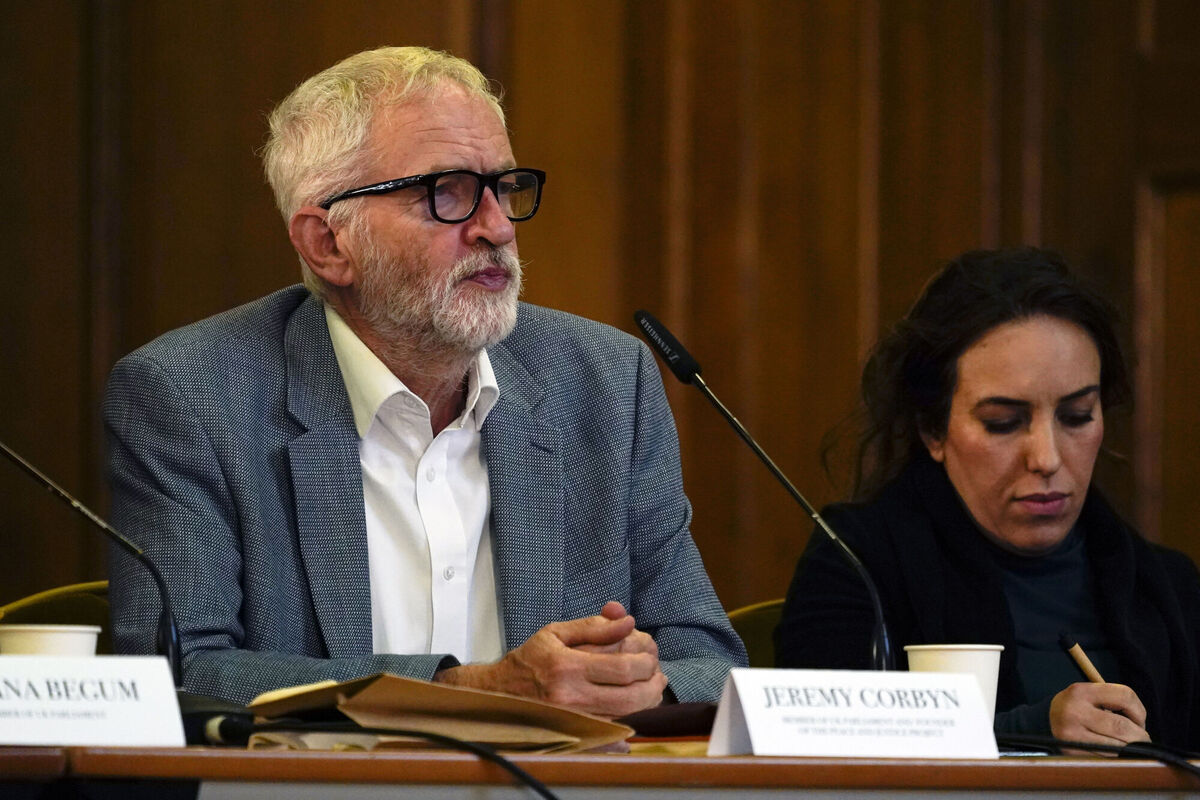
Britain's former leader of the Labour Party Jeremy Corbyn, left, and Stella Morris, partner of Julian Assange, attend the 'Belmarsh Tribunal', at Church House in London last Friday. Julian Assange has been held in Belmarsh high security prison for the last two-and-a-half years under conditions normally reserved for highly dangerous criminals. Photo: AP/Alberto Pezzali

That Assange does not come wrapped in the cape of an empathic character makes his case even more important. The narrative of the virtuous hero taking on the establishment powers and striking a blow for the dispossessed is one that exercises a strong pull on the public imagination. It’s easy to stand shoulder to shoulder with such individuals, particularly for political figures who enjoy basking in a reflected glow.

Assange is not such a character and, therefore, the force of his case lies almost entirely on the principle at issue. Like other freedoms, that of the media is often only appreciated when there are attempts to curtail or terminate it.

The Assange case is a vital example of how the most powerful government in the Western world is attempting to do just that. In such circumstances, the vagaries of Assange’s character are completely irrelevant.

If he is criminalised, if his life is to be spent rotting in a US prison, a vital element of democracy will have received a blow from which it will be difficult to recover.

  • A vigil in support of Julian Assange is being held outside Leinster House at 5.30pm today.
x

More in this section

Revoiced

Newsletter

Had a busy week? Sign up for some of the best reads from the week gone by. Selected just for you.

Cookie Policy Privacy Policy Brand Safety FAQ Help Contact Us Terms and Conditions

© Examiner Echo Group Limited