Norma Foley: There is no going back to 'how things were' in schools
'The future of our schools is a bright one and that is because of the work of our school communities and the priority placed on education by both wider society and Government under the most trying of circumstances,' writes Education Minister Norma Foley
Norma Foley: There is no going back to 'how things were' in schools

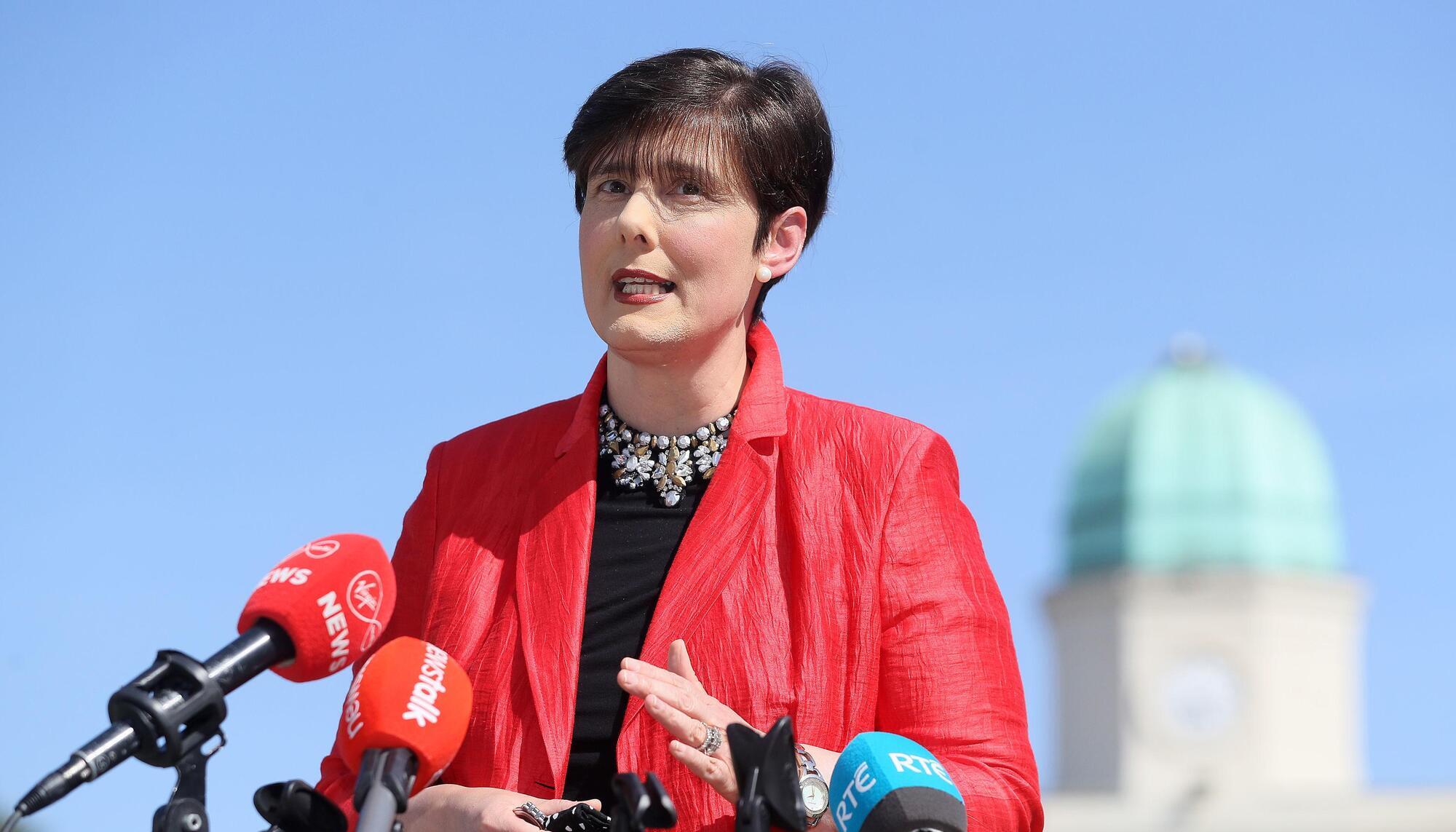
Education Minister Norma Foley: 'I do understand that in adapting to the unthinkable challenges that we have all faced together, it can be unnerving to move away from what has now become familiar. File picture: Brian Lawless/PA Wire

As the much loved stretch in the evening comes to a crisp end, all of us in the education system prepare for a new term filled with many, now familiar, routines and practices.

Since schools reopened, very significant infection prevention control measures have been put in place in schools. This has been supported by funding from the Department of Education.


Almost €650m has been allocated for Covid-19-related measures, including PPE, sanitation and enhanced cleaning. The department also provided €100m in 2020 to recognised primary, special and post-primary schools to address ICT needs.

That commitment has not waned and under the Covid Learning and Support Scheme (CLASS) provision has been made for up to €52m in extra teaching hours for schools. This is in addition to the €40m already allocated for the 2021 Enhanced Summer Education programme. €10m has also been spent this year on the Supplementary Education scheme, providing extra teaching support for pupils with complex special educational needs.

As we begin a new school term, it is still the view of the CMO Dr Tony Holohan and our public health experts that schools remain safe environments of low transmission. 

The Department of Education has always been guided by public health advice in relation to the infection prevention and control measures appropriate for schools. These measures are kept under constant review by public health. 

Under current public health advice, which was recently reviewed by Hiqa, it is a requirement for a face mask to be worn by staff and students attending post-primary school. Hiqa’s review did not advise that it should be mandatory for face coverings to be worn at primary level.

The department updated guidance for schools on ventilation at the end of May, following work by an expert group looking at the role of ventilation in managing Covid-19. The over-arching approach is for schools to have windows open as fully as possible when classrooms are not in use (break-times or lunch-times and at the end of each school day) and partially open when classrooms are in use.

CO2 monitors can play a part in providing a useful indication that rooms may not be adequately ventilated. The digital readings and multi-colour display on the CO2 monitors guide schools on the need to increase ventilation once it goes above the ‘green’ display of 800 CO2 parts per million. 

If a school has concerns about a poorly ventilated room, they are encouraged to seek professional advice from their local architect or engineer. I am confident the updated ventilation guidance and supports provided by my department provide a robust basis for managing in the year ahead.

On Monday morning, primary school children, parents and school staff across the length and breadth of the country, will take another enormous step forward. 

Following recent guidance from Nphet, the HSE announced that as of Monday September 27, routine contact tracing and restricting of movement for children identified as close contacts in settings such as childcare facilities, primary education and social and sporting groups will no longer take place.

Public health advice remains the same for any child in primary school with symptoms that may be consistent with Covid-19 – they should immediately self-isolate, they should not attend childcare, school or socialise, and, where appropriate, GP advice should be sought. This is the expert advice of the CMO Dr Tony Holohan and it is advice that we in the Department of Education will implement with complete confidence.

Since the beginning of the Covid-19 pandemic, public health experts have been reviewing the data and their observations and expertise conclude that children are more likely than adults to have no symptoms or to have mild disease. 

We now know also that investigation of cases identified in school settings suggests that child-to-child transmission in schools is uncommon and not the primary cause of Covid-19 infection in children, particularly in primary schools. We also know that even before the highly successful vaccination programme, child-to-adult transmission of Covid-19 in the school setting was very rare.

In fact Professor Philip Nolan recently confirmed to me, having examined the latest data, that children are rarely identified as the route of transmission of infection into the household setting and children are not more likely than adults to spread infection to others. He further confirmed that the rate for children testing positive for Covid-19 has fallen from 15% to just over 5% since schools reopened.

I do understand that in adapting to the unthinkable challenges that we have all faced together, it can be unnerving to move away from what has now become familiar. Sometimes, however, it is necessary to take a leap of faith and to put our trust in the integrity and expertise of those health professionals who have supported us throughout and are now leading us out of this terrible pandemic.

We must remain mindful that children and young people have also made sacrifices to protect the more vulnerable in society and have been hugely impacted by the necessity to keep them out of school in the phase of the pandemic from which we are now emerging.

I appreciate that no two schools have had the same experience over the past 18 months and I do not take the commitment and sacrifices of our school staff lightly.

It is important to highlight some of the important work carried out on a day-to-day basis in our schools. I have had the chance to visit a number of schools, both primary and post-primary and I have been continuously impressed by the dynamism, exuberance and flexibility of our staff on the ground. I often think that had we known before the advent of Covid-19 the mammoth task that lay ahead we would have simply baulked at the idea. But, today, I continue to be bowled over by the resilience shown by our school communities.

Yes, the pandemic closed doors, curtailing valuable interactions that have formed the foundations of teaching practices for years. But it also made us appreciate fully the value of in-person teaching and learning and of the excellence provided on a daily basis within Irish classrooms. 

Many schools have been physically remodelled, one-way systems introduced and playgrounds bisected to ensure pods of children could continue to flourish under trying circumstances. Behaviours have also altered as contacts continues to be minimised, often remaining socially distanced to ensure a safe, comforting and engaging learning environment.

And what I’ve learned is, there is no going back “to how things were”. The future of our schools is a bright one and that is because of the work of our school communities and the priority placed on education by both wider society and Government under the most trying of circumstances.

There is no doubt that these past two years have been filled with difficult decisions, quick pivots and daily demands which before Covid-19 seemed unimaginable. The determination, drive and generous good will shown by all of our school communities is inspiring. As we move into this new academic year, I wish all school communities well and look forward to continuing working with them in the days and months ahead.

  • Norma Foley is Minister for Education

More in this section

Revoiced

Newsletter

Sign up to the best reads of the week from irishexaminer.com selected just for you.

Cookie Policy Privacy Policy Brand Safety FAQ Help Contact Us Terms and Conditions

© Examiner Echo Group Limited