What does the Taliban’s return mean for al-Qaeda in Afghanistan?
The defeat of a superpower by Afghan Islamic fighters is a massive propaganda coup at a time when such groups are badly in need of a new narrative, writes Jason Burke
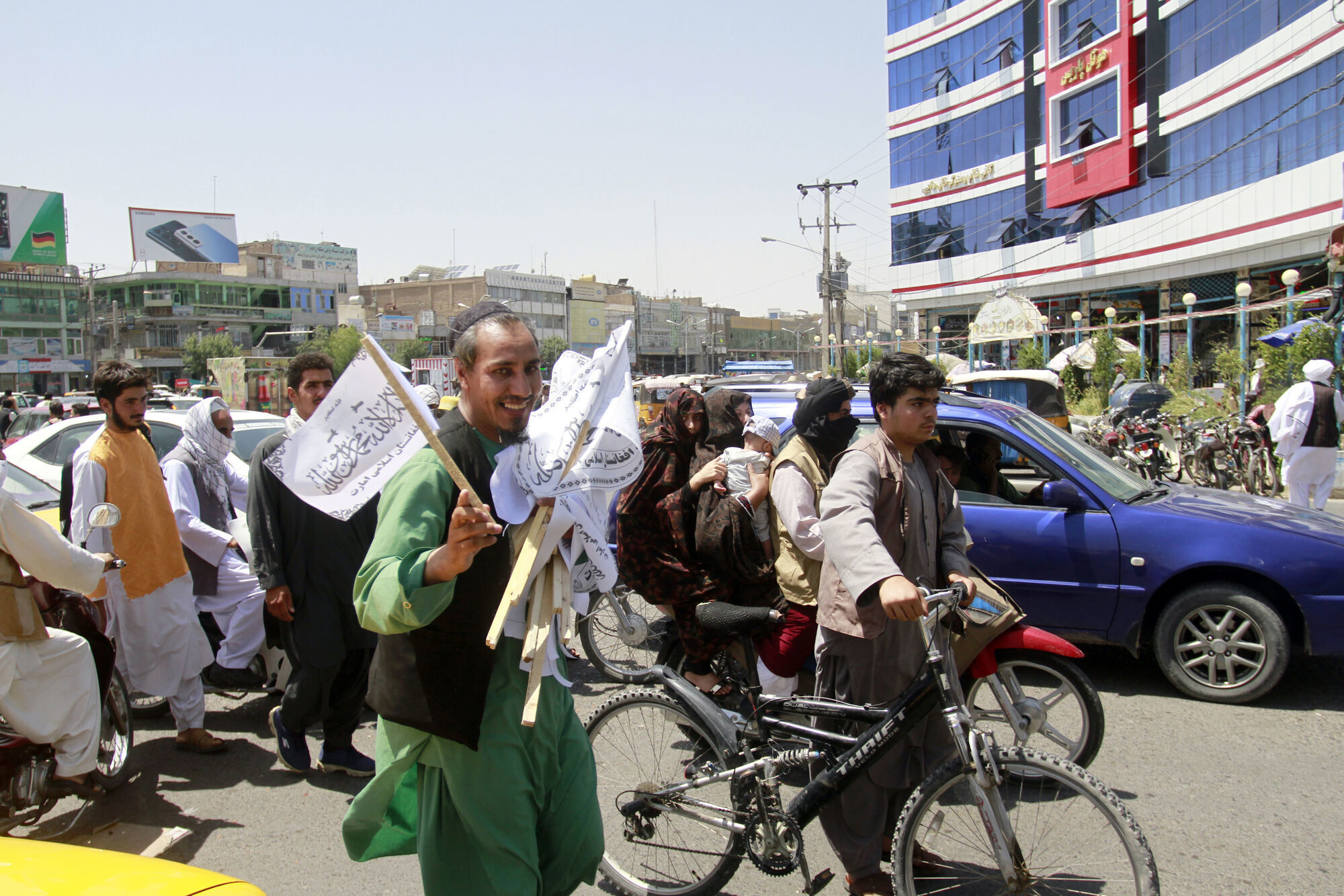
A man sells Taliban flags in Herat province, west of Kabul, Afghanistan. Picture: AP 

A man sells Taliban flags in Herat province, west of Kabul, Afghanistan. Picture: AP 

AS the Taliban prepares to rule Afghanistan after sweeping across the country in less than a week, an obvious question is what does it mean for al-Qaeda and other extremist Islamist groups committed to waging a global jihad.

There is no doubt that the astonishing rapidity of the Taliban’s victory will deliver a tremendous boost to Islamist extremists everywhere — whether al-Qaeda, Islamic State, fighters in Mozambique or Syria, or jihadi fanboys in bedsits in Birmingham or Manila.

Last week when asked about Afghanistan, Ben Wallace, the British defence secretary, told Sky that he was “absolutely worried that failed states are breeding grounds for those types of people” and that “al-Qaeda will probably come back”.

Plumes of smoke pour from the World Trade Center buildings in New York on September 11, 2001.

Mr Wallace was right to worry about failed states — the 9/11 attacks in 2001 were planned and prepared by al-Qaeda in Afghanistan when it was ruled by the Taliban — but wrong about the group making some kind of return. Al-Qaeda is already there.

UN study

Just last month, the UN published an assessment based on intelligence received from members stating that al-Qaeda “is present in at least 15 Afghan provinces” and al-Qaeda in the Indian sub-continent, an affiliate of the group, “operates under Taliban protection from Kandahar, Helmand and Nimruz provinces”. 

Al-Qaeda’s media celebrate its fighters’ apparently frequent operations in Afghanistan.

This was always a problem for the Biden administration, and one it tried to ignore. As part of last year’s deal with the US, the Taliban pledged not to allow training, fundraising or recruitment “of terrorists, including al-Qaeda, that would threaten the security of the United States and our allies”.

Zalmay Khalilzad, the US special representative for Afghanistan reconciliation, told Congress in May that the Taliban had “made substantial progress” in meeting these commitments. However, even if that was true then, and it probably wasn’t, all bets are now off.

It is unclear what attitude the Taliban will adopt towards al-Qaeda or other Islamist extremists committed to transnational campaigns of violence based in Afghanistan. Nor is it clear how al-Qaeda will react to recent events.

The defeat by the Afghan mujahideen of the Soviets in 1989 became a foundational myth that contributed significantly to the rise of the entire contemporary global jihadist movement, even though al-Qaeda played a negligible role in the war. The defeat of a second superpower by a new band of Afghan Islamic fighters is a massive propaganda coup at a time when all such groups are badly in need of a new narrative.

What is al-Qaeda planning?

Al-Qaeda, like all the others, will be emboldened, but to do what exactly?

One of the many reasons for the US failures in Afghanistan was an inability in the early years of the conflict there to distinguish between al-Qaeda — a small group of largely Arab Islamists committed to the overthrow of regimes in the Middle East, as well as a war against Israel and the West — and the Taliban, a reactionary Afghan movement with a strong local ethnic and nationalist element that aimed to impose a rigorous religious rule on a single country.

Relations between the Taliban, which contains many different factions, and al-Qaeda have evolved dramatically since. Sometimes these have been fractious, but increasingly they have been the opposite. As the decades have passed, personal relationships and familial links have been forged. Leaders of other militant networks have acted as intermediaries. Some priorities still differ, but the Taliban is very much more globally aware than it was 20 years ago, sharing elements of the al-Qaeda world view in new and important ways.

US intelligence services have characterised the relationship as “close”.

However, the victorious Taliban will also seek international legitimacy. It did so when in power before, and will do again. The question is from whom and what compromises Taliban leaders might be prepared to make to achieve it.

Shift in strategy

One key factor for the relationship with al-Qaeda may be the strategic shift implemented by Ayman al-Zawahiri when the Egyptian veteran militant took over the leadership of the group after the death of Osama bin Laden in 2011 US raid in Pakistan.

Osma bin Laden, right, listens as his top deputy Ayman al-Zawahri speaks in 2002.

Zawahiri stopped long-range attacks on the “far enemy” in the West, instead seeking to win support and legitimacy in unstable, conflict-torn parts of the Islamic world, where he believes expansion opportunities exist and the “near enemy” of local regimes can be better fought. 

Instead of flying planes into US cities, al-Qaeda has sought to build a reputation for competent governance and protection of communities that feel marginalised or threatened. This will make it easier for the Taliban — which has not been directly blamed for any international terrorism and doesn’t want to be — to maintain its current de facto alliance with the group.

However, Western and other security officials maintain that Zawahiri is very ill, and there is no guarantee that his strategy will survive his death or recent events in Afghanistan.

The opportunities provided by the combination of a ramshackle Taliban-run Afghanistan, a US defeat at the hands of an Islamist militia, a Middle East that has experienced two decades of polarising and radicalising violence, and the unprecedented spread of the extremist jihadi ideologies to all corners of the world will be evident not just to any successor to Zawahiri, but to everyone.

Even if al-Qaeda does not try to take advantage of these new circumstances, others will. They may try with the encouragement of Afghanistan’s rulers or against their express will, but they will try.

  • Guardian

    More in this section

    Revoiced

    Newsletter

    Had a busy week? Sign up for some of the best reads from the week gone by. Selected just for you.

    Cookie Policy Privacy Policy Brand Safety FAQ Help Contact Us Terms and Conditions

    © Examiner Echo Group Limited