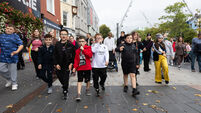
Sexual violence begins much earlier than adulthood, and needs to be tackled then too
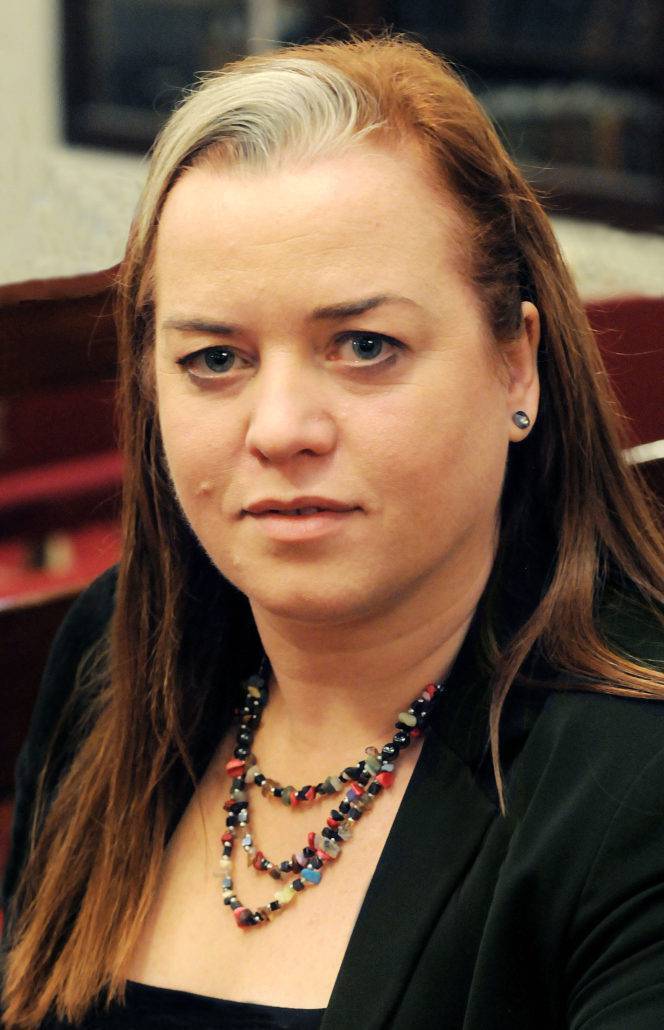
Clíona Saidléar, executive director of Rape Crisis Network Ireland says early intervention in children's lives is the strongest commitment we can make to prevention and protection from sexual violence.
Let’s face it, we all know that sexual violence doesn’t suddenly start at 18.
But what do we really know about what happens to our children and sexual harassment before they become adults?
Particularly the child who we no longer think of as a child but who is not yet an adult — the adolescent.
Because we have rarely, if ever, asked them, we know little beyond our imaginings until now.
Rape Crisis Network Ireland (RCNI) next week will release new data where adolescents and youth workers told us about the sexual harassment in their lives in the preceding 12 months.
This matters because early intervention in children's lives is the strongest commitment we can make to prevention and protection from sexual violence.
RCNI will launch a report on Thursday, July 29, that addresses a critical gap in our knowledge regarding adolescent experiences of sexual harassment — 'Storm and Stress: An Exploration of Sexual Harassment Among Adolescents: Experience and Understanding’.
The origins of the report can be traced back to 2013 when RCNI published our first statistical report on children's experiences of sexual violence —
'Hearing child survivors of sexual violence: Towards a national response'.
We noted then that the knowledge and understanding of the extent of sexual harassment perpetrated and experienced by Irish adolescents, was extremely limited.
Dr Michelle Walsh, a rape crisis counsellor and educator from the Midwest Rape Crisis Centre and now RCNI’s clinical lead, undertook a PhD in 2016 to fill this knowledge gap.
The study outlines the amount of sexual harassment witnessed and experienced by 600 Irish adolescents and within their peer groups, over a 12-month period.
Last month we informed the Joint Oireachtas Education Committee examining school bullying that 80% of adolescents disclosed being subjected to some form of sexual harassment with 78% of them saying that sexual harassment occurred within their peer community.
Twenty-eight per cent of adolescents witnessed physical or extreme forms of sexual harassment.
The report found that vulnerability to sexual harassment and abuse increases with age and is heavily impacted by sex and gender non-conformity.
Both female vulnerability to sexual violence, and acting out of harmful sexual behaviours in males manifest when the child is under the age of 13 and increases exponentially with age.
If sexual violence perpetrated against a child is not adequately addressed as early as possible, the child is at a much higher risk of being subjected to further and more extreme forms of sexual violence throughout their life.
Children also engage in progressively more serious forms of harmful sexualised behaviour and perpetration as they get older.
When discussing the introduction of education and awareness on relationship and sexual education it is important to bear in mind that our society already provides comprehensive training around sex.
This is a training in sexism and gender inequality; this training starts as soon as socialisation starts and is well developed by the time children reach second-level schools.
The cognitive changes relating to sexual behaviour that occur during adolescence often involve working out how to address and deal with desires and learning to successfully and appropriately incorporate sex into intimate peer relationships.
This period in adolescent development is often referred to by developmentalists as a time of ‘storm and stress’, which was used as the title for this research.
Adolescents will use the tools we have given them to navigate these changes and not all these tools are positive or healthy.
For many years RCNI has been calling for the Department of Education and Skills to put in place a national policy on sexual harassment for second-level schools.
This would include counting sexual harassment and assault and addressing the negative social, educational, and psychological harms associated with sexual bullying and violence.
RCNI have also strongly concluded that good curriculum content, (development of which is underway), is insufficient by itself to address this problem.
We need a whole of system approach; we must move from the classroom into the corridor.
This has not happened yet.
Next week we present the evidence from the voices of these 600 adolescents. We hope they will be listened to.
- Clíona Saidléar is Executive Director of Rape Crisis Network Ireland. Registration for the launch of ‘Storm and Stress: An Exploration of Sexual Harassment Among Adolescents: Experience and Understanding’ is open at www.rcni.ie