Lorna Bogue: Politicians are not taking climate crisis seriously despite the evidence
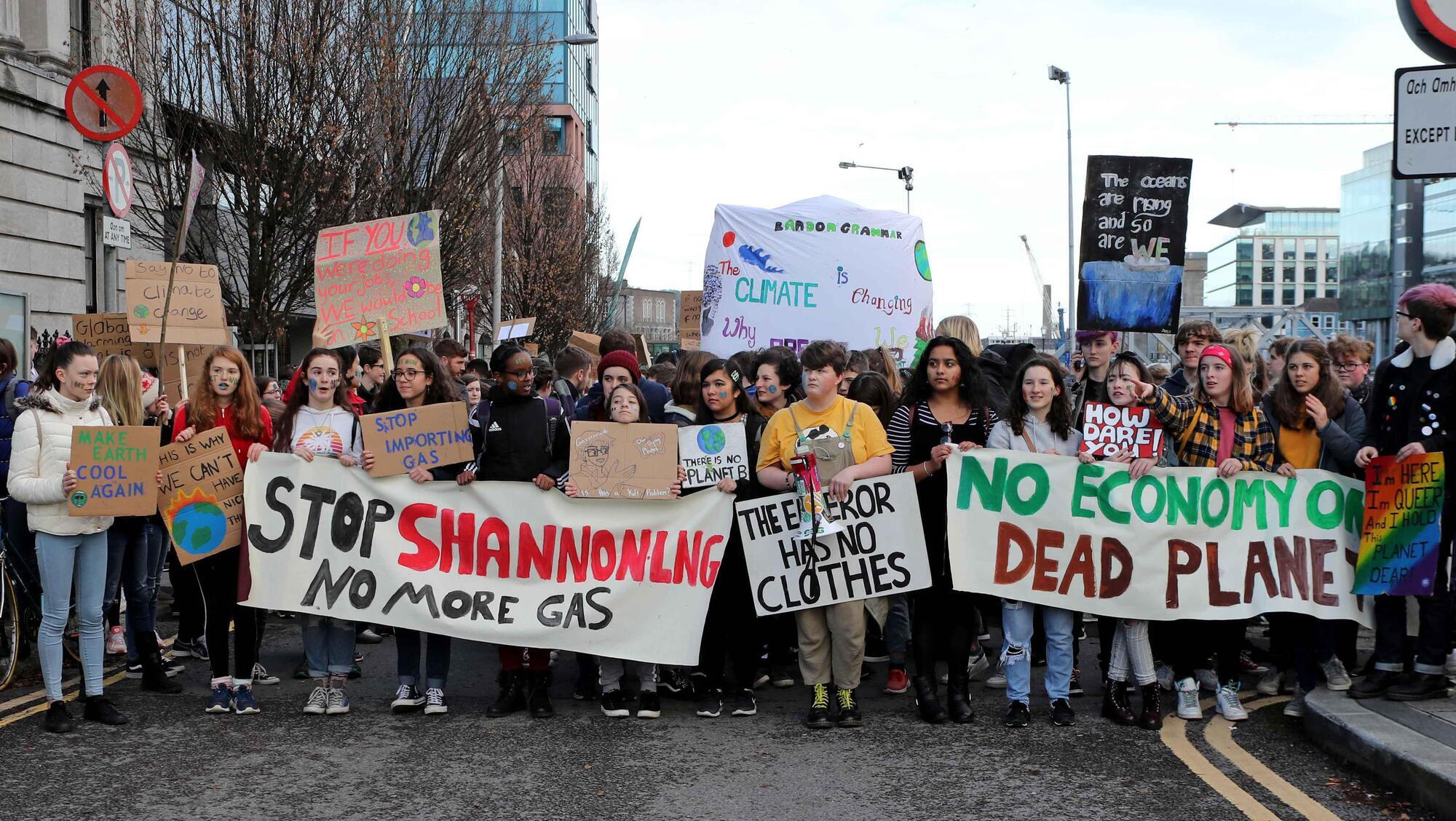
Governments are relying on the young to make the changes they won’t implement themselves. School Climate Action Network, Friday's For Future, Climate Strike, on Lapps Quay, Cork, recently. Photo: Jim Coughlan
This summer as we swelter under temperature warnings in Ireland, we bear witness to the northern hemisphere's most extreme weather events in recorded history. Climatologists warn that this is only the beginning.
With heat waves and flooding killing hundreds in Canada and Germany respectively, we would expect governments and political parties to jump into emergency mode in a bid to reduce emissions rapidly. Instead the political approach in the global north has been to underplay the significance of climate breakdown in these tragic events.
This narrative is as unsustainable as the carbon intensive industries it seeks to protect. It also does disservice to the global south, which acutely suffers these events despite contributing least to global emissions.
In Germany, Armin Laschet, the frontrunner to replace Angela Merkel as chancellor, was caught laughing on camera while the president gave a solemn address at a flood scene. While Laschet, the premier of Germany’s coal mining heartland of North Rhine-Westphalia, is known for resistance to phasing out fossil fuels, his nonchalance in the face of shattering human loss sparked outrage.
With the German Green Party narrowly pipping Laschet's CDU party in polls, this gaffe could prove decisive in elections later this year.
The German Greens have proven themselves agile in collaborating with parties all across the spectrum but expectations will be high should they become the dominant party.
However, their emissions reduction goal of 70% by 2030 will prove difficult should they require support from fossil fuel and industry-driven parties like CDU.
This is a familiar story. Navigating the space between seemingly polar opposite goals is a challenge faced by green parties, resulting in mission creep. Growing demand for climate action has sprung Green Parties into governments on a cyclical basis since the 1980s.
In Luxembourg and Austria, the Greens compromised key positions on the premise of getting climate action over the line. Generally, such compromise takes the form of abandoning positions on human rights and developing strong systems of local democracy. Inevitably, the climate goals of these parties are also eroded.
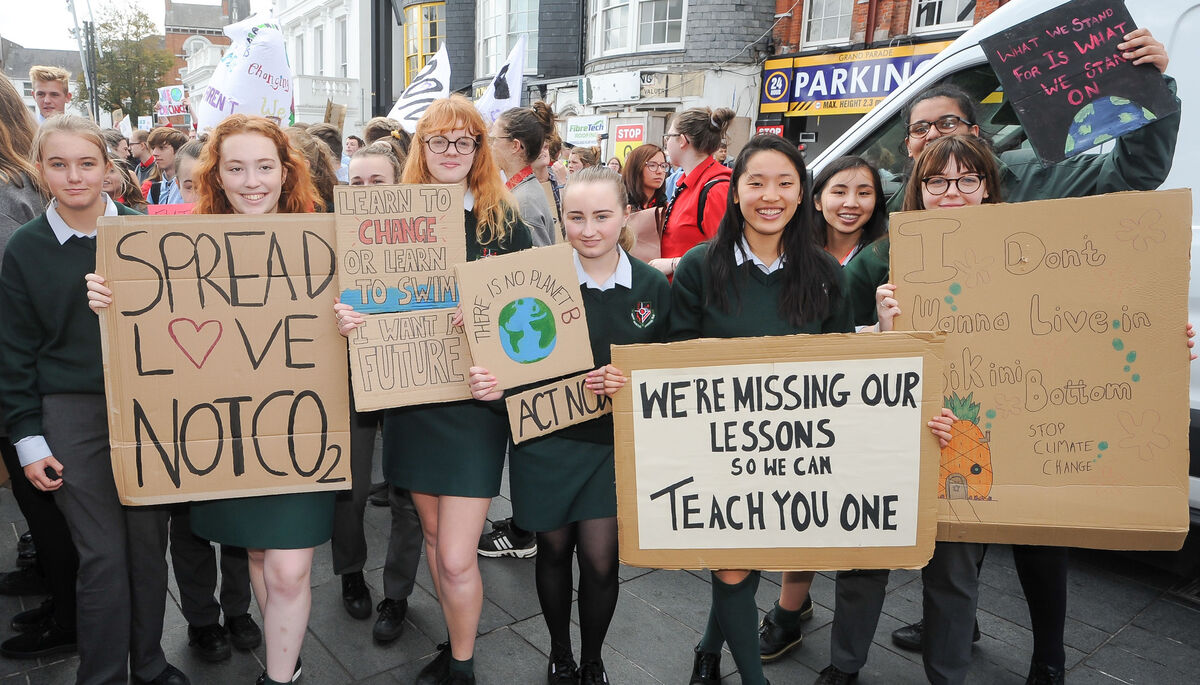
What should be clear is that climate action requires public support. Climate action and human rights in fact are symbiotic. Rather than being pragmatic, these compromises create instability in the foundations of climate action.
By favouring technocratic approaches to climate action while in government, some green parties have lost their support amongst the public and lost touch with politics. In this instance, politics, rather than being a word describing the indulgent gameplaying all green parties engage in from opposition benches; should be understood, and always has been, a discursive space through which the grassroots movements underpinning climate action at a local level assert themselves and lend the power of their collective voice to decision-makers.
The Irish Green party caught a wave of climate awareness generated by the climate strikers to win a record 12 seats. This same Green Party, a year later, diluted their own ill-prepared Climate Bill to create headroom for increased carbon emissions.
In this they were outclassed politically by a group of Fianna Fáil and Fine Gael senators who presented, unchallenged, lobbying disguised as public support. These changes undermined carbon counting systems integral to the operationalisation of the bill.
Self-isolated from the grassroots and confronted with their own predictable failure, the Green Party adopts a defensive position of managing the expectations of grassroots movements and drowning critique with spurious boosterism. Through this process they relinquish the capacity to speak truth to power on the climate crisis.
These critiques may appear harsh, but these are harsh times. The climate crisis is existential in nature. By the time this slow process shifts up a gear into being undeniable by the State and the institutions of the State; it will be too late.
Many political parties go into elections promising a better future and make qualitative claims on different flavours of how that better future might look. The problem with the climate crisis is its outcome is to cancel the future.
The political promise that must be made then to people growing up now is not between types of future, rather it is if there will be a future at all. It is one thing to compromise with another party, it is another altogether to knowingly compromise your own children’s future existence.
Over the week, climate commentators have set their store on the young. They accept the flawed Climate Bill as a milestone, but while toning down critique of the inadequacy of this generation’s response they hold up young people as being the way forward.
The young will make the changes we won’t implement ourselves. With respect, this is not good enough. Abdication of intergenerational responsibility brought us here.
Accepting the shapes of our economies in the global north, and the consumption patterns foisted on people through outdated and irrational systems of resource distribution has diminished our collective capacity to guarantee a habitable planet. When billionaires jet off the face of the earth that has given them such fabulous wealth, it begs the question, ‘what exactly are they looking for in outer space?’.
It is possible, although difficult, to turn the ship around and that involves firstly identifying the problems. Many of our state bodies focus on maintaining our tax haven status to increase GDP through FDI.
In doing so, our administrative faculties are so influenced by private interests it's difficult to tell them apart at times. We have agricultural and forestry policies prioritising corporate profit over workers conditions and efficient production of secure resources.
Our town planning is developer-led and environmental regulation is weak. Often we view these problems as being insurmountable. This feeling is because they interlink in complex knots that are man-made.
Complexity is something that we individually navigate everyday. What we require is for the institutions of the State and our politicians to help us in undoing these knots. Politics can provide tools to do this.
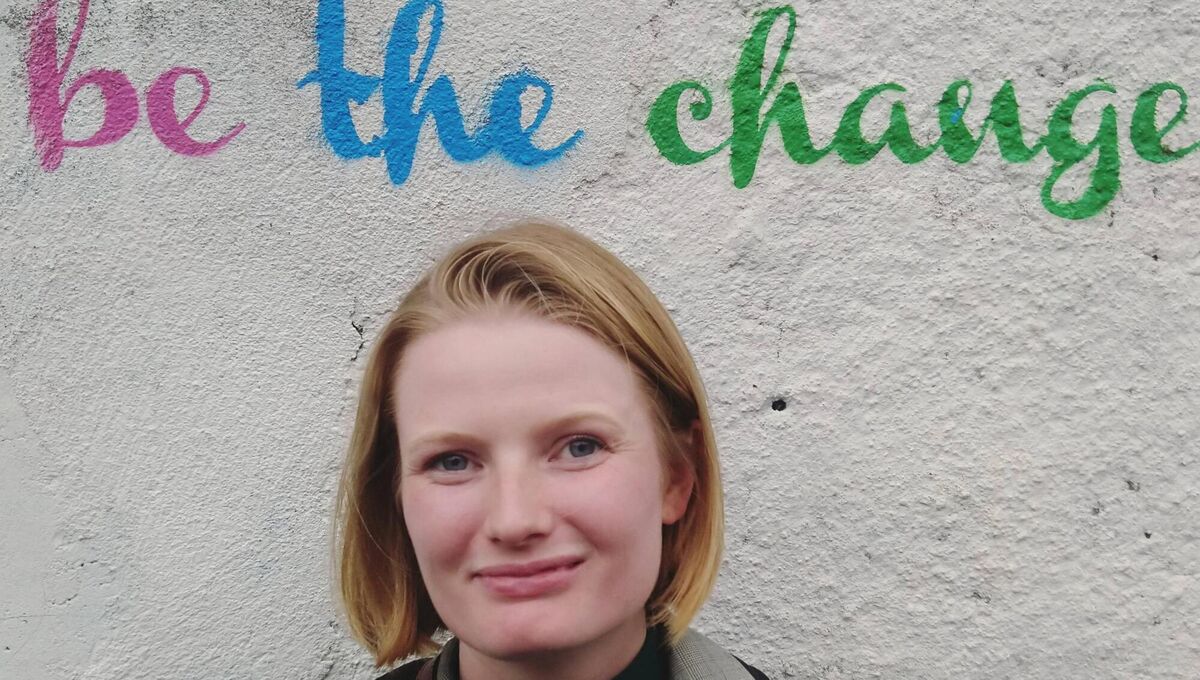
It is possible to have a politics that actively dismantles logics that have created inefficiency and human suffering. It is possible to take on the role of progressives and abandon managerialism. What younger generations need to address climate crisis is a form of politics that transforms from ego to eco.
This political shift needs those in today’s governments to engage in critical thinking and to share knowledge of errors and deficiencies. It is forgivable to be wrong, or through inexperience to be outplayed if effort is made to rectify errors.
It is unforgivable however to double down and inflict these errors on another generation. Electorates entrust Green Parties across the world to build this politics and make governments take climate seriously. We cannot afford for them to fail again.
- Lorna Bogue is a Cork City Councillor and founder of An Rabharta Glas.

CLIMATE & SUSTAINABILITY HUB
CONNECT WITH US TODAY



Be the first to know the latest news and updates