Mairead Enright: Flawed Mother and Baby report cannot be allowed to stand
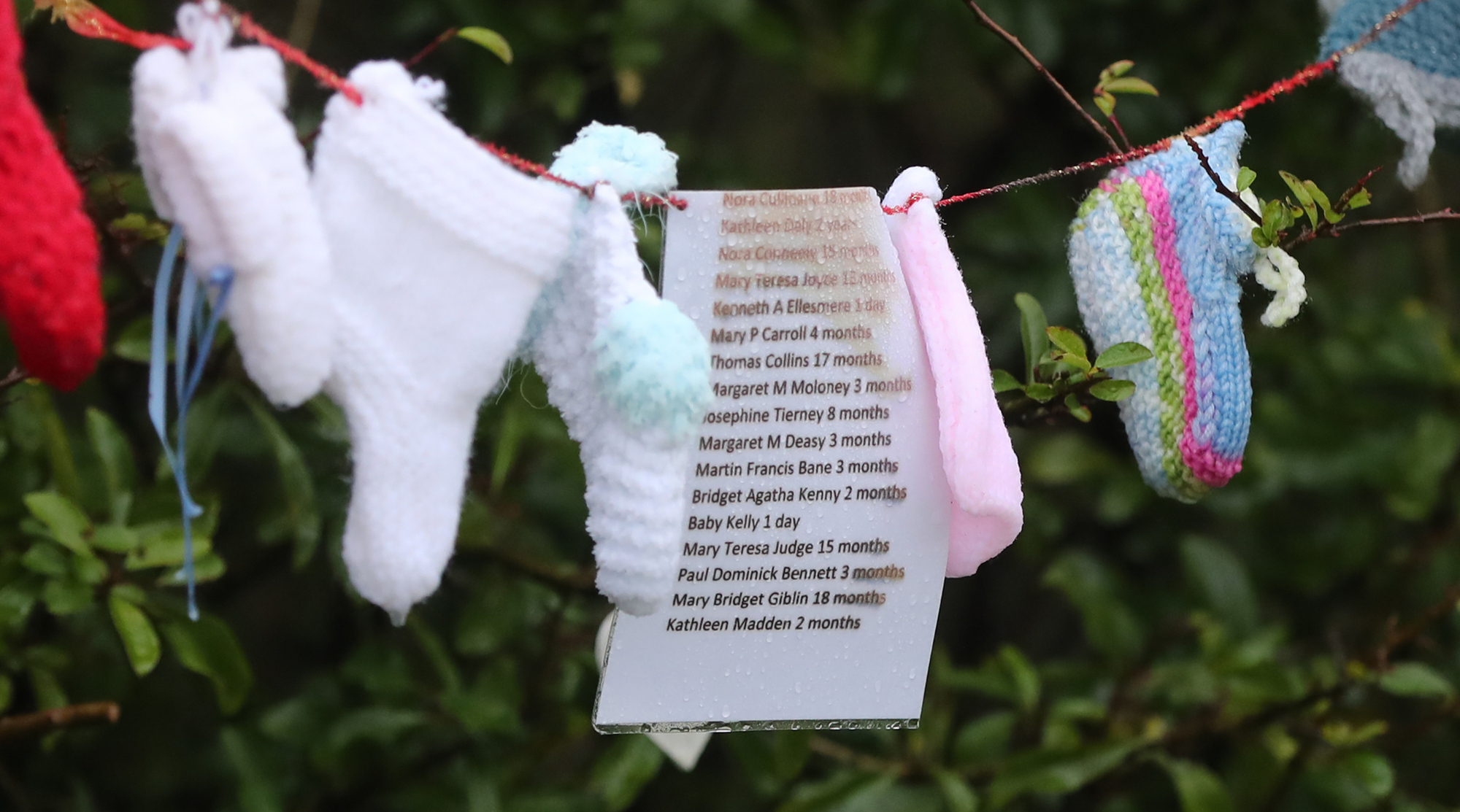
The High Court has seen eight survivors bring cases against the State from women over Mother and Baby homes. These are the first in what is expected to be a large number of such cases. Picture: Niall Carson/PA
When the Mother and Baby Homes Commission of Investigation report was published earlier this year, many people were surprised by its limited findings.
The commission found “little” evidence of physical abuse, “no evidence” of gross abuse, “no evidence” that women were involuntarily detained, “no evidence” of forced adoption and so on.
At the same time, in the separate report compiled by the commission’s confidential committee, we found pages and pages of detailed personal testimony describing those very abuses. It was difficult to account for these contradictions and the report did not explain them.
Now, months later, we have more clarity.
The confidential committee provided an informal space, where people could provide oral testimony without intensive questioning. Hundreds of survivors of the homes and their families gave evidence to the confidential committee. All of that evidence was apparently ignored. Mary Daly said that this happened for legal reasons; because evidence given to the confidential committee was not given under oath.
In February, people who went to the Confidential Committee spoke out about the flaws in its processes. Many who were eager to contribute to the commission’s main report were not facilitated to give evidence in ways that would meet the ‘robust’ legal standards that the commission decided to adopt.
The commission did not support them to submit evidence in a sworn written statement or to attend the investigative committee and submit to questioning. In effect, their evidence was ignored because they did not swear oaths that they were never given the opportunity to swear.
In any event, Prof Daly is confused about the legal standards that apply to a commission’s use of unsworn oral testimony. Put simply, different principles apply to findings of a ‘general nature’, than apply to detailed findings of serious wrongdoing by specific individuals or organisations.
It would have been impossible for the commission to draw specific conclusions about individuals’ responsibility for criminal offences or human rights abuses solely on the basis of honest but untested confidential committee evidence. Basic principles of due process and natural justice apply to commissions of investigation.
By contrast, the commission could have drawn on confidential committee evidence to support findings of systemic failures, repeated patterns of human rights abuse, or common experiences of neglect. It could have added that evidence to archival evidence and witness statements, and decided what weight to give to oral testimony in coming to each finding of fact.
In many places, the main report discloses ‘limited’ evidence of serious abuse, based on the small number of oral and written statements given to the investigative committee. Where this evidence is corroborated by hundreds of similar statements to the confidential committee, there is a good case for taking it into account.
‘Limited’ evidence might then become ‘significant’ evidence; a finding that certain abuses may have occurred can become a finding that they probably did, or a recommendation that the State urgently investigate further.
It is expensive and time-consuming to deal with evidence of traumatic personal experience given outside of a legal setting. Nevertheless, that was the commission’s role.
It could have hired and consulted with Irish and international experts to fill gaps in its own expertise.
It could have used its interim reports to draw Oireachtas attention to its difficulties in producing a body of usable oral evidence.
It could have engaged openly with the Clann Project, which repeatedly drew attention to flaws in the commission’s methods.
Instead, it is clear from ProfDaly’s statements that the commission disregarded key evidence, and left half of its budget unspent rather than incorporate key oral evidence into its investigative processes.
Prof Daly repeatedly invoked the commission’s terms of reference as a constraint on her work, preventing any use of confidential committee evidence. However, Article 4 of those Terms of Reference is very clear.
The commission was asked to compile a report of a ‘general nature’ based on evidence heard by the confidential committee. Article 4 then says that the commission may “to the extent it considers appropriate rely” on that report to “inform its investigations”. The commission had discretion to make some use of all of that oral testimony.
There was no blanket exclusion in force.
In the end, the commission has not escaped legal conflict; eight survivors are bringing judicial review actions in the High Court, all related to how the commission treated their evidence.
There was no real risk that the commission would publish evidence given in the confidential committee accusing an identifiable person of serious wrongdoing, without allowing them to defend themselves. The confidential committee evidence was anonymised.
Prof Daly also described how lawyers for relevant people and organisations exercised their rights under s.34 of the Commissions of Investigation Act 2004, to scrutinise the report in draft, make submissions and request changes. Therefore, the decision to ignore confidential committee evidence entirely was overkill.
This unbalanced and conservative legal culture is a recurring theme in the State’s attempts to address the legacies of institutional abuse in Ireland.
Whether the issue is access to personal records, transcripts, burial records, or birth certificates or access to justice itself, the State’s legal advisors repeatedly treat survivors as an inconvenience.
The result on this occasion is a half-complete investigation, a flawed report, and a series of findings that cannot be allowed to stand. In the end, the State’s miserable approach to its own basic law costs us much more than it saves; in time, public resources, and the dignity and trust of Irish citizens who deserve much better.
- Máiréad Enright is a reader in Feminist Legal Studies and Leverhulme Research Fellow at Birmingham Law School.
CONNECT WITH US TODAY



Be the first to know the latest news and updates