Ireland's Defence Forces in the last chance saloon
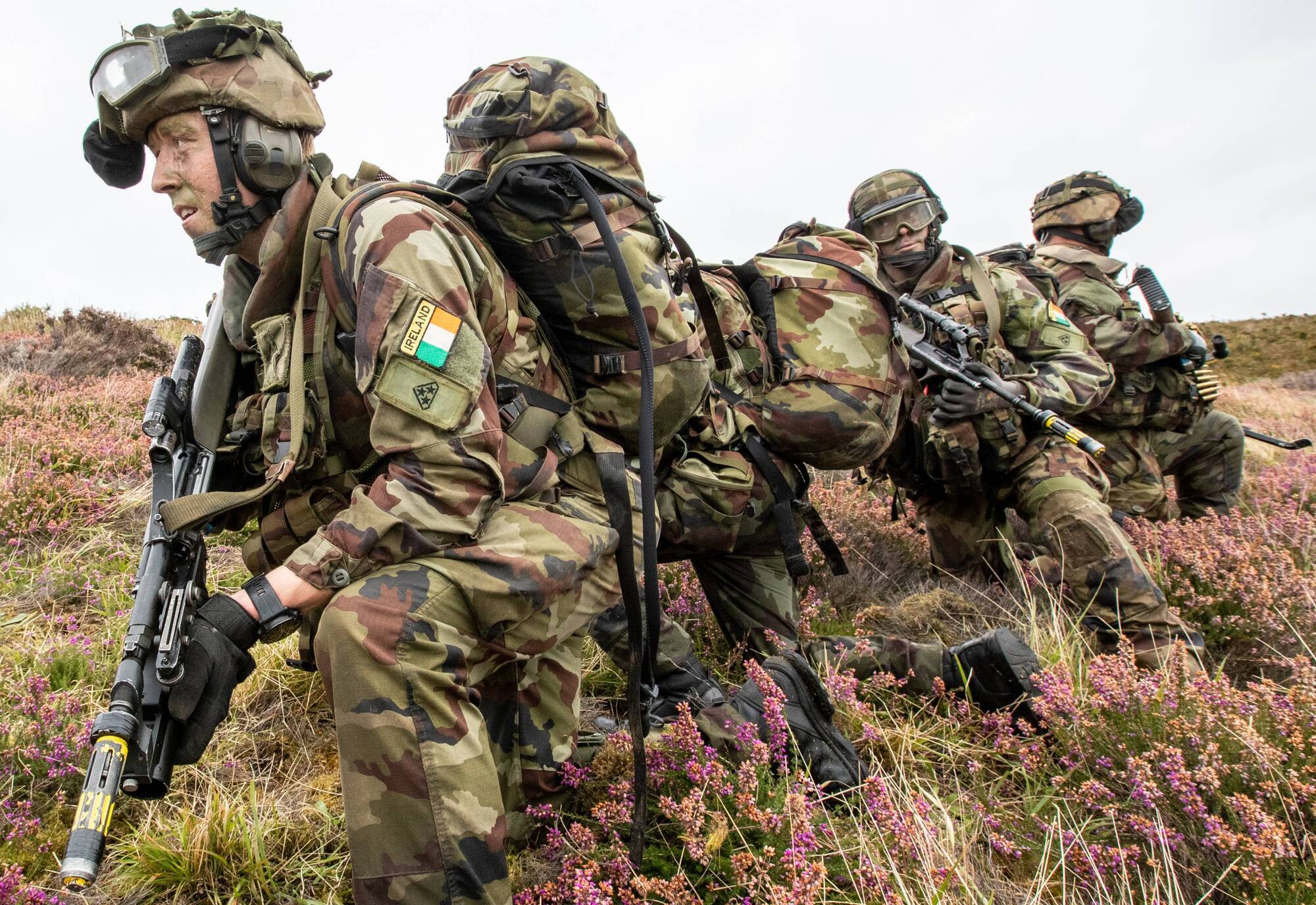
Given the historical cyclical pattern of war in Europe, and the unique threat to internal security in Ireland, the steady decline in the Defence Forces' capabilities is past the point where it poses a long-term existential threat to the State itself.
If the current decline in defence spending continues, at the same rate as it has over the past eight years, the Defence Forces will cease to exist within the next eight years. Since 1980, defence spending fell gradually by two thirds, from 1.67% of GDP in 1980, down to 0.56% in 2012. In the subsequent eight years to 2020, inclusive, it fell by half, from 0.56% to its current level of 0.27%. At an average annual decline of 0.035%, defence funding will cease completely in August 2028.
Given this situation, the Commission on the Defence Forces, which is due to report at the end of this year, could well conclude that the Defence Forces are underfunded and unable to realistically fulfil the roles assigned by the Government. It could recommend substantial increases in defence funding, over the next 10 years, to bring it up close to the EU average of 1.2% of GDP. Since conscription is not politically acceptable, the only viable alternative would be to phase out the Defence Forces and make alternative arrangements.
In this scenario, the Government, faced with massive recovery costs as a result of the Covid-19 Pandemic, opts to stand down the Defence Forces.
The alternative arrangements include a plan to increase the Gardai by 2,000 personnel, mostly in Border areas, and reverting them to being an armed force similar to the old RIC. An offer by Ireland to sign a mutual defence treaty with the UK has been declined, as Ireland would not be making any contribution to its own national defence. However, the Government negotiates a 99 year lease with the UK Government to take over Haulbowline Naval Base and Dockyard, Casement Air Station at Baldonnel, Knock Airport and for shared facilities at Shannon Airport for the RAF. A Hong Kong consortium buys up the Curragh Camp and surrounding Department of Defence lands. A generous, but mandatory, retirement scheme is supervised by the Department of Defence. By the end of 2024, all military personnel are withdrawn from peacekeeping missions. The Government hails the standing down of the Defence Forces as an example of the Irish people’s commitment to World Peace.
Of course, no one expects this to happen.
The Minister for Defence, Simon Coveney TD has mentioned additional funding for defence over the next four years, which is a good sign that this Government have decided to halt the catastrophic decline in defence spending.

Nevertheless, the decline in spending, and its likely consequences, have been brought to the attention of successive governments by the military leadership, the representative associations, by veteran’s organisations and, for sure, by the Department of Defence itself.
But where does the ‘buck ‘ stop? For the most part, the political leadership of this country, to put it delicately, are inadequately enlightened on defence matters. How has this come about? The answer is simple, really. They are all products of an educational system that does not explain to our children why we need defence forces, and what the consequences of loss of independence mean for nations that neglect their national defence.
Given the historical cyclical pattern of war in Europe and the unique threat to internal security in Ireland, the steady decline in Defence Forces' capabilities is past the point where it poses a long-term existential threat to the State itself.
The slow relentless downgrading of the Defence Forces may have had, so far, little or no immediate effect on the lives of our citizens. True, in old garrison towns like Mullingar, Clonmel, Fermoy and Ballincollig, they still have memories of a time when local army units gave the younger generation a real opportunity to ‘live a life less ordinary’.
So now, as we approach the centenary of our Independence, the army has lost the means to function in a modern conflict zone, other than in limited peace support operations. The Air Corps has no jet interceptor capability to protect our skies and the Naval Service has not got a single warship capable of naval combat. The Reserve is down, from 15,000 personnel in 1980, to approximately 1,700 men and women, leaving the country with effectively no capacity to expand in time of emergency.
Two simple comparisons illustrate how bad things have got. Just imagine where we would be if State funding for education stopped at primary school level? Or if the Government decided to close down most of our hospitals in favour of ‘bush’ clinics?
Recovering from the long decline in Defence Forces capabilities will take many years, perhaps decades. The current Commission on the Defence Forces must not flinch from making the recommendations necessary to give the Defence Forces the means to meet its national defence responsibilities.
Until then, the Defence Forces are in the last chance saloon.

CONNECT WITH US TODAY



Be the first to know the latest news and updates