Elaine Loughlin: Expectant parents are being forgotten as the country reopens
Elaine Loughlin: The ad-hoc system of maternity restrictions highlights a much larger issue around a lack of investment in services which has forced doctors and nurses to fundraise for essential equipment and use hallways as offices.
For decades, expectant mothers, their babies and the dedicated medical professionals who care for them have been neglected, so why would we expect it to be any different during this pandemic?
The ad-hoc system of maternity restrictions highlights a much larger issue around a lack of investment in services which has forced doctors and nurses to fundraise for essential equipment and use hallways as offices.
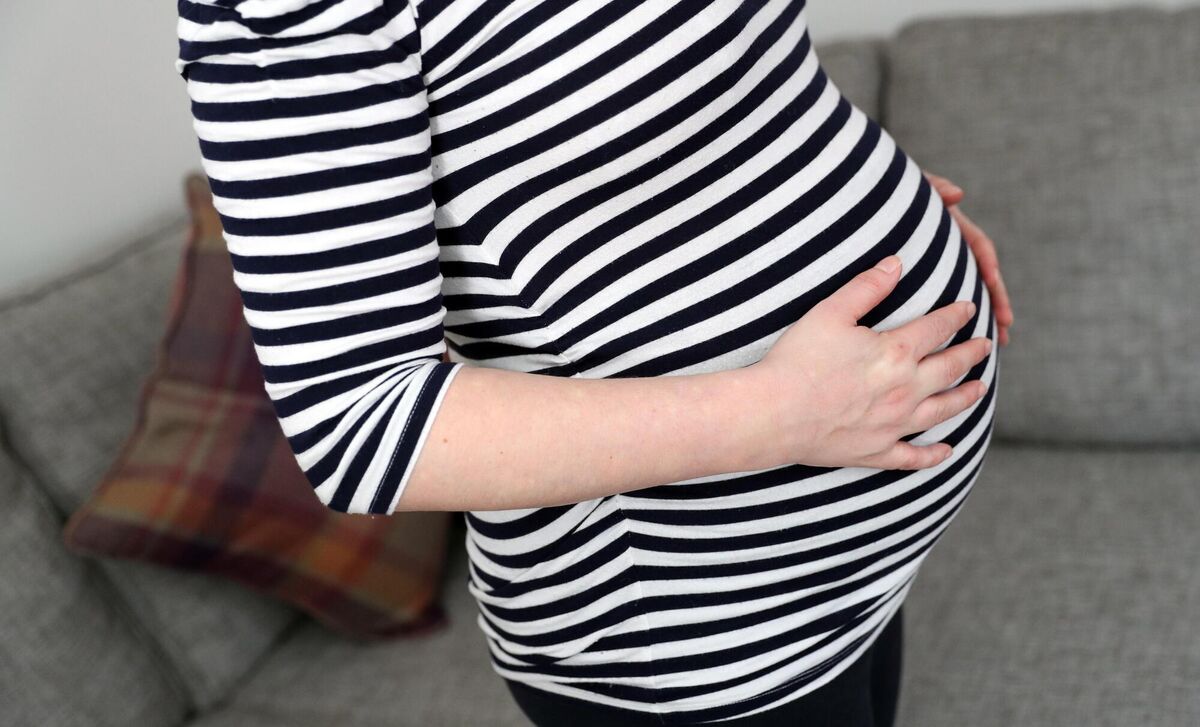
It feels so wrong that as of this week pregnant women, like us all, can get their hair done and a fresh set of nails, they can even go for a browse in Penneys if they were quick enough to grab an appointment last week, but still they are being denied the support of a partner for scans and, in some cases, labour.
It feels so wrong that the reopening of international travel, a return to drinking in pubs and allowing crowds at football matches is eating up far more of the Government's time than any consideration of pregnant women, their partners and babies.
As the country eases itself out of a level 5 slumber, expectant fathers and birth partners are still being locked out, literally.
There's a row of on-street parking on Dublin's Parnell Square – despite the 5km quarantine and the new reality of working from home, these spaces remained full through multiple lockdowns.
Pass by any morning and you will see McDonald's takeaway remnants and groggy looking men inside. They are the dads-to-be who since last year have been spending anxious overnight hours and minutes outside the Rotunda Hospital waiting for the call.
It's a heartbreaking sight that has been replicated in carparks outside our 19 maternity units for the past 14 months.
At the end of March of last year, when we were still so naive about what the following months would bring, Shane, whose partner was 38 weeks pregnant with their first child, spoke to Joe Duffy's .
As the first wave ripped through care homes and spread in the community, the maternity unit in Mullingar, Co Westmeath, had taken the decision not to allow fathers access at any point in labour.
"I understand there is a pandemic going on and it is serious, but at the same time it would only be myself and my partner in the labour ward and that's it, there are things that could be done, including protective wear," Shane argued over the airwaves, before being joined by other expectant fathers.
The response to their predicament was not all sympathetic.
Callers urged the anxious fathers-to-be to show maturity, to get a grip and accept that sacrifices must be made in a pandemic.
"These are exceptional times Joe, these are really exceptional times and I think people must square their shoulders and say 'yep we have to put up with that for the moment'. The norm has now gone," Carol from Cork said.
Thankfully the hysteria and fear that gripped every home last year has dissipated as we know a lot more about Covid-19.
We are now an altered nation, we have existed through hand-washing, face masks and large stints in isolation, starved of hugs and social chats around dinner tables.
But we are also in a very different place now, with 10% of the population, including healthcare workers, fully vaccinated and the numbers in ICU on the decline.
We have a roadmap back to normality, with dates marked out across May and June. But there is no highlighted date for the full easing of maternity services – this has been left up to individual hospitals, leaving expectant parents unsure of what awaits them.
It has to be said that the Rotunda, along with the two Dublin maternity hospitals – which deliver 40% of babies born in Ireland each year – have been among the quickest to find workarounds to allow partners in to the 20-week scan, labour and limited post-natal visits.
But when you are working in a building designed to Florence Nightingale 12-bed ward specifications, adapting to a pandemic cannot be easy.
“If you have unrestricted visiting, you now have possibly 20 to 24 adults in that room. You would have to think carefully about that, especially in the context of this B117, which we know is much more transmissible," master of the Rotunda Fergal Malone told this newspaper.
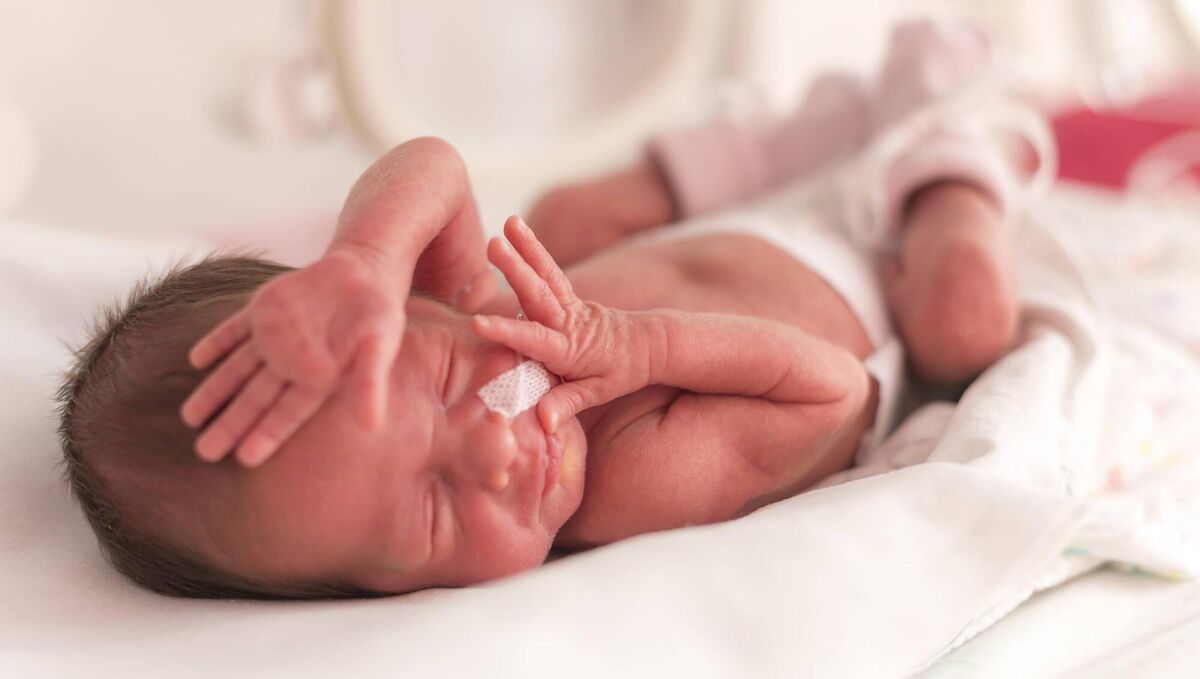
Some of the sickest and tiniest babies born in regional units will be transferred for care to the Rotunda or the National Maternity Hospital, which is a slightly more modern building, at only 90 years old.
Outside the doors of the Rotunda's intensive care unit, incubators and other machines not in use are covered over with plastic and placed along the wall of the public corridor, simply because there is nowhere else to put them.
In late 2019, staff resorted to fundraising for a €76,500 heart ultrasound machine for the ICU after no Government funding was made available.
Across the River Liffey at the National Maternity Hospitality on Holles Street, they have been using "sticky plasters" to maintain services and keep up with new developments in the treatment of mothers and their babies.
"I could describe Holles Street as a Lego set, all we are doing is plugging pieces here and there, it by no means amounts to 21st-century maternity care," master of the hospital Shane Higgins told RTÉ last weekend.
It will be 2027 at the very earliest before Holles Street moves to a new purpose-built facility on the grounds of the campus of St Vincent’s University Hospital in south Dublin.
The best-case scenario for the Rotunda is a 15-year wait before the hospital moves out to a greenfield site at Connolly Hospital in Blanchardstown.
The pandemic has shown us that in an emergency, significant changes can be rapidly made in how care is delivered. That urgency needs to be extended to the provision of properly funded modern maternity services.

May 13, 1921: Elections are held across the island under the Partition Act, but south of the border Sinn Féin members are given what the Cork Examiner calls a "walk-over", as all 128 candidates are returned unopposed and deemed elected.
Then justice minister Brian Lenihan Snr publishes documents that had been found on a "prominent member of an illegal organisation" which detailed plans for a putsch. Under the headline, 'Plan to Take over the State', the reports that the document states that training of specialist groups in techniques of harassment of the military will be needed.
There is fury when it emerges that a spotter plane bought by the government to assist with fishery protection is being used to "ferry politicians to and from Brussels".
After 32 years of active engagement in politics, which included nine years as taoiseach, Jack Lynch announces he will not be contesting the next general election.
"A noted son of Blackpool in the vicinity of which he was born in 1917, Jack Lynch had reached the height of his fame on the GAA fields – he had won six All-Ireland medals, five in hurling and one in football – when he was first elected for Fianna Fáil in the general election of 1948," the reports.
As what is dubbed "the closest fought election campaign for 15 years" enters its final week, Fine Gael leader Enda Kenny, squares up to then taoiseach Bertie Ahern in a televised debate. The head-to-head is declared a "messy draw" by the .
A glazed bridge leads from the chamber of Leinster House to the ministerial corridor in Government Buildings and gives the Taoiseach and his cabinet easy access to the Dáil.
However, those crossing the bridge often note a strange smell. It is said the pungent odour stems from the building's previous use.
The theory is that Room 714, which is at the end of the corridor, was used by the staff and students of UCD to study cadavers and carry out experiments with various chemicals.
All attempts to get rid of stench over the years have been unsuccessful.
"It's said to be the smell of death," one Leinster House usher remarked.
Tuesday: It's back to three days of business for TDs as the Dáil resumes for its first Tuesday sitting of this year. It means opposition parties will get opportunities to question the Taoiseach twice this week, and Tánaiste Leo Varadkar on Thursday during Leaders' Questions.
The Government came under intense criticism last week for allowing cuckoo funds to buy up the majority of a housing estate and there will be no reprieve this week for Housing Minister Darragh O'Brien. Sinn Féin is to bring forward a motion on institutional investors in the residential property market, which is up for debate from 6.14pm.
We have one of the lowest breastfeeding rates in the world, with the latest figures showing just 13% of Irish babies are breastfed after six months, compared to a global average of 38%.
Members of Bainne Beatha and Cuidiú will come before the Health Committee to discuss the lack of breastfeeding supports in maternity services. For context, it's worth reading Joyce Fegan's piece on motherhood in the pandemic. She spoke to four women about being pregnant, giving birth and the postpartum period under the Covid-19 cloud.
The Public Accounts Committee (PAC) has An Bord Pleanála in on Thursday morning on its annual accounts. Given all that is going on in housing at the moment, there should be some interesting exchanges.
Legislation to allow for accredited grades for this year's Leaving Certificate class is due to be debated in the afternoon. The bill will also indemnify teachers in respect of the provision of estimated marks and parents caught lobbying teachers for better results could see results withheld.
Public Expenditure Minister Michael McGrath is up before the Finance Committee as members consider the Public Services Pay Bill.
The pay deal hammered out late last year awards a wage increase worth 1% of gross pay or €500 this year and next year.
CONNECT WITH US TODAY



Be the first to know the latest news and updates