Is Covid shadowing a deeper global crisis?

Adior Deng (32 months), who is severely wasted, at a primary care centre in Aweil, South Sudan, parts of which are affected by famine. Picture: Jennifer Nolan/Concern Worldwide/
Against the backdrop of the Covid-19 pandemic an equally grave threat to the lives of millions of people is mounting — famine.
The latest ‘Global Report on Food Crises’ to be published in the coming weeks by the UN, will provide a stark analysis of rising food insecurity around the world, with 34m people now experiencing emergency levels of acute hunger.
On the standard scale of food security, with 'one' being considered secure and 'five' categorised as catastrophic or famine, these people are in category four, meaning they are already on the precipice of starvation.
Most are living in regions beset by conflict, with an estimated 155,000 people in areas of South Sudan, Yemen and Burkina Faso thought to be already living in famine or famine-likely conditions.
These countries, along with areas of northern Nigeria, are of most urgent concern right now, but food insecurity is also rising to dangerous levels across almost every other context affected by conflict, including Afghanistan, Haiti, Syria, and the Democratic Republic of Congo.
While protracted conflict has become tragically entrenched in the last decade, repeatedly pitching millions into situations of extreme hunger, averting famine through early warning and early action has been a phenomenal and yet somewhat overlooked achievement in that time.
In 2017, when famine simultaneously threatened large regions of Nigeria, Somalia, South Sudan, and Yemen, a strong humanitarian response, backed up by political will and timely funding, helped millions of people to avoid mass starvation.
Four years later, as the threat of famine re-emerges, there is a growing fear that a similar response effort is not forthcoming.
Although needs have surged to record highs in the last year, driven by the phenomenal disruptive impact of the pandemic, many of the larger donors are slashing overseas assistance.
It is in war–torn regions, where people have been already pushed to their very limit, that these cuts are likely to have the most devastating effect.
After years of conflict, Yemen is now at a cataclysmic tipping point, with soaring cases of Covid-19 and more than 400,000 children at risk of dying from hunger.
Only last month however, a UN fundraising conference for the humanitarian response in Yemen fell drastically short of its targets as donor nations pledged less than half of what is required to respond to the most urgent needs.
The UK was singled out for particular criticism after slashing its aid to the country by 60% from last year, especially as it is now one of the only remaining nations providing weapons to the conflict.
“Cutting aid is a death sentence,” the UN secretary general, António Guterres, said of the conference outcome, leaving no doubt as to the consequences of such an inadequate response.
Yet only weeks later a similar situation unfolded at a conference organised to support the relief effort in Syria, which, after a decade of relentless warfare, is experiencing some of the worst levels of hunger since the conflict began.
In these fragile contexts, the Covid pandemic is turbocharging the damaging effect on food security and human suffering.
Livelihoods have been decimated for many people in countries without adequate or indeed any social protection system just as markets have been disrupted and prices of fuel and staple foods have spiked.
As lockdowns in higher-income nations have impacted severely on sectors of the economy with a high level of migrant workers, remittance payments from those workers to their relatives in lower-income countries have plummeted.
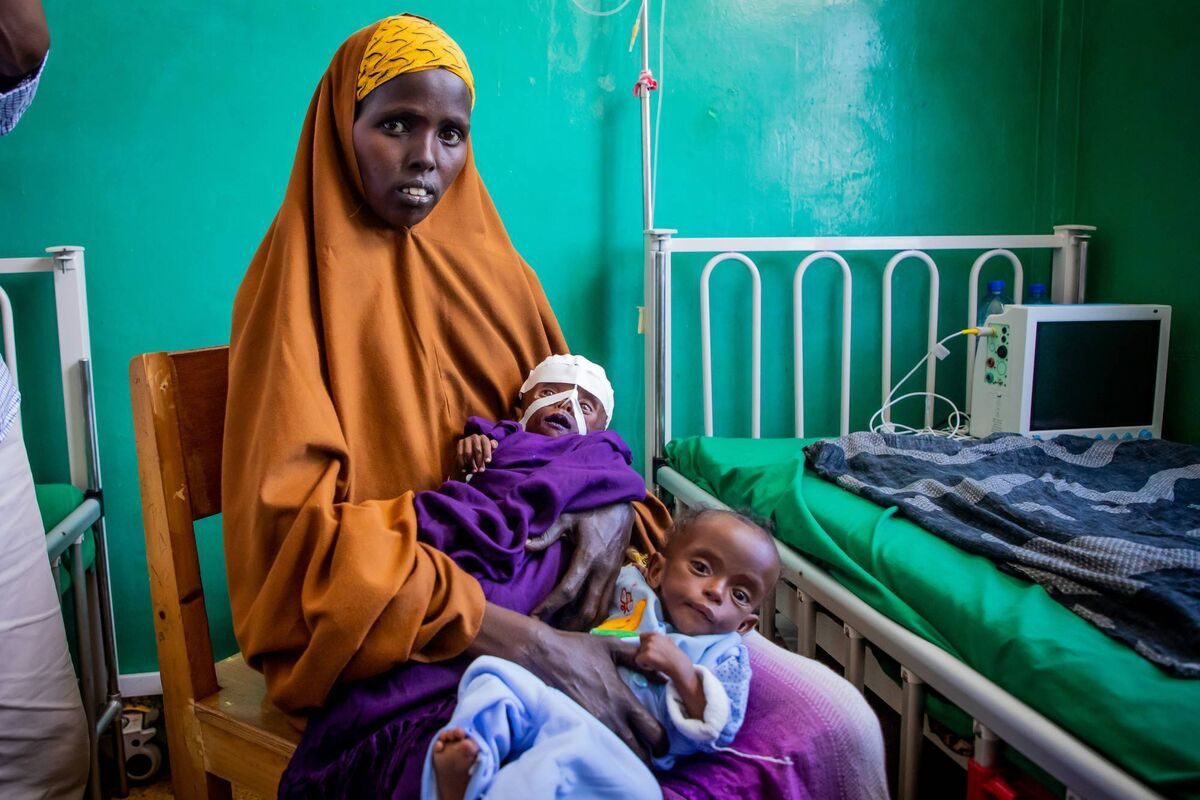
Starvation should demand outrage and action, and yet there is almost silence on this issue; the pandemic itself has dominated all media coverage overshadowing its deep secondary effects in lower-income nations.
The story that is not being told is that there are now a staggering 235m people in urgent need of humanitarian assistance — that is one in 33 people worldwide, and behind the immense figures are the millions of real people caught up in the depths of crisis.
In an attempt to generate a greater global response, the UN secretary general has formed the Famine Prevention Taskforce — to put a spotlight on the suffering and starvation and to consolidate efforts to prevent famine in the four worst-affected countries: South Sudan, Yemen, Burkina Faso and northern Nigeria.
If Covid-19 is a test of how the most vulnerable people are protected, it is a test we are failing.
It is still possible to avert catastrophic levels of famine this year, but it is critical to remember that by the time famine is declared, it is, by definition, too late.
- Dominic MacSorley is CEO of the Irish humanitarian organisation Concern Worldwide. To learn more about Concern’s work visit www.concern.net.

CONNECT WITH US TODAY



Be the first to know the latest news and updates