Úna FitzPatrick: Pollinator Plan helping to make country buzz again
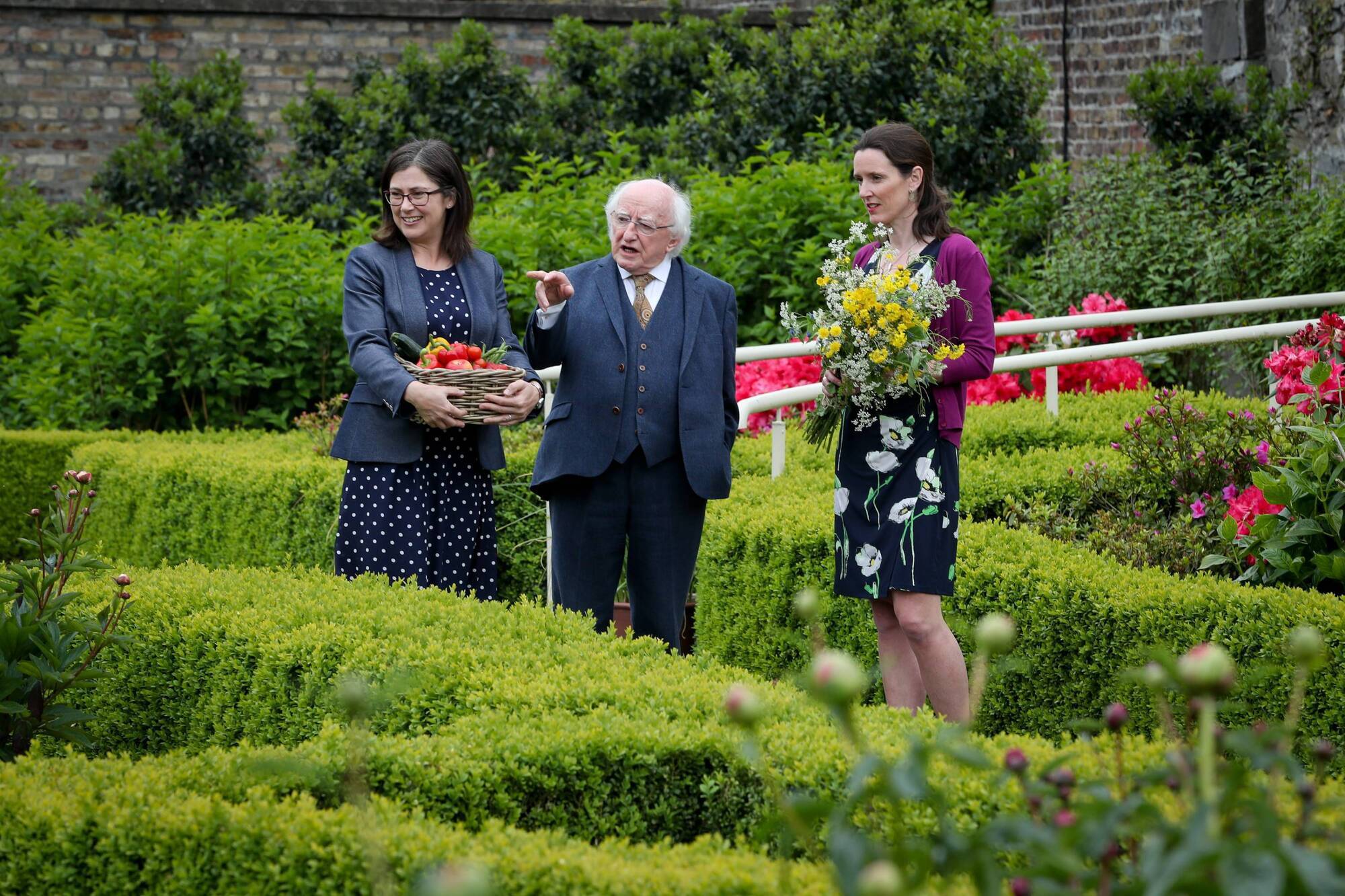
Úna FitzPatrick and Jane Stout, of the Botany Department, Trinity College Dublin, co-founders of the All-Ireland Pollinator Plan, meeting President Michael D Higgins to mark World Bee Day in 2019.
When I was a child, our garden was full of bumblebees and butterflies.
For many years, I was scared of going outside our back door at night because of the hundreds of moths flitting around the outside light.
In the intervening years, all this has changed. Unfortunately, we are witnessing a biodiversity crisis, which includes a massive decline globally in the number of flying insects.
One third of our 98 wild bee species is threatened with extinction from the island of Ireland. Even our common bumblebees are getting scarcer year upon year.
One of the main reasons for this is our changing landscape. In recent times, we have managed to tidy, strim, mow, or spray away much of the wildflowers on which pollinators depend for food — leaving a landscape that, to a bee, must resemble the apocalypse.
Pollinators are in enormous difficulties, but the good news is we don’t have to accept this — it is still possible to change their fate. Big problems need many solutions.
One of those solutions can be to create initiatives to empower everyone to take small positive actions together. That is the premise of the All-Ireland Pollinator Plan (AIPP).
In publishing the first AIPP in 2015, Ireland became one of the first countries in Europe to address pollinator declines, and has since gained international acclaim.
The plan was developed from the grassroots up, to ensure we have an island that’s better for biodiversity, pollinators, for us, and for future generations.
It is a shared action plan. Together, we can collectively take steps to restore our pollinator populations to healthy levels.
The 81 actions in the first plan for 2015-2020 have been delivered. A 16-member steering group provides oversight, with implementation co-ordinated by the National Biodiversity Data Centre.

In the first phase, we wanted to ensure that everyone understands what pollinators need, and what simple, cost-effective, and evidence-based actions they can take to help. Guidelines were developed for everyone from farmers to councils, communities, businesses, schools, sports clubs, and gardens (freely available herehere).
If pollinators could talk, I think the two things they would ask us to do is to let our hedgerows bloom in spring and to let more meadows flower in summer.
If this happened across the island, the positive impact on biodiversity would be enormous. This means not cutting hedgerows or grass so often — actions that can save us time, effort and probably money.
It’s also what science tells us will work: Native plants in hedgerows and meadows are rich in the pollen and nectar that our insects need to survive.
More native flowers in our landscape mean more insects, which mean more fruits and seeds, and therefore more birds and mammals. More flowers also mean a more colourful and healthier environment for us.
In taking simple actions to help wild bees, we gain so much more.
The success of the last five years has taken all of us by surprise. Across all sectors, people are helping. The seeds of change are everywhere, with patches of pollinator-friendly habitat being restored in almost every corner of the island.
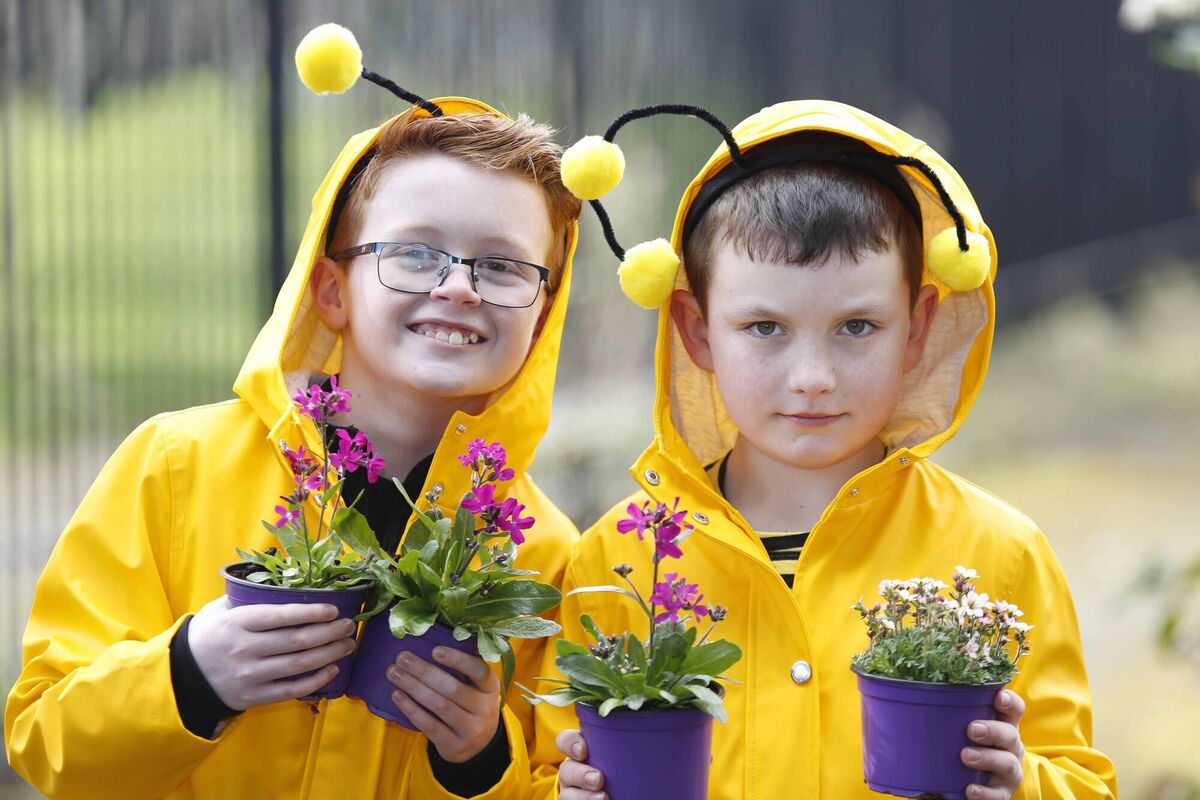
We are working with farmers to develop a framework by which all farms can become more pollinator-friendly; 55% of councils have become partners and many have embraced the ‘don’t mow, let it grow’ approach and species-rich meadows are reappearing in parks, on roadside verges.
Hundreds of local communities have embraced the initiative, while tightly cut lawns are being replaced by wildlife lawns, dappled with clover and dandelions.
There are community orchards, and pollinator-friendly railway stations, campuses, schools, and gardens. Already 270 businesses have become supporters.
The AIPP has also attracted international acclaim and has been recommended as a template for the development of national pollinator strategies by EU member states.
Today, we are delighted to launch a new Pollinator Plan for 2021-2025. It is more ambitious than the last — with more partners coming together to deliver even more actions.
Pollinators are better off than they were five years ago, but we still need to do more. The new plan has more than doubled our goals, with 186 actions to help biodiversity.
In the next phase, we want to encourage the restoration of more land for biodiversity. We will improve awareness of how farmers can help. We will encourage more councils to manage their land in a way that better integrates people and biodiversity.
We will encourage new sectors to get involved, such as hospitals and nursing homes. We will help rare species that are at risk of disappearing, like the great yellow bumblebee.
We will encourage more people to pledge their gardens for pollinators, creating pitstops for hungry bees across our landscape. We will engage with new audiences and better explain the wider benefits of helping pollinators, particularly for human health and wellbeing.
Ultimately the plan will only be a success if we can halt declines in wild bees, hoverflies, and other insects; and if in 10, 20, or hundreds of years, this island is buzzing with healthy and stable pollinator populations, providing us with the services on which we are so dependent.
To my children, a moth is something they encounter just a few times in summer. To them, that’s their ‘normal’.
They don’t know what has been lost already, so how can we expect them to feel the need to change things. It’s on us. Let’s not be the generation that squanders this vital resource.
As we look forward to the next five years, we thank everyone who has already engaged with the Pollinator Plan. It has shown — in every sector and in every corner of this island — that people do care, and that lots of small actions, taken together, can begin to solve big problems.
Úna FitzPatrick is co-founder and chair of the All-Ireland Pollinator Plan. Pollinators.ie
CONNECT WITH US TODAY



Be the first to know the latest news and updates