Challenges for the most marginalised have worsened during the pandemic 
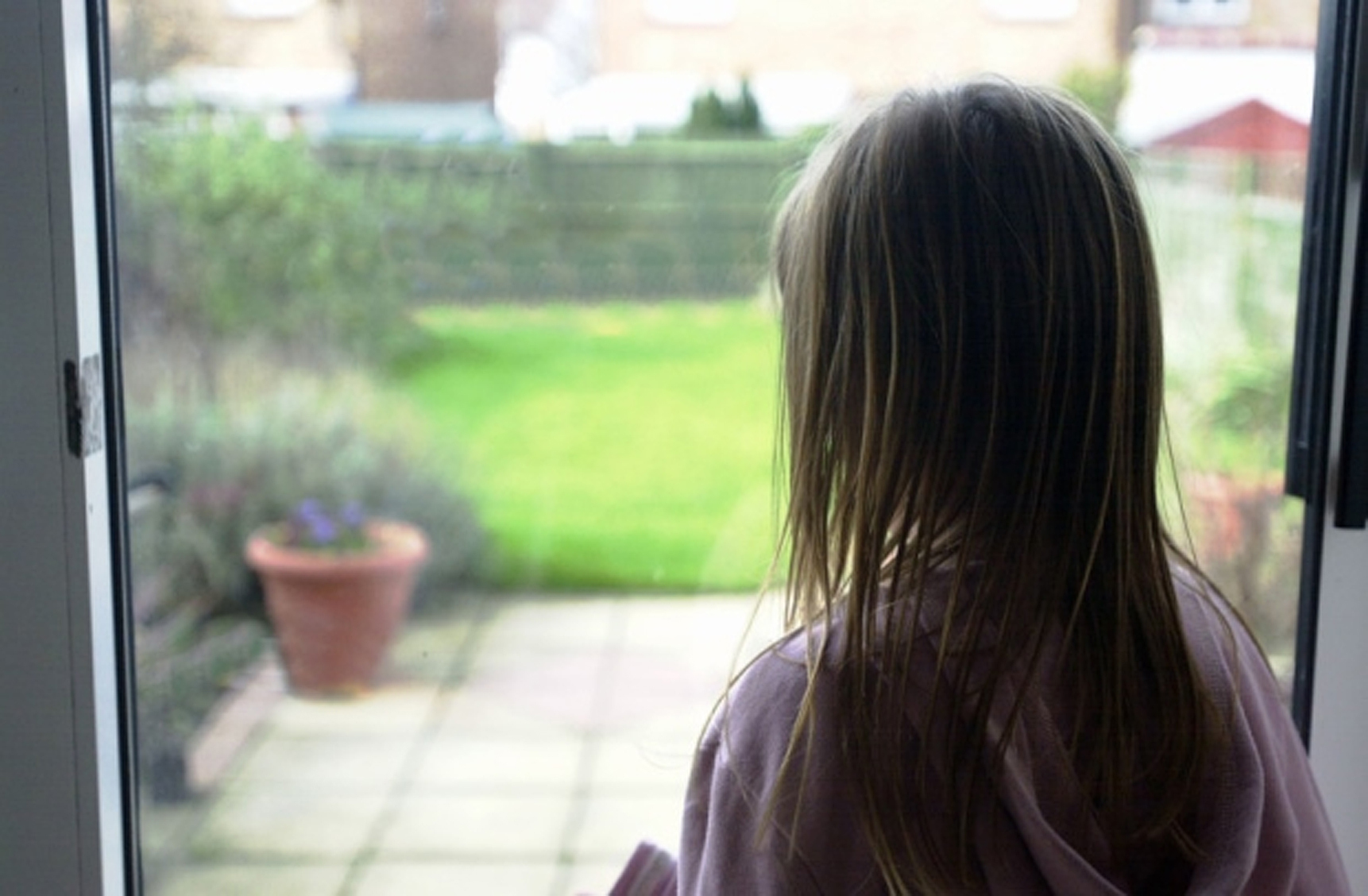
An opportunity should be provided to social workers and policy makers to reflect on the learning arising from the pandemic, and develop good practice, so as to plan and manage services even better
Challenges for the most marginalised have worsened during the pandemic 

A survey has show that concern for clients is what has most preoccupied social workers during Covid-19. 

A national survey of social workers, carried out by the Irish Association of Social Workers (IASW) over several months last year, has revealed a range of serious concerns and practice issues. 

Top of this list of concerns for social workers is client wellbeing and access to social work services during the pandemic. 

Given their training, and focus on human rights and equality, whatever the setting in which they work, it should come as no surprise that concern for their clients is what has most preoccupied social workers during Covid-19. 

In fact, two in every three social workers surveyed expressed concern that those who need services are not able to access them. 

We are all aware of the negative effects on our individual mental and social wellbeing caused by our isolation and restriction on movements and being unable to meet face to face with family, friends, and colleagues. 

While we may all struggle in this way, the clearest message from the IASW survey is that the challenges for the most marginalised and vulnerable among us has worsened to a much more significant degree.

These concerns are not only for those involved directly in social work. They should concern all of us, and especially our Government and policy makers. 

Dr Mike Ryan of the World Health Organization (WHO), among others, has pointed out that the pandemic has exposed pre-existing inequalities in society. Social workers are well aware of this. 

The IASW survey has confirmed that ‘lockdown’ has made it more difficult than ever to provide critical social work services, including the protection of children and safeguarding vulnerable adults, for example. And while more people need social work help, it has never been more difficult to receive, as well as to deliver, it.

Lockdown has made it more difficult for social workers to provide critical services, including the protection of children. Picture: Bill Binzen/CORBIS

It has demonstrated the innovation, creativity, and commitment of individual social workers and organisations in responding to the current crisis, continuing to deliver services, often in new ways. 

It has also exposed the various challenges and concerns faced by social workers, as well as the often inconsistent levels of support received from their employers, in terms of professional, management, and technical assistance for frontline social workers. 

Even where employers have provided more ICT resources for example, these tend to be only partial solutions, especially given the sensitive and systemic context of social work, where helping professional relationships need to be developed in a context of trust and direct human contact. Some of the most disadvantaged and vulnerable of social work service users may also struggle to access or use such ICT ‘solutions’ anyway.

While many social workers have ‘pivoted’ to work primarily from home, or at least minimised their attendance at their office or usual workplace, as well as home visits, this has been a double-edged sword. These new ways of working have enabled essential social work services to continue to be delivered safely. 

On the other hand, the reduced face-to-face contact has made it much more difficult for social workers to do their jobs well and specifically to ensure their clients’ needs are addressed. 

Dr Ryan of the WHO has also made the point that, while remote working and new technologies can help in times of emergency, “apps don’t replace shoe leather” and “qualities like reciprocity, solidarity, and humanity can be supported by technology, but never replaced by it”; messages reflected strongly in the survey responses by social workers.

Social workers are recognised as providing ‘essential services’ under the Government’s Covid-19 provisions, as they provide ‘therapy services, drug treatment, and addiction services, hospice, residential care services, disability, mental health, child protection, and welfare, domestic, sexual, and gender-based violence, and homeless services,’ and others under the level 5 ‘essential services’ banner. 

Social work services identifiable in other sections of the Government’s ‘essential’ list, such as including probation officers under the ‘services to enable the administration of justice’ heading, serves to illustrate the breadth of critical services provided by social workers. 

But social work tends to be an invisible and unheard profession, despite its ‘essential’ designation. 

As Irish society moves out of Covid restrictions, and returns eventually to some level of ‘normality,’ it is vital that we are all aware of the backlog of social problems stored up, and acknowledge the critical role played by social workers in supporting the most vulnerable and disadvantaged to navigate their way through these challenges.

If we, as a society, are to make the most of our recovery from the pandemic in the months ahead, we will need to hear and heed the voice of social work in responding to the current difficulties and building for the future. We must to ensure that social workers are equipped and supported to do their essential jobs, especially as we ‘return to normal.’

 We need to, as one social worker highlighted in the IASW survey: “See social workers as the problem-solvers and solution-finders that we are.” 

To begin with, the voice of the social work profession  — and our most marginalised and disadvantaged service users  — should (even at this late stage) be represented in national Covid-19 decision-making bodies. 

In addition, there is an urgent need to:

  • Resource and support social workers to do their job effectively (including improved professional support, organisation of work and access to technology);
  • Ensure that social workers and their clients can meet face-to-face safely, while providing appropriate ‘online’ facilities to do so, only where unavoidable and with appropriate planning;
  • Provide adequate social work resources and related planning for managing any backlog, or post-Covid ‘surge’ in demand for services;
  • Recognise social workers as essential and ensure that they are not redeployed from frontline social work services to other Covid-19 related work.

Finally, an opportunity should be provided to social workers and policy makers to reflect on the learning arising from the pandemic, and develop good practice, so as to plan and manage services even better in the future. 

Dr Mike Ryan has commented that, regarding Covid-19, none of us is safe until all of us are safe. Similarly, if we are to build up our society again, as we emerge from the pandemic, we need to ensure that the needs of our most vulnerable children, adults, families, and communities receive the help they need. That would be real evidence that we truly are ‘all in this together.’ 

Social workers can be game changers in that project and are ready to play their part.

Vivian Geiran is  adjunct assistant professor at the School of Social Work and Social Policy, TCD and a  board member of the Irish Association of Social Workers.

More in this section

Revoiced

Newsletter

Sign up to the best reads of the week from irishexaminer.com selected just for you.

Cookie Policy Privacy Policy Brand Safety FAQ Help Contact Us Terms and Conditions

© Examiner Echo Group Limited