Compulsory Irish was all wrong for our national psyche
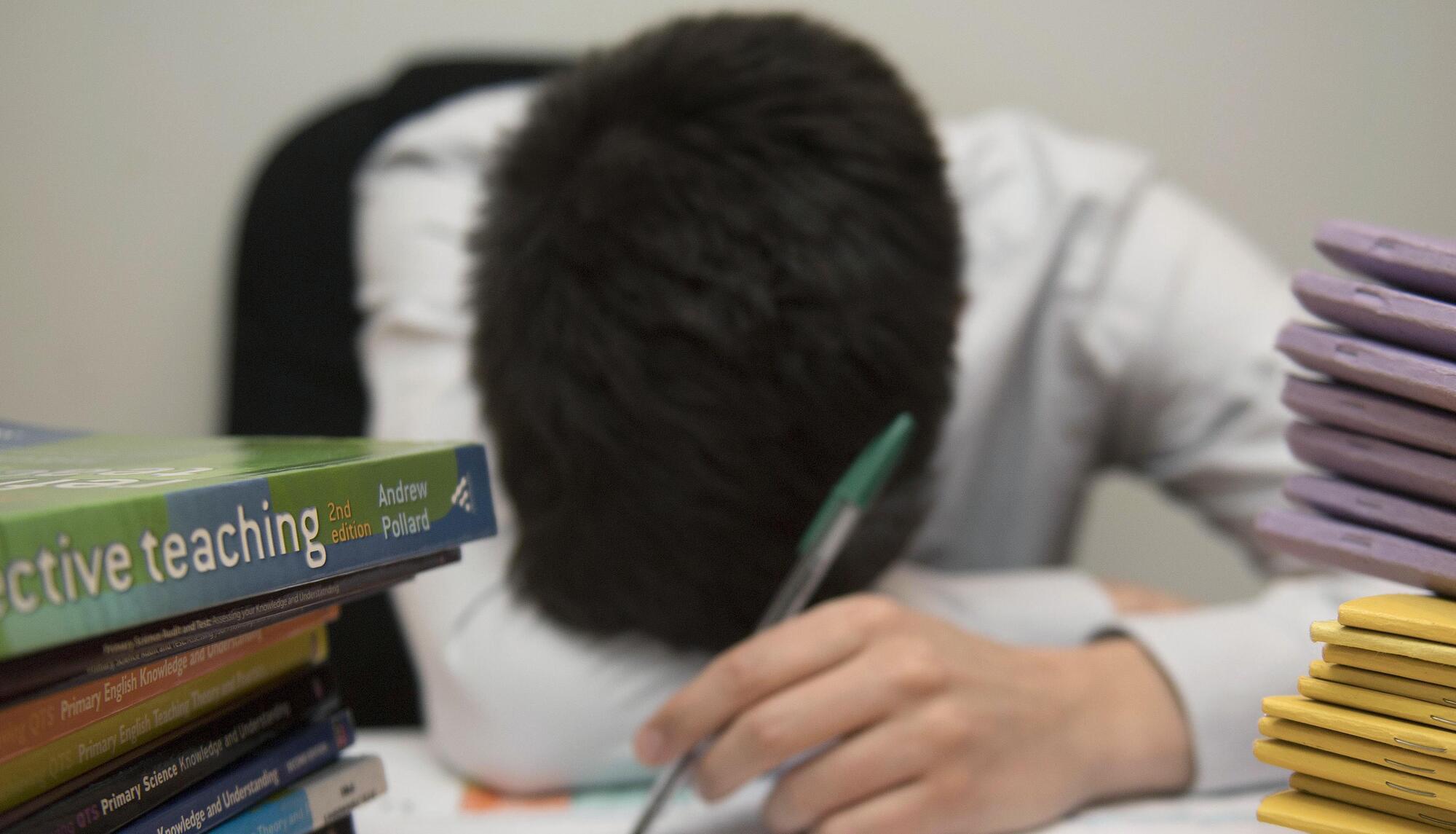
The fact few of us can competently converse in our native tongue is most likely an inheritance from a dismal education system obsessed with grammar and vexatious complications.
Seachtain na Gaeilge has once again crept up on us. This is when we are expected to get a little misty-eyed about our linguistic inheritance, while the commentariat bemoan the fact that few of us can competently converse in our native tongue. Most likely, this failure is an inheritance from a dismal education system obsessed with grammar and vexatious complications such as briathra neamhrialta, and the dreaded modh coinníollach.
Actually, I find it hard to blame Irish people for not making a greater effort, for when I was at school, I didn’t care much for ár dteanga féin either.
To most long-haired 1970s teenagers, the language seemed preposterously out-dated and irrelevant.
Then, I began noticing, when outside Ireland, how proudly other nationalities spoke their native tongue. Very soon, I was pondering the ironies of being constantly mistaken, on my travels, for an Englishman abroad.
So, I undertook a few Irish classes as an adult, did a couple of Gaeltacht courses and became cuíbheasach maith as Gaelige. Along the way, I discovered that reasonable competence in spoken Irish can be achieved without reference to the modh coinníollach or saor briathair, while our national tendency to be non-committal may arise from the fact that there isn’t a word for yes or no in Gaelic.
But then, like the terrier that had succeeded in catching its own tail, the question arose, what next? Immediately apparent was the fact that Irish woefully lacked everyday utility: it was very difficult to find opportunities to speak it in everyday life.
I did manage some unpromising encounters with those, líofa as Gaelige, who usually seemed to inhabit the upper echelons of the public service.
Opening a conversation with these exalted polymaths was invariably an intimidating experience. It wasn’t that they weren’t tolerant of those less linguistically endowed:
it just seemed strange and contrived for two English-speakers to struggle with a very one-sided conversation in a tongue that only one had mastered.
There were also the inevitable encounters with the grammatically obsessed.
Once in an Irish speakers' club. when I rashly ventured that the way ahead lay with a “dhá teanga” policy, it was pointed out to me rather sternly that this tactic offered few possibilities — a “dhá theanga” approach might, however, have some merit.
Otherwise, the attitude of most people seemed one of benign indifference to my new-found linguistic competence tinged, I suspect, with just a little embarrassment at an inability to answer even basic greeting as Gaelige. Indeed, Irish conversation seemed to make sense only between fluent Gaelic speakers or as a cunning ploy for exchanging private jokes about the idiosyncrasies of other nationalities.
Yet, on my hillwalking trips across the Irish Sea, I noticed how ordinary people proudly embraced Welsh as an expression of national identity.
Why were things different in Wales? Was Irish independence the culprit?
Had it somehow removed our need for the national distinctiveness that is still desired by those nations remaining within the UK and also among the nationalist community of West Belfast, where there is a thriving Gaeltacht Quarter?
Undoubtedly, one reason why any sentimental attachment to the language by Irish people was immediately defenestrated after independence, was the rash over-enthusiasm of successive governments. We have a long history of rejecting that which is imposed upon us: Norman Conquest, Protestant Reformation, Act of Union, Guinness Light.
Compulsory Irish was all wrong for our national psyche, and it is only recently that the language has begun to recover from this dissolute policy.
Green shoots have certainly appeared. Gael Scoileanna have been a huge success while increasing numbers of Gael Coláistí now teach through Irish at second level. TG4 has succeeded in making the language accessible in a way that Radió na Gaeltachta, which is aimed at existing speakers, never did
It is nevertheless rare to encounter Irish in everyday life; while there is much goodwill towards the language, few actually speak it. I have noticed, for example, that students leaving Gael Coláistí will almost inevitably revert to English beyond the school gates.
And so, the old problem remains, while there is much goodwill towards the language, few opportunities exist to practice it.
My pet solutions to this problem involves designating an area in our libraries as relaxing bilingual spaces with people encouraged to come along, socialise and use whatever cúpla focal they have. We should also be actively encouraged by government to insert Irish words such as salutations into our everyday English speech.
Failing this, I’m afraid we must invoke the nuclear option and entirely ban the language. Given the peculiarities of our national psyche, this should ensure that within a short time we would be proudly embracing ár dteanga féin once again.
John G O’Dwyer’s latest book, , is available from currachbooks.com


CONNECT WITH US TODAY



Be the first to know the latest news and updates