Margaret E Ward: Will Bauer grasp the poisonous nettle of Irish commercial talk radio?
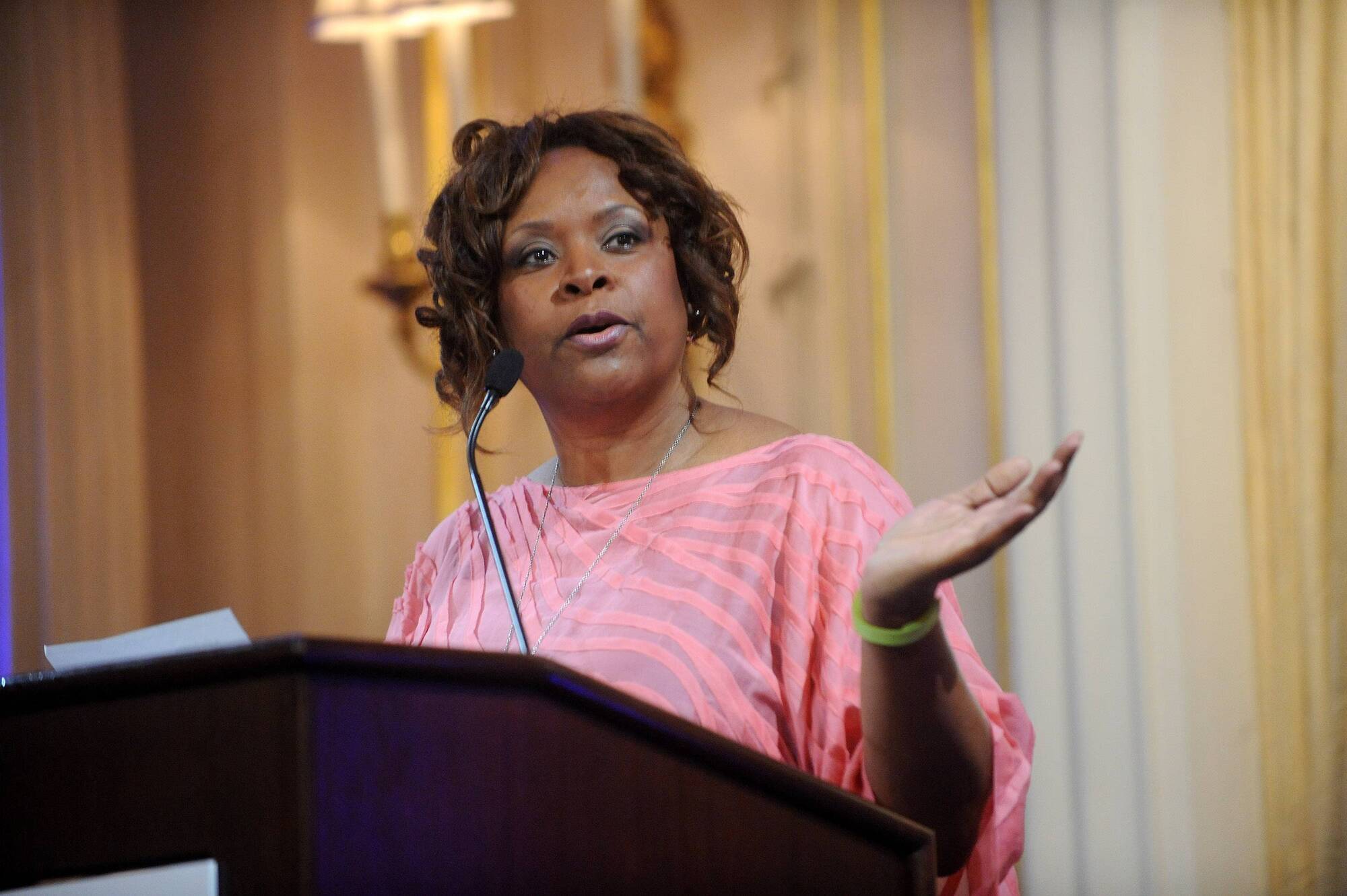
NEW YORK, NY - MAY 01: Host and radio personality Robin Quivers speaks onstage at the T.J. Martell Foundation's Women of Influence Awards on May 1, 2014 in New York City. (Photo by Brad Barket/Getty Images for the T.J. Martell Foundation)
Radio has a special place in society: it connects us to ourselves, our neighbours and our culture. In many Irish homes, radio is on throughout the day like a talkative friend keeping us company. It’s on in farm sheds, accompanies us on our daily walks, plays in our home offices and our local takeaways. Radio can push away the Covid-imposed loneliness, help us have a deeper understanding of the world and allow us to discover new music and talent.
A recent Joint National Listener Report (JNLR) claimed 80% of us listen to radio every single day. When it comes to younger age groups, the JNLR says almost twice as many 15 to 24-year-olds listen to radio than to Spotify. It’s no wonder then that European media giant Bauer Media Audio wants to snap up Communicorps’ five stations NewsTalk, Today FM, 98FM, Spin 1038, Spin Southwest and digital radio platform Off the Ball.
Radio is the most intimate of the traditional mediums, when compared to newspapers and TV, and has a strong influence on the direction of national conversations. Good radio feels like an intimate chat over coffee. Great radio makes you stop everything you’re doing to just listen; the longed for ‘I couldn’t get out of my car’ moment.
In recent years though, a negative foreign import has entered the national Irish commercial radio landscape: talk radio. Yes, we’ve always had programmes that are all talk, all the time but this is talk radio US- and UK-style featuring shouting, blatant exclusion and hate-baiting bigotry.
When my children were little, they called it ‘shouty men radio’ and, first thing in the morning, it always felt like an assault.
Ten years on, more Irish radio stations have gone down ‘reactionary road’ with incendiary call-in shows, programmes featuring controversial figures who promote hate against certain groups (women, Travellers, immigrants, transgender people, asylum seekers) without actually featuring any member or representative of those groups themselves. Even the latest conspiracy theories on Covid, 5G and vaccines are given airtime, sometimes left largely unchallenged with facts, or balanced by well informed public health professionals. This is a potentially dangerous development for our democracy.
Growing up in New York in the 1980s, I witnessed the birth of the ‘shock jock’ embodied by talk show host Howard Stern. Comedian Stern was a proudly foul-mouthed, vulgar, racist, misogynistic radio presenter and people loved him for it. Nothing was out of bounds: his wife’s miscarriage, bestiality, promoting plane crash sites as tourist destinations, racist and sexist abuse of his black co-host Robin Quivers. He said whatever he wanted, often clashed with management and was regularly fined by the Federal Communications Commission for indecent material. But, his employers made stacks of money by syndicating his show nationwide.
Stern and Fox News became part of the 1980's conservative backlash against the civil rights and feminist movements of the 1960s and 1970s. It was no coincidence that these shock jocks were white, educated middleclass heterosexual men who believed, and heavily promoted the idea, that women, blacks and homosexuals needed to know their place in the back of the queue. Unfortunately, we all witnessed how the rest of this story unfolded: conservative media pundits contributed significantly to the rise of Donald Trump in the US and Boris Johnson in the UK.
The exclusion of women and mainstream media journalists is an important part of the talk radio formula. And Irish radio has been no exception. When women feature on Irish commercial talk radio stations, they are rarely the presenter and they are almost always featured as a carer, victim or celebrity. In conservative talk radio world, women are simply there to support and promote men. Few are presented as leaders, experts, authorities in their field, innovators or entrepreneurs; that’s left largely to the fellas.
Another part of the talk radio schtick, ‘indignantly attacking mainstream media’ has been employed in Ireland in recent years too. The widely reported banning of all ’ journalists from Communicorps' stations because columnist Fintan O’Toole wrote an article claiming Newstalk was ‘systematically sexist’ was followed up with the banning of former investigative journalists Tom Lyons and Ian Kehoe.
So, why does any of this matter? Talk radio is a trojan horse for starting culture wars. When conservative, or far-right, elements control the national conversation then they can bend it to their will.
Ireland was once considered a beacon of conservative white Catholic ‘traditional’ beliefs. It has become a more progressive, tolerant, diverse nation over the last ten years. When the majority of the voting public here decided to permit gay marriage and abortion it did not go unnoticed by wealthy conservative billionaires who want white heterosexual men to remain on the top of the power pyramid. In the last year, foreign funding for the Irish far-right has increased significantly and human rights groups have banded together to form Le Chéile ‘Diversity not Division’ to prevent it from taking hold here.
Bauer Media Audio has an important choice to make if it comes to Ireland. Which business model will it follow? One of the greatest failings of Irish national commercial radio stations is their unwillingness to serve and represent women, 51% of the population, and to recognise Ireland’s diverse modern society. Why exclude more than half your potential listenership? It makes no sense.
Thankfully, Bauer has a clear bias towards music programming. They seem to be led by a love for music and not big brash personalities. If Bauer decides to continue with the talk radio format however, it would do well to look at the money that can be made in more inclusive programming.
Netflix saw this opportunity in 2013 when it launched its first TV shows, and , and aspired to tell stories that weren’t available elsewhere. When deciding on programmes they ask: ‘Whose voice is missing? Is this portrayal authentic? Who is excluded?’ To double down on this, they’ve just launched the Netflix Fund for Creative Equity which will invest $100m over the next five years in finding and training creative talent to create more diverse programming that appeals to a wider audience.
“We are still in the early stage of a major change in storytelling where great stories can truly come from anywhere, be created by anyone, whatever their background, and be loved everywhere.”
Now that’s inclusive leadership, great for democracy and good for the bottom line too.

CONNECT WITH US TODAY



Be the first to know the latest news and updates