Elaine Loughlin: Direct provision has morphed into a permanent unpalatable problem

Deputy Political Editor Elaine Loughlin says it's finally time to change the Direct Provision system.
Elaine Loughlin: Direct provision has morphed into a permanent unpalatable problem

THE entire nation seemed to jump on the banana bread bandwagon when Covid first hit.

But for some, the ability to fill the day with level 5 baking is a luxury beyond their grasp.

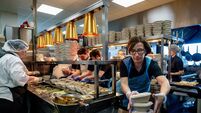
Almost half of the 7,000 men, women and children currently placed in direct provision do not have access to their own kitchen facilities; the tiny stipend they receive each week prevented them from travelling or eating out in non-Covid times, and they do not have the right to a driving licence or cannot open their own bank account.

Vulnerable people who come to this country seeking refuge are effectively put under level 5 restrictions for years as they survive rather than live in direct provision. Direct provision - even the term sounds sterile.

Children's Minister Roderic O'Gorman is this week expected to publish the Government's long-anticipated White Paper on direct provision.

In doing so the Government must finally act to change a system that was first set up as a temporary stopgap, but which has morphed into a permanent unpalatable problem.

Of the 44 accommodation centres, just 32 provide residents with access to their own cooking facilities and many of these are communal kitchens. 

When emergency accommodation is brought into the mix, the number of people without access to their own cooking facilities rises to 52% of those in direct provision. 

This must change.

Some centres are located in urban areas with good access to transport, health care, educational and employment services. Others are in remote locations and suffer from poor service links such as transport and broadband.

Much of the focus has rightly been placed on the accommodation provided to those waiting for a decision on their future and there is no denying that the hotchpotch of hotel rooms, dormitories and other forms of emergency accommodation is wholly unsuitable.

 Residents of the Skellig Star DP Centre in Caherciveen, Co Kerry, celebrate last year following the news they would be moved to more suitable accommodation. Photo: Alan Landers
Residents of the Skellig Star DP Centre in Caherciveen, Co Kerry, celebrate last year following the news they would be moved to more suitable accommodation. Photo: Alan Landers

A new model

Abolishing an inhumane system will not only provide families and individuals with their own front door, it will also save the taxpayer money.

The direct provision system costs the State in the region of €178.5m each year. A report compiled for the Government by Catherine Day last year found that the combination of increasing numbers of applicants and the lack of suitable accommodation, which requires increased use of emergency accommodation, demonstrates that the current core direct provision system is "inadequate and very expensive".

She said a new model of accommodation would provide some dignity to those seeking asylum here and would only cost €35.9m less each year.

Since 2018 the direct provision system has been beyond overflow.

Ireland should have the permanent capacity to process and accommodate around 3,500 new applicants for international protection annually, but we don't.

This must change.

Unacceptable delays

The length of time that people wait in limbo only exacerbates the problem as people are forced to stay in direct provision for far longer than is right.

Nasc CEO Fiona Finn says a full reform of the international protection process is required.

"Long delays have been a feature of Ireland’s protection system since its inception and this has led to people living for years in direct provision. As clearly identified in the Day Report, in order to end direct provision – we must have a functioning international protection process," she said.

The Day Report recommends that it should take no longer than six months to receive a decision from the International Protection Office. Currently, the median waiting time for decisions is 17 months.

"One of the key recommendations in the Day Report to deal with the backlog is the implementation of a one-off case processing system which will look at granting permission to remain for those in the international protection process for two years or longer. This will be crucial to the success of any plans to create a new reception system," said Ms Finn.

People waiting for a decision on their application are entitled to direct provision and a weekly payment of €38.80 per adult and €29.80 per child.

This must change.

A whole-of-government approach

Untangling an institution such as direct provision is unsurprisingly complex.

But a whole-of-government commitment is now required to tackle a system which should never have been introduced in the first place.

The Department of Children may be charged with leading reform, but the Department of Justice must urgently address the backlog; the Department of Education has a responsibility to ensure teachers are trained to deal with vulnerable children, while the Housing Department will play a role in ensuring people have their own-door accommodation.

The Movement of Asylum Seekers (MASI) believe we will be back to yet another expert group in five or 10 years' time, producing yet another report on direct provision if every single minister does not fully commit to doing their bit.

The programme of government promised to end direct provision by 2023. Change comes dripping slow.

Protesters in Dublin during a national demonstration calling for the end to the Direct Provision System for refugees in Ireland. File picture: Eamonn Farrell/RollingNews.ie

While you are here why not sign up to our new 'On The Plinth' political newsletter. Delivered direct to your inbox every Tuesday. Sign up here - https://exa.mn/ontheplinth

What to look out for this week

  • Tuesday: At this stage Living with Covid has turned into a serious loathing of Covid experience, but the Government is expected to sign off on a new version of its strategy to deal with the virus at Cabinet. Expect the usual set-piece press conference with much hope pinned on the vaccination rollout. Over at the Oireachtas Health Committee the emerging evidence that vitamin D may reduce the severity of Covid-19 will be discussed from 10am.
  • Tuesday: Children's Minister Roderic O'Gorman is to bring a long-anticipated white paper on direct provision to Cabinet before publishing it this week. The Programme for Government promised to abolish the inhumane accommodation system by 2023, this white paper is the first step in bringing about the much overdue change.
  • Tuesday: Given last week's announcement that Ulster Bank is to close in Ireland, the Finance Committee should have plenty to say when they meet to discuss banking matters at 5.15pm.
  • Wednesday: With the clock ticking down, the Social Democrats have put forward a last-ditch motion to have the Commission of Investigation into Mother and Baby Homes extended to allow for a full investigation into the destruction of 550 audio recordings of witness testimony.
  • Thursday: Apart from a break for Leaders' Questions, almost the entire day will be devoted to debating the Health (Amendment) Bill 2021, which will allow for the rollout of hotel quarantining.

This week in years gone by...

1965, February 23: "In the gathering dusk, rain drummed a sad tattoo on the windswept tarmac. Dignitaries stood bare-headed" This was how the Irish Examiner set the scene in recording the return of Roger Casement's body from England for re-interment at Glasnevin Cemetery in Dublin.

1973, February 28: The National Coalition of Fine Gael and the Labour Party win the general election, ending 16 years of Fianna Fáil in government. A few days later on March 2, the Examiner reported that there had been "scenes of an extraordinary emotion" on RTÉ the previous night when Mr Lynch "apparently only a blink away from tears, admitted he had miscalculated the mood of the rural constituencies".

1997, February 27: Divorce is legalised in Ireland. Under the headline 'Divorce Floodgates are opened' the front-page story of the Irish Examiner reports that 1,000 applications to end marriages had been received within minutes of the ban being lifted.

2009, February 24: Gardaí raid the headquarters of Anglo Irish Bank in St Stephen's Green, Dublin. The 11-hour search came after then Finance Minister Brian Lenihan confirmed that substantial sums had been withdrawn from Irish banks in the weeks prior and sent abroad due to fears over the stability of our banks.

Gardaí raid the headquarters of Anglo Irish Bank in St Stephen's Green, Dublin. Photo: Denis Minihane

2011, February 25: General election sees Fine Gael enter Government. Enda Kenny says the Government is not going to leave the people in the dark on the country's finances. "Paddy likes to be told," he said at the time.

While you are here why not sign up to our new 'On The Plinth' political newsletter. Delivered direct to your inbox every Tuesday. Sign up here - https://exa.mn/ontheplinth


x

More in this section

Revoiced

Newsletter

Sign up to the best reads of the week from irishexaminer.com selected just for you.

Cookie Policy Privacy Policy Brand Safety FAQ Help Contact Us Terms and Conditions

© Examiner Echo Group Limited