Michael Clifford: Former TD's case shows the damage of social media disinformation

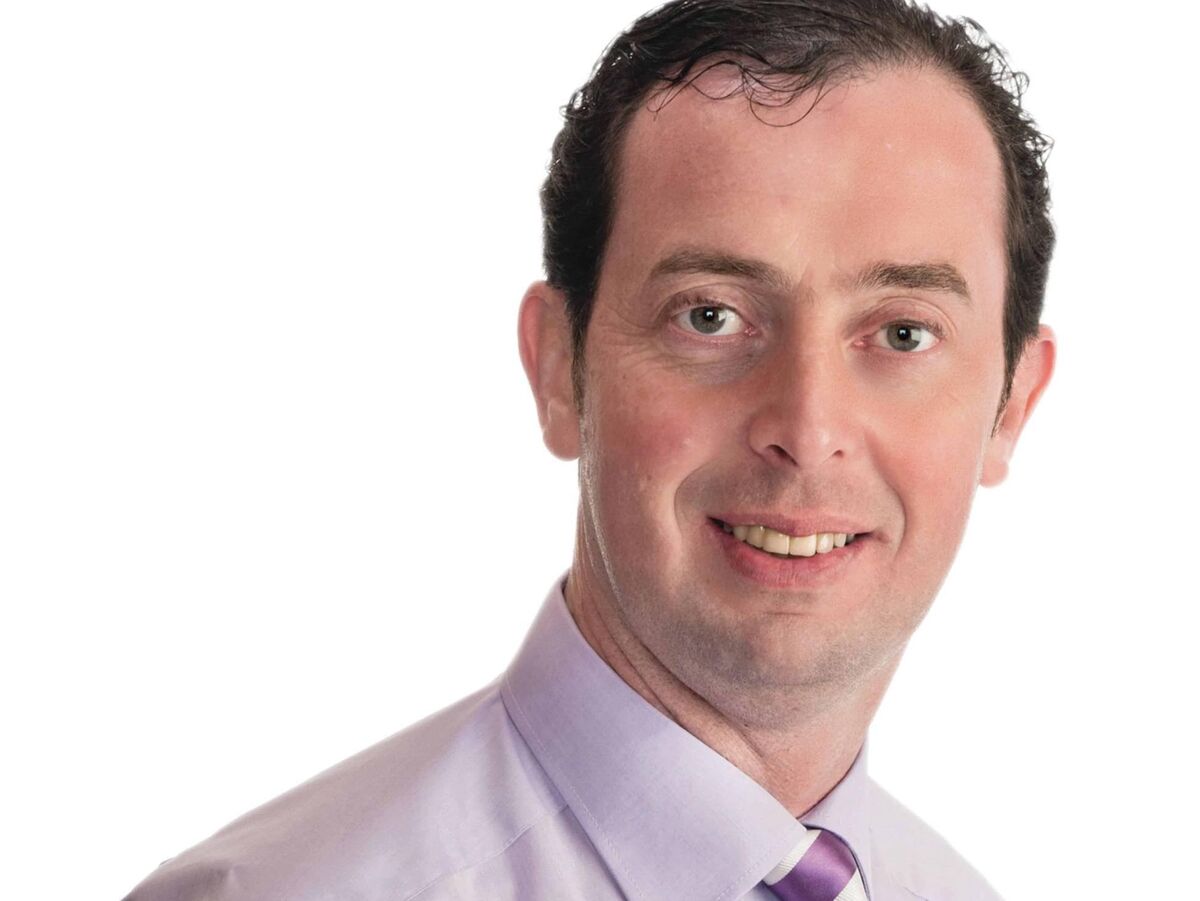
File picture.
Frank O’Rourke believes he was shafted at the last general election.
The former Fianna Fáil TD for Kildare North claims he was the victim of a campaign of personal vilification and the High Court may yet decide whether anybody is accountable for that.
His case is a perfect exemplar of the dark side of modern politics, particularly in how damaging misinformation can be spread across social media.
Mr O’Rourke is suing Twitter and Facebook for hosting posts in the run-up to last February’s general election which he claims were highly defamatory and based on complete falsehoods.
Yesterday, his lawyer brought a motion to have an individual who posted a tweet on election day joined to the proceedings.
This man, the has established, is personally unknown to Mr O’Rourke.
Mr O' Rourke was also granted permission by the High Court to add another "persons unknown" to defamation proceedings. Declan Doyle, SC for Mr O'Rourke, told Ms Justice Leonie Reynolds that his client is still trying to identify the person who posted the alleged defamatory post on a Facebook page.
Frank O’Rourke was co-opted onto Kildare County Council in 2011 and topped the poll for the Cellbridge-Leixlip area in the 2014 local elections. He was elected to the Dáil on his first attempt in 2016. Then in February 2020, he lost his seat after one term, going out on the sixth count.
Last November, he launched a defamation action against the social media companies.
He told the High Court the material disseminated ahead of the election was designed “to cause maximum professional damage to me” at a time when he was going through a difficult marriage breakdown.
He said members of the media told him they had seen “horrible stuff” about him on social media and his supporters received “negative feedback on the doorsteps of North Kildare”.
In the week before the election, the material appeared on a local Facebook page in Celbridge.
Then on the day of the election, a tweet was posted which began: “Don’t vote for Frank O’Rourke . . .” and repeated the defamatory material.
Yesterday, the High Court was told the Facebook post was posted by somebody under the name Mary Doyle.
“The plaintiff doesn’t actually know who Mary Doyle is,” Mr O’Rourke’s lawyer Declan Doyle told Judge Leonie Reynolds.
“We are left in the position of pursuing Facebook and whoever was or is Mary Doyle.”
Identifying who posted the tweet has proved easier. Twitter co-operated in locating the controller of the offending account, @cronny86. The account was traced to Andrew Cronnolly, 19 Tamarisk Lawn, Kilnamanagh, Dublin 24.
In response to a query from Mr O’Rourke’s lawyers, Mr Cronnolly accepted that he had sent the tweet.
The tweet was posted at 2.18pm on election day, February 8, 2020.
Yesterday, the High Court was told the IP address for the Twitter account at the time in question was physically traced to City Hall in Dublin city centre, where the local authority sits.
However, an affadavit filed in court noted this may not be the correct physical address as the same account “appeared to be logged in and logged out of, minutes apart, from a wide array of IP addresses all over the country”.
The day before the election, the court heard, the account was logged in at an IP address in Limerick and 26 minutes later logged in at Dublin’s City Hall.
On another day, “there is a log-in at a physical location in Dublin . . . but 17 minutes later the log-in is in Donegal.”
Last night, Mr Cronnolly told the he can’t understand why the IP addresses which processed his tweets showed him as being all over the country.
“I was in City Hall about three years ago. I don’t think I’ve ever been to Limerick,” he says. “I was in Donegal over 10 years ago.”
He was asked whether he had used virtual private network technology, which can disguise the location of a phone. He said he hasn’t a clue about that.
He said he tweeted the material only after seeing it on a Facebook screenshot.
“It was a big long post and I took it off that. I’m not a member of any [political] party,” he said.
“In general, I would have been that vote left, transfer left way [inclined] at the last election. To be honest with you, I’d never heard of him [Frank O’Rourke] ahead of that post.”
He accepts he now may be in some difficulty facing into a defamation action. “He [O’Rourke] looks like he’s going all out. I did admit it.”
As of now, the High Court will have to rule whether the material was defamatory, and if so, who is culpable.
A similar process will be required in the matter of Facebook and the person who may or may not be named Mary Doyle.
The action has also thrown up an interesting issue around the social media platforms. If the action continues to a hearing, a judge would have to decide whether Twitter and Facebook can be held responsible for material posted on the platforms. The stakes in any such hearing would be extremely high.
Whatever the outcome of the defamation action, the established facts in the case are highly unsettling in term of the democratic process.
Damaging allegations of a personal nature – which O’Rourke says are completely false – about a sitting politician were first circulated on a local Facebook page less than a week before polling.
Traditionally, the last week of an election campaign is when a large cohort of voters decide on their preference. The post was taken up elsewhere and spread further over the following days.
Then on election day, ahead of the evening rush, the allegations find their way onto Twitter. The offending post was written by a man based in Tallaght, in a completely different constituency to O’Rourke’s Kildare North.
The two men do not know each other. The tweet was sent from an account that regularly shows up in places it couldn’t physically be operated from by a single account holder.
When contacted, Frank O’Rourke said he was not in a position to say anything about his case as it is ongoing.
CONNECT WITH US TODAY



Be the first to know the latest news and updates