Analysis: Expect a flurry of measures from Biden that will restore US influence
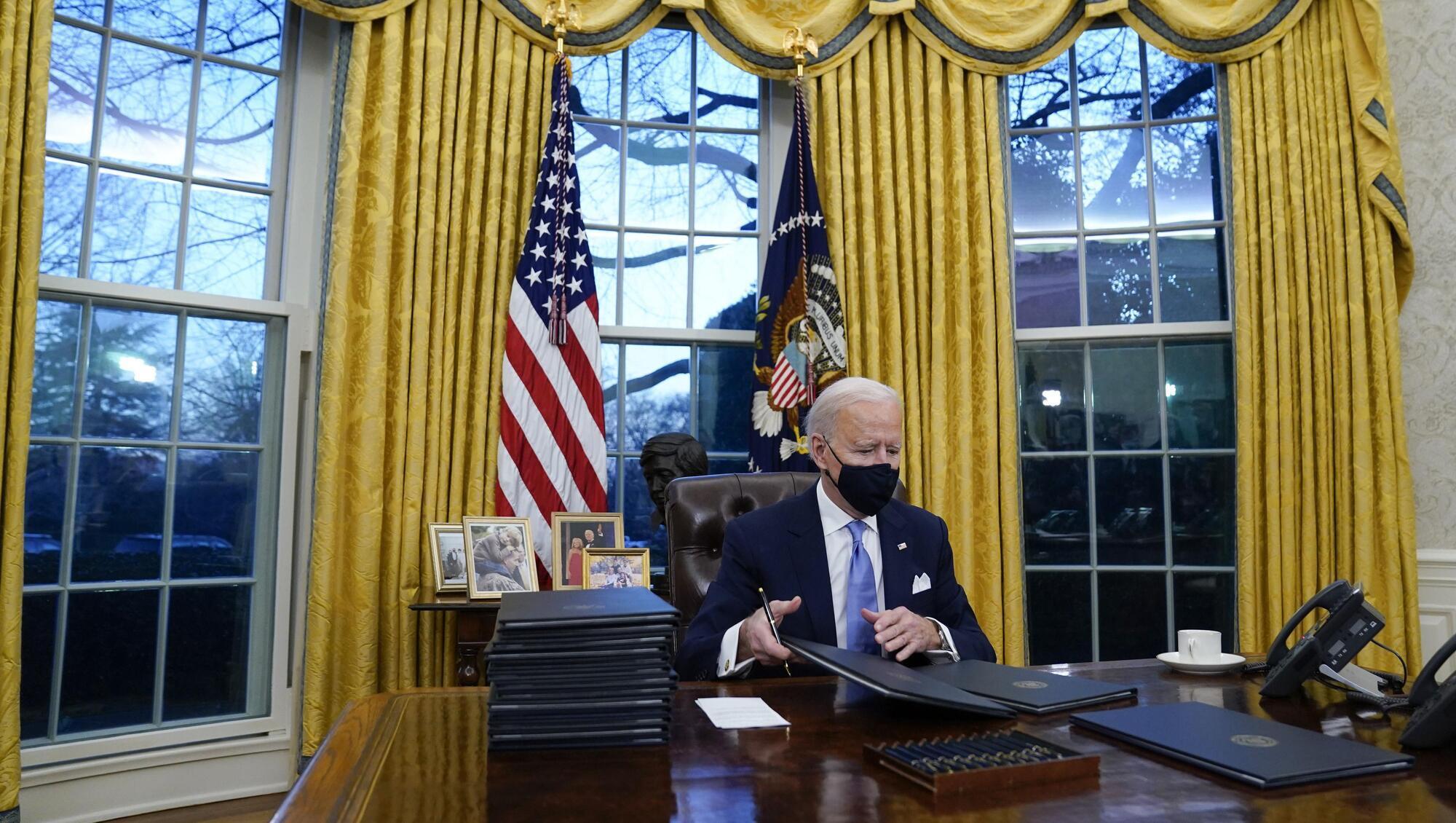
President Joe Biden signs his first executive orders in the Oval Office of the White House yesterday. He has inherited a mess that historians may eventually compare to the Great Depression. Photo: AP/Evan Vucci
It was Franklin Delano Roosevelt who set the standard for all future men and women who sat down in the Oval Office back in March 1933, vowing to take swift action in his first 100 days to halt the slide of the American economy into the abyss.
Historians place the Democrat alongside exalted names in American leadership such as George Washington and Abraham Lincoln for his New Deal, which brought the country back from the brink.
His first 100 days set the scene for his unprecedented four terms in office, enacting 15 major legislative measures and 76 laws passed overall.
Joe Biden has inherited a mess that historians may eventually compare to the Great Depression, with 400,000 Americans dead from Covid-19 and an economy struggling to get going again after a decade of growth.
He has been there before, alongside Barack Obama who passed the American Recovery and Reinvestment Act on day 29 of his administration, paving the way for a $787bn stimulus to boost the devastated economy from the financial crash of 2008.
He couldn’t possibly get as lucky as Ronald Reagan, who saw 52 American hostages released after 444 days by Iran a mere 20 minutes after he had been sworn into office in 1981.
In Joe Biden’s first 100 days, expect a flurry of measures designed to restore American influence on world affairs, which have taken a severe image hit during the tumultuous Donald Trump administration.
It is no easy task. Trump promised a glorious new healthcare plan in his first 100 days, but even with control of both houses of Congress, he failed abjectly to do so.
The Biden administration will look to have Congress pass a $1.9trn relief package for struggling Americans due to the Covid-19 pandemic as a matter of urgency. This is where chief of staff Ron Klain comes into play - the longtime Washington insider was with the former Vice President during the Ebola outbreak of 2014, as well as by his side during the aftermath of the 2008 financial crash.
He will be the conduit between the Oval Office and Congress as they attempt to pass the relief package, which is not without Democrat doubters. Americans will get an extra $1,400 under the plan, on top of the $600 in December, which was seen as a pittance by many struggling to pay bills.
Raising America’s corporate tax rate from 21% to 28% will also be a priority, but he may face stiff opposition, with conservative Democrats resisting, lest they upset their Republican constituents.
Expect conservative Democrat senator Joe Manchin of West Virginia to hold a crucial role in the 50-50 split Senate over the next two years, akin to Jackie Healy-Rae or Tony Gregory in Ireland, as he may be the key vote in getting things over the line with some sweeteners thrown in for his traditionally poor state.
A lack of a coherent federal strategy under the laissez-faire, and arguably Covid-19 denialist, Trump administration has led to a situation where 400,000 Americans have perished. Joe Biden has vowed that help is finally at hand, setting a goal of 100 million vaccines in the first 100 days.
A mask mandate for travel interstate and on federal property will require a major public relations push, but Dr Anthony Fauci of the White House Coronavirus Task Force will finally be taken seriously again.
Incoming health secretary (if confirmed), former California attorney general Xavier Bacerra, has signalled previous support for expanding healthcare in the US under a federal system, an idea that has been nixed as too radical previously, but may just get traction as the Covid-19 damage settles and Americans assess the fallout.
An executive order - where a President makes a decision without Congress - will be implemented immediately in order for the US to rejoin the Paris Accords, the commitment to reduce global temperatures through actions on human-made emissions.
His new cabinet-elect, including the first Native American secretary, Deb Haaland of New Mexico, who will lead the Interior Department, and former Michigan governor Jen Granholm as energy secretary, are seen as solid choices to tackle pressing climate emergency issues.
The Environmental Protection Agency (EPA), seen almost as a joke in the Trump administration, will get its teeth back with the appointment of Michael Regan, an African-American with an impressive record in tackling polluters in his native North Carolina.
His work with disproportionately affected disadvantaged communities - standing up for the marginalised - has led to some observers saying it could be a transformational pick.
President Biden will also signal his intent by reversing the granting of a permit for the Keystone XL oil pipeline, which is supposed to bring oil almost 2,000kms from Canada to Nebraska.
Having been a huge issue for environmentalists and Native Americans for years, it is a significant move.
So often the punching bag and scapegoat for Americans and their economic and social woes, immigrants to the US should have a less stressful existence under a Biden administration.
He will propose protection for Deferred Action for Childhood Arrivals (DACA) Americans, who came to the US as children of undocumented immigrants, while also providing a pathway to citizenship.
A Biden executive order will reverse a Trump executive order restricting entry into the US from predominantly Muslim countries, while the infamous “wall” between Mexico and the US will stop building.
Department of Homeland Security (DHS) secretary nominee Alejandro Mayorkas will have a tough job, trying to balance the rights of humanity with the rule of law in the US.
“We are a nation of immigrants and we are also a nation of laws, and I intend to apply the law. If people qualify under the law to remain in the US, then we will apply the law accordingly. If they do not qualify to remain in the US, then they won’t,” he told Congress members this week.
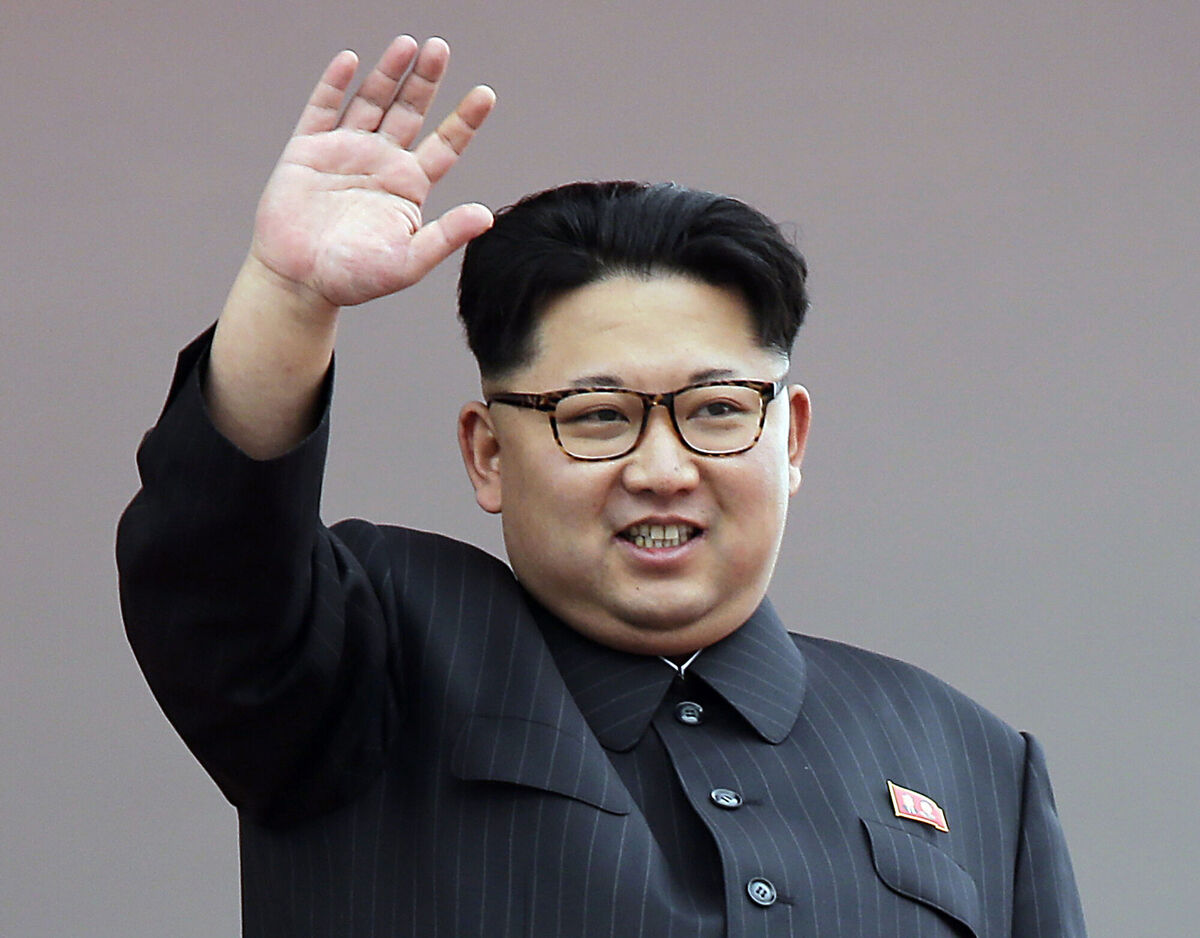
Expect North Korea to engage in stunts such as missile-testing in precarious locations in order to get Joe Biden’s attention, now that the public displays of affection between Donald Trump and Kim Jong-Un are gone.
Antony Blinken is expected to be nominated for secretary of state, and he is no stranger to rogue regimes such as North Korea.
The career diplomat is a firm believer in fostering and nurturing American relationships around the world, and he will have a lot of making up to do with allies in the EU.
It may be unlikely that China will test the Biden administration in his first 100 days, but if it makes military moves in Taiwan, the President will have his first major unenviable crisis to handle.

CONNECT WITH US TODAY



Be the first to know the latest news and updates