Elaine Loughlin: Government has yet to get to grips with the housing and homeless crisis
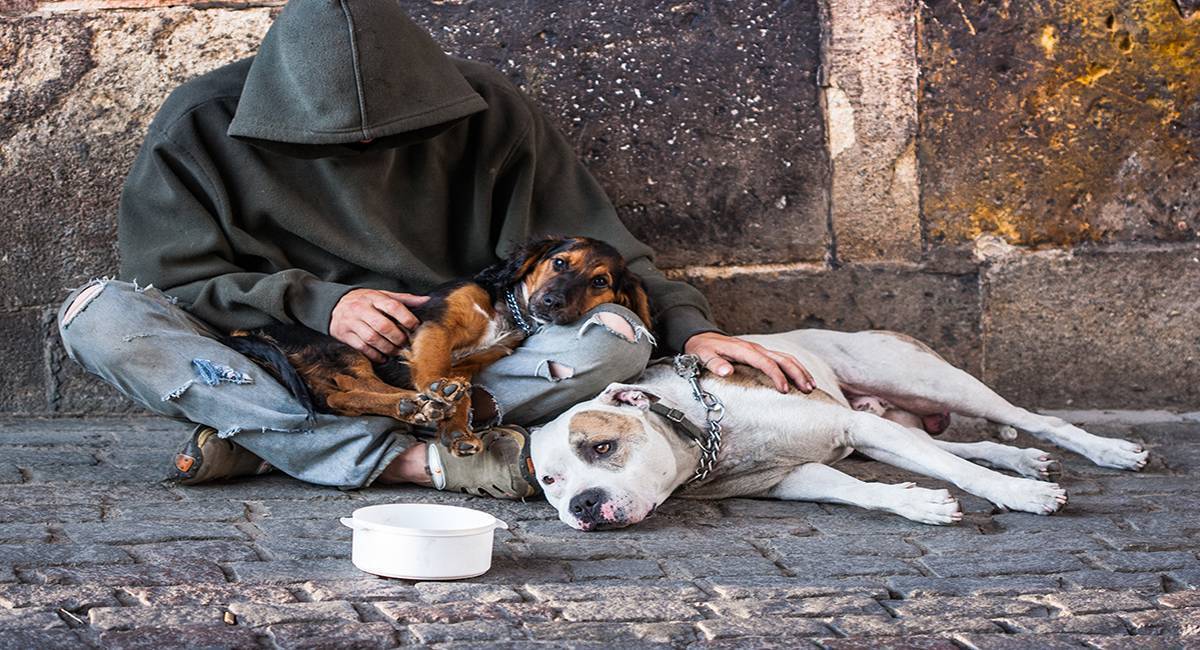
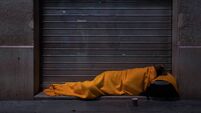
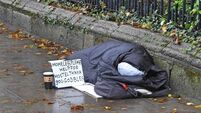
More than 2,600 children will spend Christmas in hotel rooms, homeless hubs, and B&Bs, while the number of homeless adults dying this year has increased in Dublin, Galway, and Cork. File Picture
Santa has been deemed an essential worker and will not face any Garda checkpoints on his way in and out of Irish airspace on Christmas Eve.
The recent Dáil announcement by Simon Coveney, the foreign affairs minister, was welcomed by little believers up and down the country.
However, more than 2,600 children will this year be directing Santa Claus to hotel rooms, homeless hubs, and B&Bs as they spend Christmas in emergency accommodation.
While the focus has, for obvious reasons, been on health over the past nine months, the housing and homelessness crisis has not simply been sorted. In fact, the figures have barely budged and at least one homeless person has died in the capital each week this year.
It has been a strange year; a year when through massive upheaval, uncertainty and loss, people came together and we witnessed the best of humanity.
Those working in areas that have too often been dismissed — our cleaners, our binmen, our supermarket shelf-stackers and, of course, our healthcare workers — have been acknowledged and applauded.
However, the Covid pandemic has diverted attention away from other urgent issues.
In the Dáil, Social Democrats co-leader Catherine Murphy last week reminded us that this time last year, we were facing into a general election where we knew that health and housing would be signification issues.
"However, the housing crisis has not received the same attention this year."
Timing is everything in politics and this time last year, Leo Varadkar's government was breathing a combined sigh of relief heading into the Christmas break having come under relentless and sustained pressure on the issue of housing and homelessness including a motion of no confidence in then minister Eoghan Murphy.
Fast forward 12 months and, with political eyes focused elsewhere, the death of a homeless man just metres away from the gates of Leinster House got a brief mention in the Dáil and barely a few column inches in the media. A second homeless man died in emergency accommodation on the same day last month.
By October of this year, the Inner City Helping Homeless (ICHH) charity had recorded more than 50 homeless deaths in Dublin alone, this compared to 37 at the same point in 2019. Spikes in homeless deaths have been recorded in Cork and Galway as well.
The two tragically anonymous deaths on November 25 came almost exactly six years after the passing of 43-year-old Jonathan Corrie, who was found in a doorway on Molesworth St, sparking a national outcry.
The day after the deaths of the two men, Sinn Féin's housing spokesman Eoin Ó Broin pointed to an interview given by Mr Corrie's daughter, Natasha, after his passing during which she said he could have been helped a bit more.
"On the basis of the very significant increase in the number of deaths among those who are either sleeping rough or in emergency accommodation, it seems that little has changed and that, in fact, some things are getting worse," Mr Ó Broin told the Dáil.
The neglect of — or at least failure to get to grips with — the housing and homelessness crisis and the slow progress made on building social housing, moving families out of emergency accommodation, and addressing the housing assistance payment (HAP) model been was apparent long before Covid-19 reached these shores.
This Government has continuously stressed its commitment to build more social houses and to move away from the HAP model that relies on private landlords to provide public housing and which was only ever meant to act as a temporary stop-gap when introduced in 2014.
 Micheál Martin has promised to deliver 12,750 new social homes next year, of which 9,500 will be new-build homes, and the remaining to be provided through leases.
Catherine Murphy has raised concerns around a move by local authorities opting for long leases instead of the State acquiring housing under Part V which was designed to deliver 10% of new developments as social housing.
"At the end of the 25 years, the properties revert to their developers. This appears to be the most expensive way of delivering social housing with no asset at the end," she said.
Leasing is a costly option which simply pushes the problem further down the road.
While the number of units being long-leased through Part V may still be relatively low it constitutes a worrying trend of developing a model that is simply HAP by another name.
One of the most important things for society is citizens having secure roofs over their heads. While an unprecedented €3.3bn housing budget has been approved for 2021, how it will be spent is critical.