Responsibility for Traveller accommodation must be taken from local authorities
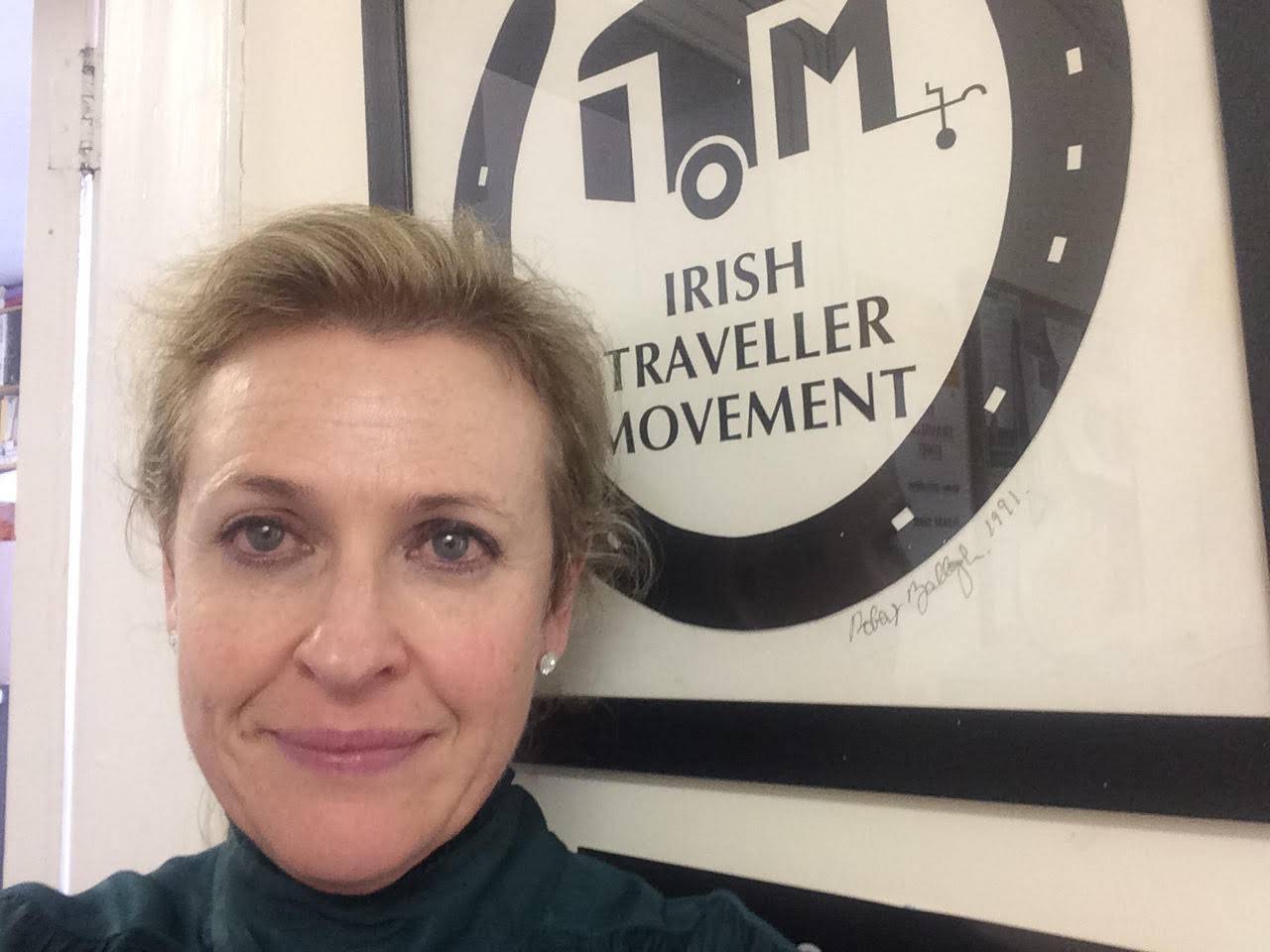
Jacinta Brack of the Irish Traveller Movement says Traveller families accounted for 10% of all families in emergency accommodation nationally last year.
The failure to supply Traveller accommodation is well documented and ingrained in systemic and institutionalised racism.
At delivery and supply level the structural and institutional opposition embedded in the cultural practice of personnel and elected representatives responsible for the spending of Traveller Accommodation budgets, has resulted in massive under-utilisation of allocations available prior to, during and post austerity.
Coupled with an often-hostile public opposed to Travellers living across every type of accommodation, this has caused a decades-long accommodation shortage for the community.
The current over-reliance on the private rental market for delivery of social housing through rent supplement schemes such as HAP and RAS has had repercussions for all recipients of social housing but has had a unique and disproportionate impact on Travellers, given the barriers they face accessing private rental accommodation.
A 2017 report by the Irish Human Rights and Equality Commission found Travellers to be 22 times more likely than any other group to be discriminated against in the private rental sector. For example, often when their identity becomes obvious to the agent, Travellers are told the house is no longer available.
“Travellers are as Irish as you & me. But they have been excluded from our society for generations,” says FRA’s @MichaelCJT at a #TravellerSurvey debate on discrimination. "The results can help policymakers deliver #equality & #inclusion for Travellers."
— EU Fundamental Rights ➡️ #HumanRights (@EURightsAgency) December 7, 2020
👉https://t.co/dFPofScOIv pic.twitter.com/Bb1Rc5WA35
For those lucky to secure one, they are sometimes outed by neighbours who in turn put pressure on landlords to evict them.
The upshot of that is a steep increase in Traveller homelessness. In 2019, Traveller families accounted for 10% of all families in emergency accommodation nationally and in Kerry in June 2019, for 23% of all homeless families.
The introduction of a data collection model, like an ethnic identifier to fully monitor their status, is still outstanding.
Objections at part 8 of the planning process, the public consultation stage for building Traveller-specific accommodation, is also a cause of a lack of supply. Much of this happens behind closed doors by interventions made in private to elected officials who in turn object to plans, fearful of their future political careers.
The burden of proof on Travellers and representative groups is no longer an issue and was confirmed again by an assessment of the current 5-year Traveller Accommodation Programmes adopted in December 2019. The Irish Traveller Movement conducted an audit of those which revealed that 30% of Traveller families in the State are currently in need of accommodation and yet eight of the 31 local authorities mandated to supply that accommodation, have set targets below the need they have identified in their own plans.
That audit highlighted a repeated pattern found in previous programmes of under-delivery, inadequate planning for future need and a failure to redress for families in roadside and overcrowded accommodation or for those who are homeless. Many of those local authorities had also failed to spend their Traveller accommodation budgets.
Ironically, the socio-economic long-term cost of non-implementation is far greater, and the ill effects far-reaching leading to chronic overcrowding, inhuman living conditions, worsening health outcomes, evictions and increased homelessness.
At the onset of the Covid 19 crisis, local authorities were provided with additional resources to support Travellers most in need of basic sanitation. In a reflection of the State’s failure in its duty of care, these provisions were not already in place.
Despite these additional resources, some local authorities dragged their heels in supplying them or to draw down funding available. Some of those were the same ones who consistently underspent budgets, without fear of sanction or rebuke.
The Irish Traveller Movement carried out an audit of the Traveller Accommodation Programmes 2019-2024 that confirmed a repeated pattern towards under-delivery, inadequate planning, failure to address temporary/roadside, overcrowded accommodation, and homelessness.
— Irish Traveller Movement (@itmtrav) November 24, 2020
Why should one group in Ireland face the same global crisis, but with unequal access to basic protective resources against the risk of infection, simply by an unwilling and sometimes dysfunctional local-based governance?
The road map towards improving the provision of Traveller accommodation has been laid out in the 32 recommendations of the government report the Traveller Accommodation Expert Review in July 2019. The implementation of those recommendations, rather than any recent political decisions, would bring about the necessary changes.
The cornerstone of these is the establishment of a centralised oversight and monitoring body to lead out on a national plan for delivery of accommodation for Travellers across this island. Its advancement would bring significant authority and drive, and provide the governance needed to tackle inadequacies at a structural level.
The next stage requires the Minister, Peter Burke, to prioritise a national oversight structure and consolidate those intentions into actions in 2021.

CONNECT WITH US TODAY



Be the first to know the latest news and updates