TP O'Mahony: Second lockdown will test our sense of social solidarity
Our sense of social solidarity, as well as our tolerance for unpalatable measures aimed at the common good, will be tested during the second lockdown.
Restrictions on personal liberties on the scale required by a national lockdown may even test our loyalty to and belief in the institutions of democracy.
No matter how well-intentioned or popular a government may be, there are limits, even in a crisis, to what citizens will endure.
For now, a suspension, however temporary, of constitutional guarantees of personal liberty is something citizens will live with. There has, of course, been no formal suspension or abrogation of constitutional rights.
We have voluntarily assented to the lockdown and all that this involves, however inconvenient.
But the Government must not be unmindful of this. There is a limit to the public’s patience: citizens are unlikely to acquiesce in the face of a succession of lockdowns in the absence of an exit strategy.
Restrictions on freedom of movement and freedom of assembly – the right to gather together in places of our own choosing, whether in places of worship, sports stadiums or pubs – are so far proving acceptable.
We do this because the common good requires it. But our history since independence shows that we do not, as a people, possess a very well-developed sense of the “common good” – selfish individualism and the pursuit of sectional interests have been more characteristic of us.
Read More
Instead of a tradition of social egalitarianism, we have bred a form of social Darwinism which has promoted a corrosive individualism and a “survival-of-the fittest” ideology.
The hope must be that in the midst of this global pandemic we will see emerging a new and enriched sense of the common good.
Shortly before he died in May 2011, former taoiseach Garret FitzGerald wrote an article (published in the ) in which he sought to explain the failure to develop a civic morality in Ireland.
“A factor common to a whole range of recent Irish economic and financial failures seems to have been a striking absence of a sense of civic responsibility throughout our entire society.”
Dr FitzGerald said the source of Ireland’s lack of civic morality was to be found in our history.
Instead of talking about the lack of civic morality, he could have talked instead about the absence of any sense of “social sin” in this country.
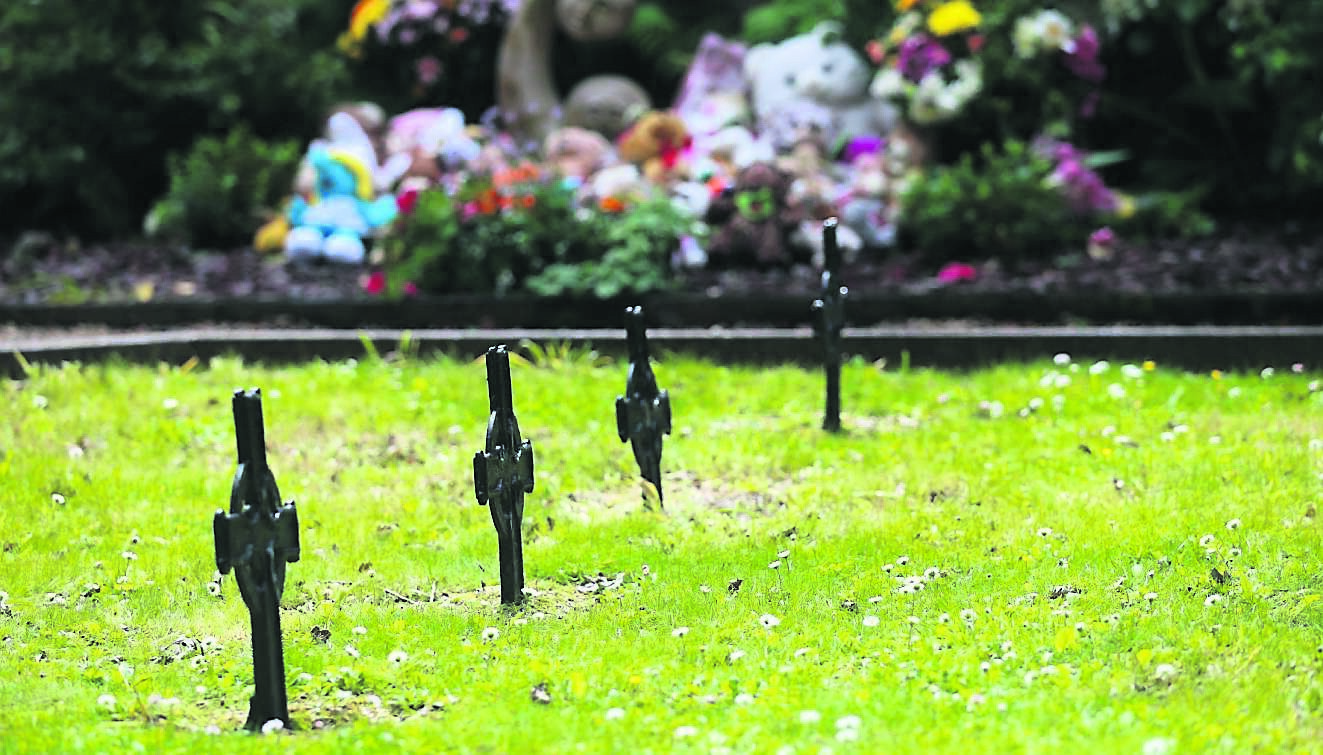
For far too long we were happy to see young women who gave birth “outside of wedlock” consigned to Mother and Baby Homes, but widespread tax evasion was never seriously tackled.
The monolithic Catholic Church concentrated much of its energies on aspects of sexual morality, failing to develop – despite a series of powerful social encyclicals from a succession of popes – any sense of a “social gospel”.
I was reminded of this as I listened to an interview with the Harvard philosopher Michael Sandel on BBC Radio 4. He is the author of a new book entitled , having previously won huge acclaim for his 2012 book, .
Sub-titled 'The Moral Limits of Markets', in this he passionately opposed the commonly-held assumption of modern public life – that moral and religious notions are private matters that should be kept out of public political debate.
“Over the past three or four decades,” he wrote, “markets – and market values – have come to govern our lives as never before. We have moved from having a market economy to living in a market society, in which just about everything is up for sale.”
He argues for politics centred on human dignity and the common good. In the midst of the Covid-19 crisis, the slogan “We’re all in this together” hints at the importance of a sense of the common good.
The idea of a collective effort, or of a people making a collective sacrifice for the good of all, at least holds out the hope that when this crisis passes – and it will pass – there might emerge in its wake a new sense of civic responsibility.
The hope here in Ireland must be that the shared experience of the restrictions, privations, hardships and interdependency imposed on us by the pandemic will foster a new sense of the common good and of social solidarity.
There is, of course, a bigger picture, and Pope Francis looks at this in his new encyclical, (“Brothers All”), on fraternity and social friendship.
One of the central themes of this latest encyclical – the most important papal social document since Pope John XXIII’s famous 1963 encyclical (“Peace on Earth”) – is our shared humanity rooted in human dignity.
“Social friendship and universal fraternity necessarily call for an acknowledgment of the worth of every human person, always and everywhere.
"If each individual is of such great worth, it must be stated clearly and firmly that the mere fact that some people are born in places with fewer resources or less development does not justify the fact that they are living with less dignity.
"This is a basic principle of social life that tends to be ignored in a variety of ways by those who sense that it does not fit into their worldview or serve their purposes.”
Pope Francis says that a worldwide tragedy like the Covid-19 pandemic has revived “the sense that we are a global community, all in the same boat, where one person’s problems are the problems of all. Once more, we realised that no one is saved alone; we can only be saved together.”
We are all part of one another, the pope stresses. “We are brothers and sisters of one another.”
And he sounds a grim warning: “The notion of every man for himself will rapidly degenerate into a free-for-all that would prove worse than any pandemic.”

CONNECT WITH US TODAY



Be the first to know the latest news and updates