Slawomir Sierakowski: Predictions of return to European hegemony prove wildly inaccurate
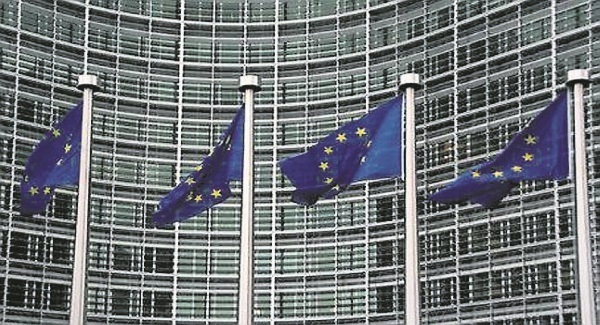
With the rise of China and and an introspective US, the continent faces an uncertain future and a vassal status writes .
IN 2004, the American economist Jeremy Rifkin wrote a bestselling book, The European Dream, in which he proclaimed that the 21st century would belong to Europe — and even would depend on it. In Rifkin’s view, a Europe held together by the idea of “unity in diversity” would be the most effective answer to globalisation.
Europe was supposed to represent a new “global awareness” and “freedom from the slavery of materialism,” which would be “replaced by empathy”.
We all know how that turned out. The materialistic United States, which Rifkin expected to be eclipsed by Europe, was better able to weather the financial crisis. Brexit, the crises in Greece and Catalonia, and the implosion of liberal democracy in Central and Eastern Europe have highlighted the shortcomings of unity in diversity.
And European societies’ hostile reaction to the wave of migrants fleeing wars and hunger demonstrated that empathy has failed to overcome materialism.
The error was not Europe’s, but Rifkin’s. Europe was not, and is not, bound to succeed. In fact, as 2019 comes to a close, the European Union is seemingly helpless and resigned in the face of its most important challenges: Completing the economic and political integration of the bloc, creating a common defence policy, and even safeguarding basic standards of the rule of law.
Poland’s government, for example, is responding to a European Court of Justice decision regarding violations of judicial independence by introducing legislation that would allow the country’s judges to be removed for criticising violations of the Polish constitution. When leaders of Poland’s ruling Law and Justice (PiS) party proclaim that “this caste must be disciplined”, what can the EU do?
Rifkin’s analysis does not focus much on China, whose emergence as a global leader is displacing not the United States, but Europe. China is now the world’s largest exporter, and, as the biggest producer of electric cars, it may soon overtake Germany to becomethe global leader in the automobile industry.
America’s position as the world’s leading military, financial, and innovation power is not threatened for now.
The US withstood previous challenges from Germany and Japan in each of those areas, and very likely will resist China’s competitive threat, too. But Europe very likely will not.
In fact, we are witnessing a great reversal of roles between Europe and China compared to the 19th century. For China, the 1800s were the “age of humiliation”, a period when it was infiltrated by the French, British, and German empires, as well as by Russia and the US. These foreign powers imposed humiliating trade treaties, subordinated and exploited China economically, and controlled it politically.
Today, the EU increasingly resembles 19th-century China: A still-rich empire that cannot be occupied by others, but is weak enough to be infiltrated and exploited. China, meanwhile, has assumed Europe’s former role, with its companies and investors increasingly penetrating the European economy and extending their influence.
Chinese investors are buying Europe’s best factories (including the pearl of German robotics, KUKA) and its largest ports (including Duisburg in Germany, the world’s largest inland port, and Piraeus in Greece). They are signing unequal economic agreements and gradually conquering the EU, beginning with the weakest links, namely Eastern and Southern Europe – and, in particular, Hungary, Greece, and Portugal.
Worse, there is no reaction from Brussels. There is a rickety plan to build European industrial champions, but it is being blocked by the fear of violating EU competition rules.
In addition, European leaders’ silence on questions of human rights is deafening. While Hong Kong’s citizens protest, and the US Congress passes legislation threatening possible sanctions on Chinese and Hong Kong officials for human-rights abuses, Europe puffs itself up and “calls on both sides to refrain from aggression”.
Europe can only watch from the sidelines, because it has no arguments to make. Transatlantic unity is disappearing, and nothing new is emerging in its place. Even cooperation among European intelligence services is a sham: journalists knew who murdered a former Chechen rebel commander in Berlin’s Tiergarten park in August before Germany’s politicians did.
If this stagnation continues, the only question is whether Europe will become the satellite of the US or of China. And, ultimately, that will be decided outside the EU. If isolationism wins out in America, Europe will become a Chinese satellite. And if the US maintains a confrontational stance vis-à-vis China, Europe will remain dependent on America.
Until recently, Europe could have hoped to be a partner for the US. But that now appears increasingly unlikely — not only because of US President Donald Trump’s America-first instincts, but also as a result of the EU’s own failings. In the face of a rising China, European passivity is no less problematic than Trump’s unpredictability.
CONNECT WITH US TODAY



Be the first to know the latest news and updates