Taxpayers let down over historic assurances about Nama

The reassurances on Nama made by the late Brian Lenihan a decade ago were a puff of smoke, writes .
A decade ago, the then finance minister, the late Brian Lenihan, was shoulder deep in his efforts to rescue the country from financial abyss.
One of his key weapons to do so was the creation of the State’s bad bank, Nama, or the National Asset Management Agency to give it its due regard.
Its stated job was to take over control of loans originally worth €74bn by paying the banks just €32bn for them and take 10 years to work out those loans, good and bad and return as much money as possible to the taxpayer.
The size and scale of what Nama was tasked with was simply incredible. It was the single largest property portfolio in the world when it kicked into life.
One of the major accusations levelled at Lenihan and Nama at the time was that it was a bailout for developers.
It was a lifeboat to the buccaneers who, along with their pals in Anglo Irish Bank, Irish Nationwide, AIB, and elsewhere, had played fast and loose, lost but were now looking to the State for a lifeboat.
A big fear, expressed by many, was that by dealing with developers, Nama was leaving the door open to them being able to buy back their loans at a major discount down the line.
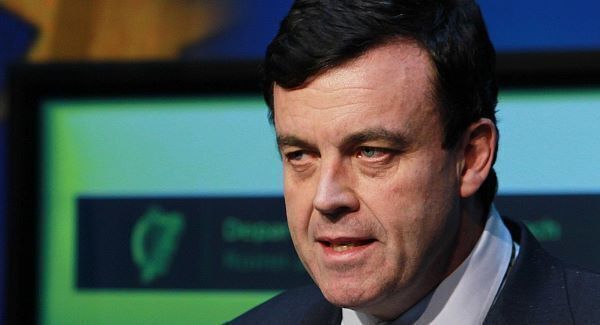
Seeking to reassure the opposition, Lenihan and the then government made clear such an eventuality would be against the Nama Act. A clear breach, it could not happen.
A decade on, we now know those reassurances from Lenihan were a puff of smoke.
At its weekly meeting in Leinster House yesterday, the Dáil’s public accounts committee (PAC) got stuck into Nama and the weaknesses in how it protects the taxpayer.
During the discussion, section 172 of the Nama Act, which deals with the issue of the assurance about the ban on the resale of properties back to developers, came up.
Comptroller and Auditor General Seamus McCarthy was called on to explain the matter and in doing so dropped a major bomb.
“Section 172 is a legal prohibition on Nama which stops them selling an asset back to an owner or someone with an interest in that asset. But it is a very restricted provision in the law. It only applies to a sale by Nama, not by a borrower or a receiver," he said.
It only applies to the sale of a property and not to the sale of a loan
The significance in what he said was that Nama’s disposal of the €74bn has been done primarily by the developers or receivers and not by it directly. Therefore such sales were not covered by the ban.
McCarthy said Nama has sought to extend the principle of section 172 to the sale of loans but it has no statutory powers to do so.
“If Nama was selling property, that there would be some infringement or criminal offence, it is not in the same league when they have looked for the same declarations or assurances in terms of the sale of a loan.
“So it is very complicated. Any infringement or any irregularity around the sale of loan would not be strictly an offence under section 172 of the Nama Act,” he said coldly.
Committee members were aghast.
Social Democrats TD Catherine Murphy remembered what Lenihan had promised.
“Essentially, the legislation was presented in a particular light. The expectation was that the original owner would not become the beneficial owner at a reduced price. I think the public expectation was that someone would not be able to buy back their loans at a discount,” she said.

I think that was an important assurance that was given. There is at least one Garda investigation under way. Someone is back in control of their an asset that was substantially discounted.
“I have no doubt in my mind there are people back in control of their assets. It is very frustrating to see it. It is certainly not the way the public expected the law to operate in practice.”
Committee chairman Sean Fleming added his voice to the frustration.
“Nama made the developer do the selling, one stepped remove. So very little [of the billions of loans] was sold under section 172, which we thought was the belt and braces to protect the taxpayer. That was the Oireachtas, not Nama who drafted that. This main safeguard to the taxpayer did not really apply,” he said.
Members of the PAC clearly stated that the fault was not Nama’s but by the Oireachtas of the day which drafted the legislation.
Fleming also concluded that it “would have been impossible” for the Department of Finance not to be aware of the gap in the law, having been told by Nama, but chose to do nothing about it.
Fianna Fáil’s Marc MacSharry said while Nama will turn out to return a €4bn surplus to the taxpayer, we simply do not have enough transparency to know if it did a good job or not.
Yet again, when it comes to Nama, assurances made about the taxpayer being sufficiently protected have been greatly undermined.
CONNECT WITH US TODAY



Be the first to know the latest news and updates