New report shows hostage, suicide scenarios on the increase
Amid the sea of statistics and targets in the Garda Síochána’s annual report for last year, there is an issue of public interest that has not previously received much if any publicity.
There were 61 volatile situations, described as hostage, barricade and suicide incidents, that gardaí were called to deal with in 2017.
Many people will recall the tragedy of Abbeylara, Co Longford, and the death of John Carthy in April 2000, and the necessity of a professional, structured and trained response to such incidents.
The report said all 61 incidents last year “were resolved successfully”. This is a result worth highlighting given the prospect of a different outcome.
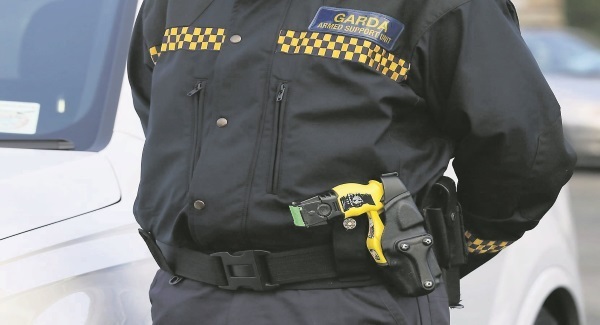
The report said those gardaí involved were from the little-known National Negotiation Unit and the organisation’s specialist firearms intervention squads, the regional Armed Support Units and the elite Emergency Response Unit.
The 61 incidents involved the threat of harm to another person, whether by being kept hostage or barricaded into a home by an individual, or the threat that the individual was threatening to harm him or herself.
The report said the situations were resolved either through the work of National Negotiation Unit negotiators or intervention by Armed Support Units or Emergency Response Unit.
“There is no doubt that such negotiation and intervention helped to prevent loss of life in some instances,” it said.
The report said it has seen a rise in such situations in recent years. “The National Negotiation Unit has noticed an increase in such incidents and they are continuing to liaise with mental health professionals at Dundrum Central Mental Hospital in an effort to identify any patterns emerging,” it said.
The National Negotiation Unit, as well as the Armed Support Units and Emergency Response Unit, comes under the remit of a recently established Special Tactics and Operations Command, part of the Garda Security and Intelligence Section.
The report highlights the scale of activity involving the Armed Support Units and Emergency Response Unit. In Dublin alone, there were 383 requests to have the Armed Support Units available to divisions, including 295 situations over armed backup in searches and arrests. There were 63 cases where the Armed Support Units was needed for large-scale public events, escorting a high-risk suspect to court, where a suspect was released from prison or to deal with organised crime activity. Reflecting the level of Garda operations targeting the Kinahan-Hutch feud, the Armed Support Units took part in 980 Hybrid checkpoints, on average, per month during 2017.
The Emergency Response Unit was involved in high-level operations against gangs (and dissidents), including the arrest of four members of an organised crime group about to commit a murder and the arrest of another four members, caught in possession of three firearms, also about to carry out an assassination.
Elsewhere, the work of the Drugs and Organised Crime Bureau in targeting criminal gangs is detailed. This included 26 threats to life operations, in which assassination attempts were thwarted, resulting in seven people being charged with conspiracy to murder in three cases. A total of 29 firearms and 1,900 rounds of ammunition were recovered.
In addition, nearly €3.5m in cash was confiscated and €75.6m worth of drugs seized. Though the report doesn’t give the number of drug seizures, the valuation compares to €29m worth of drugs seized in 2016.
Last year’s rise was driven by hauls of cannabis herb, jumping from 480kg (worth €9.6m) in 2016 to 2.6 tonnes (€53m) in 2017. Seizures of cocaine fell (91kg to 52kg), as did heroin (38kg to 18kg).
Information was less detailed on the Special Detective Unit in relation to combating terrorism, though the report did say the Counter Terrorism Domestic Investigation Unit recovered AK47 assault rifles and rockets as well as explosives.
The Special Detective Unit arrested people following an investigation into the leadership of the Real IRA and one man (Seamus McGrane) was convicted of directing terrorism. In other areas, the report said the Victim Identification Unit, based in the Online Child Exploitation Unit, identified 35 victims of child sexual exploitation since it was set up in July 2017.
It said the Garda National Immigration Bureau conducted 31 arrests under Operation Vantage, targeting sham marriages, and hundreds of immigration permissions were revoked.
A further 22 people were detected under Operation Sonnet, targeting illegal immigration. Some 3,900 people were refused entry.
The Stolen Motor Vehicle Investigation Unit recovered 45 vehicles, worth €1.4m, while the Intellectual Property Crime Unit directed the removal of 194 web pages selling counterfeit goods and foodstuffs.
Support units
* The Garda Dog Unit (GDU) was involved in 472 searches in 2017, including in missing person cases, drugs, firearms, explosives, and stolen property.
On March 25, the GDU with a drugs and firearms detection dog assisted Drogheda gardaí with the search of two premises and surrounding areas in the aftermath of shots being fired through the front window of a house.
During the course of the search, the dog detected a shell casing used in the shooting as well as a small amount of heroin.
The GDU member indicated to the search team an area where a firearm could possibly have been discarded and, as a result, a loaded 9mm handgun was located that had been thrown over the back wall of the premises by a suspect.
* The Garda Air Support Unit (GASU) was used in 1,904 incidents in 2017, totalling 1,055 hours.
It was involved in the apprehension of 170 suspects, locating 10 missing persons and the recovery of 61 vehicles.
This included a dramatic, cross-city tracking of a male armed with a machine gun who hijacked a number of vehicles on October 23. GASU directed ground units and the man was arrested.
Barricades
* Gardaí responded to a call for assistance when a man barricaded himself in his home with a full petrol cannister and stated he was going to burn his house down.
The front hall had been doused with petrol and the front door completely barricaded.
A Garda negotiator and on-scene commander were summoned and the ERU was placed on stand-by.
An emergency action plan was put into action and the rear door was breached and entry gained.
The male was detained under the Mental Health Act.
* The ASU responded to a call where it was alleged a man had stabbed his wife.
They noticed blood on the front door, so a decision was made to breach the door and search the apartment.
Two people were found with stab wounds. The woman appeared to be dead for some time, while the male was found with a knife protruding from his chest.
ASU gardaí performed CPR on the man until paramedics arrived.
The report said the decision of the ASU to breach the door in a timely fashion, resulted in the male surviving and being brought before the courts and charged with the murder of his wife.
CONNECT WITH US TODAY



Be the first to know the latest news and updates