Time has come for the Church to repent for its sins
Reconciliation is a risky undertaking, but the Irish can be a forgiving people. Pope Francis, we’d like to move on. Help us in that process, writes

How do you forgive someone who isn’t sorry?
Forgiveness, even when your wrongdoer stands before you asking for mercy, can be a hard act to stomach for the most saintly of human beings.
But to actively forgive when your wrongdoer is silent or, worse still, unrepentant, must be the hardest of things for a human to do.
In July 2016, a man by the name of Tony Walsh was jailed for seven-and-a-half years for raping a boy three times, once with a crucifix. He had previous convictions for sexual assault. Walsh had been ordained as a priest in 1978.
Two days after his first appointment as a curate in Ballyfermot, a complaint was received in the Archbishop’s House that he had sexually abused an eight-year-old boy.
Over the course of the next 15 years or so, complaints would be received here and there and Walsh would be sent to England for treatment or moved to a new position. The first complaint about him was made to gardaí in 1991, by a parent of a boy he tried to assault. The gardaí would receive more of these complaints, only ever from parents, in the following years. It would be 1995 before the Archdiocese itself would provide the gardaí with all the other complaints about Walsh, 17 years after they had received their first one.
It’s not that there is anything particular about Walsh’s case. It models the Catholic Church’s standard handling of abuse allegations: Priest abuses child, Church hears about abuse, priest is moved to another parish, priest receives private Church-run counselling, priest goes on abusing.
The State and the law of the land remain in the dark and the priest goes on to leave a trail of destruction in his abusive wake, including at worst, the suicide of his victims, as has been documented.
Pope Francis will arrive in Ireland on August 25 and spend 36 hours here. He will visit Áras an Uachtaráin and the Capuchin Day Centre for the homeless. Whether he will meet with survivors of clerical abuse remains to be seen, because his “time is very tight”.
Time is tight, it seems, for a visit that has been more than four years in the making. It is tight for a visit that was officially announced last March.
In the Church’s own teachings, forgiveness is comprised of a few parts. We confess our sins and make amends through the sacrament of penance.
Penance means repairing the wrongdoing. Penance must take the penitent’s personal situation into account. The penance must correspond with the gravity of the sins confessed. Penance can be a work of mercy, a sacrifice or a service to others.
But when penance is not forthcoming, forgiveness can be hard, and reconciliation and healing harder still.
A lot has changed since Pope John Paul II’s visit here in 1979. Homosexuality has been decriminalised in Ireland. Divorce is legal. Men can openly love and marry other men, and women can openly love and marry other women.

Something else has changed here too. Years of abuse scandals have blighted people’s faith. The Church’s unwillingness and inability to really say sorry has isolated and damaged not only victims, but those who would like to have a faith in a power higher than themselves.
In Budapest, there is a Jewish synagogue, its courtyard a memorial to the Holocaust, its walls a canvas of images from before, during, and after the Second World War.
In the same city, there is another memorial, the Shoes on the Danube Bank, remembering the Jews shot barefoot on the bank of the river between December 1944 and January 1945. They were rounded up from the newly established ghetto, ordered to take their shoes off, and shot dead by the fascist militia. Their bodies fell into the Danube, to float away. It’s estimated that 20,000 Jews died in this way.
Memorials and visual reparations of this kind serve as reminders of historic wrongs and go along way towards healing and forgiveness. They also help to make sure the same does not occur again.
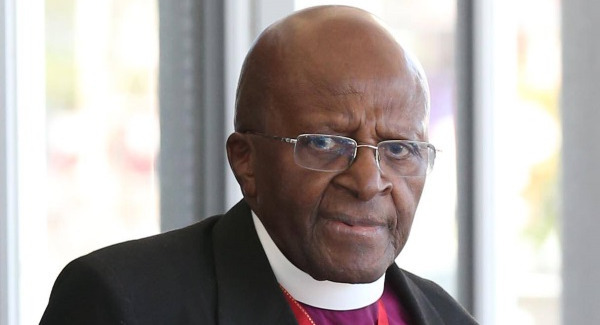
Anglican cleric Desmond Tutu’s practical thoughts on forgiveness are easy to stomach.
“Forgiving is not forgetting; it’s actually remembering,” he said. “The remembering part is particularly important. Especially if you don’t want to repeat what happened.”
However, what the former Archbishop of Cape Town has to say about reconciliation is probably more important in the context of Pope Francis’s upcoming 36-hour visit.
“True reconciliation exposes the awfulness, the abuse, the hurt, the truth,” said Archbishop Tutu.
“It could even sometimes make things worse. It is a risky undertaking but in the end it is worthwhile, because in the end, only an honest confrontation with reality can bring real healing. Superficial reconciliation can bring only superficial healing.”
Pope Francis, that your time is tight is undeniable, but beware you are visiting a changed land compared to that visited by your predecessor.
You are entering a land where 3.7m of our 4.7m people still identify as Catholic and there is not one of those several million citizens who would ever condone the sins of your Church.
You’re entering a land where wider access to education has lifted many boats and given rise to critical and independent thinking.
You’re visiting a people who have swapped blind deference for the brave questioning of authority, both official and otherwise.
You’re meeting a people where 468,400 of us declared ourselves as having no religion in the last census.
And most of all, you’re visiting an increasingly secular state, but a state that knows the importance of accepting religious difference; a state compromised of Hindu (14,300), Muslim (63,400), and Church of Ireland (126,400) people.
Pope Francis, we know you are here for a short time, but it would be prudent to use your time wisely. Forgiveness is hard but it’s made all the more harder, when the doer of wrong is unwilling to engage.
As Desmond Tutu said, reconciliation is a “risky undertaking”, but the Irish can be a forgiving people.
Pope Francis, we’d like to move on. Help us in that process.