Dermot Morgan's son says he knew how to be one hell of a Father, Ted
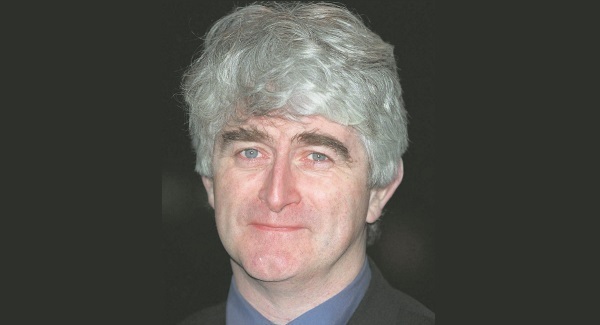
Since my first son was born in 2015, I have been trying to understand my new role in the absence of my own father, Dermot Morgan, who today will be dead 20 years.
As my now two sons grow up, I want them to be unafraid to learn from all experiences, even unmitigated disaster. I also want them to judge people not on preordained assumptions but on their individual qualities; to understand life is full of choices. At a time when how boys are raised has been most critical, my dad, by his example, has influenced my hope that they will be feminists.
As I’m writing, they’re upstairs, asleep. I say asleep, but that’s a loose concept. Peter, the younger, is 15 months old and is fogging it like Sonny Liston after catching an eyeful of Mohammed Ali’s fists. Dermot is my oldest boy.
He’s two and a half. He has pulled up the blind and is now reading loudly from a book. Dermot is the moon and Peter is the sun — the former is intense, achingly funny, and greets everyone in shops; takes apart and puts together things and, best of all, wants you to be with him.
He always wants to ring family and friends to say hello. Peter grins from ear to ear which belies the fact that he has twigged everything. He’s cool with that, and he’s quite happy that his big brother will do the running. They’re as unselfconscious as they come and we hope they stay that way.
To paraphrase his old adversary, Eamon Dunphy, my dad wasn’t a good dad — he was a great dad. He was fun, he was open to sharing his life with us and wanted us to share our lives with him. He was fair, funny, sincere, and, most of all, willing.
He was extremely keen to make time for us. But he also worked extremely hard. When he was off gigging or
filming, he’d ring every day to check in. We’d repay him by belting out a chorus of Harry Chapin’s ‘Cat’s in the Cradle’ down the phone for our amusement. If he was sad missing us, he understood sadistic humour from his offspring was a price to pay for raising us with a love of laughter.
As I mulled over my experiences of being a son, it struck me that, although he loved footie, meeting mates, and
having the craic, my dad wasn’t a cartoon alpha male.
He was emotional, emotionally aware, and willing to share. Despite an ability to seem like he wasn’t listening, he would upend your assumptions about what had passed through his mass of white hair and planted itself in his busy brain.
When, through my own web of lies as a teen, I let slip that I was smoking, he dredged up every half comment,
allusion, and opinion I’d ever uttered near him, to cross-examine me as to how I could ever smoke.
I want to give my kids a childhood where they will be free to be who they are, but, as importantly, I want them to know they can do anything they want with their lives and so can everyone else. It’s a matter of choice, of tolerance, of good grace. I want them to grow up knowing and respecting women, to be emotionally aware and willing to listen to women and their experiences.
Supporting women’s right to equal and fair treatment is not a matter of bestowing a gift, but of vindicating their entitlement to the same opportunities and choices as men as a matter of course.
The old line in Scrap Saturday that the Church isn’t an equal opportunities employer is one of my favourites and speaks to a wider truth about Ireland. At home, my dad would often put on the voice of a long retired politician and make a pointed comment that, in Ireland, women ought to be “chained to the sink, barefoot and pregnant”.
The reality is that the right and actually Christian thing to do is to treat all as you would like to be treated. If you’re a boy, you wouldn’t like to be dismissed because you’re a boy. I hope my children will continue to treat as they find, with respect and kindness.
What I also learned from my dad is that bottling it up isn’t the same as coping. He did, for the most part, find his upbringing reflective of a pronounced imposition of defined gender-based behaviours and responses. He was an emotional man, and by and large, his life was defined by his learning to understand his emotional responses.

What I want for my boys to learn is to articulate their feelings, describe them and know it’s okay. Unfortunately this may be an uphill battle, as men and boys are still told that, to do that, is the opposite of manly. The trend of the last decade towards hyper-masculine behaviour has seen young men surrendering their emotional awareness and personal responsibility to a seemingly accepted but destructive machismo.
‘Manning up’, as the comedian Robert Webb points out, means ignoring your emotions. As a kid, I knew my dad to be someone who refused to ignore them. He’d give in to them, even if you were a teenager and it was totally
embarrassing. I can still remember with incredible clarity a day he did the most dadly thing and responded in the most emotionally honest way.
My maternal grandmother had died overnight in Hamburg and the next morning Dad was taking us fishing in Bullock Harbour, just outside Dalkey in south Dublin. My mother had no choice but to go to work that morning. She was in Dublin, my grandmother was in Hamburg, and what has to be done must be done, which in her native Hamburg is reduced to a pithy Low German seanfhocail: ‘Wat mutt, dat mutt’ (what must, that must).
What else could be done? We told my dad in the driveway when he came to collect us. He sobbed his heart out. He was very fond of her, as my German grandparents had been of him, even if they didn’t really understand him and even though my parents’ marriage had long since ended.
There wasn’t another soul around, but my 13-year-old self wanted the ground to swallow me up.
If I had that time again, I would cry with him. It was healthier, it was right, and we still went fishing which, at the time, I was most concerned would fall by the wayside.
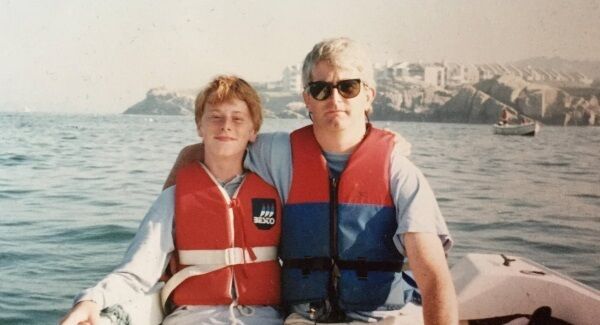
Of all the summers of my life, the ones where we went fishing off Bullock Harbour were the sunniest, shiniest ones. They were some of the closest we had with our dad. Nowadays, Bullock Harbour still looks the same, despite the irresistible march of development along that piece of coastline.
Back then as now, on a fine day in September you get great mackerel near there and could rent a boat and off you went into Dublin Bay. There were silly voices, throwaway comments, and the bluest skies. It was nearly as nice as West Cork, but only nearly: Goleen at the right time of the year takes some beating.
If you haven’t read Webb’s book, How Not to be a Boy, go on to YouTube and watch the 14-minute interview he did for Channel Four News for a taster.
Webb refers to his daughter’s description of the ‘trick’, derived from ‘patriarchy’, which young Ms Webb describes as “the trick that makes men sad and women take rubbish jobs”. It’s a telling statement.
How boys are raised is more important now than ever, the scandals in Hollywood, pay disparity between the genders, and college ‘rape culture’ all point to a crisis in masculinity.
They have a lot of expectations older generations didn’t have, from what work they can and can’t do and what choices they can and cannot make, to the way they speak to their feelings. First among those newly refocused
aspects of parenting has been how boys grow up to be men and how they treat women.
But good men have gone before us and, in my life, I was lucky to have great male role models, not least my old man. I look to him as a starting point in raising my children to be feminists. Feminism, as I understand it, benefits everyone by fixing the systemic injustices perpetrated against a little over half of humanity.
Everyone is entitled to a fair shake and everyone ought to have the freedom to make their own choices and to do so on their own merits, irrespective of gender, notwithstanding background, race, or religion. No one ought to be judged by their biology but rather judged on their character.
We were brought up to be impatient for progress but to be willing to tolerate others and treat them with respect. My dad’s line of work was about puncturing thoughtless deference and taking a stick to give the stagnant pond a good stir to let the light in. That’s not a bad way to be.
If the future is indeed feminist, which I think and very much hope it will be, I want my children to make a positive contribution to the society their generation will shape and, all going well, will see the start of the next century.
Their grandad was a heady mix of pure willingness, guts, and wit. He was a man out of his time in his world view and his parenting style. It’s not a huge step to see how he pointed to where I want my children to go. They know who he was and if they show even an ounce of his guts and lust for life, they won’t go wrong.
CONNECT WITH US TODAY



Be the first to know the latest news and updates