TK Whitaker's financial mind kept ahead of ministers
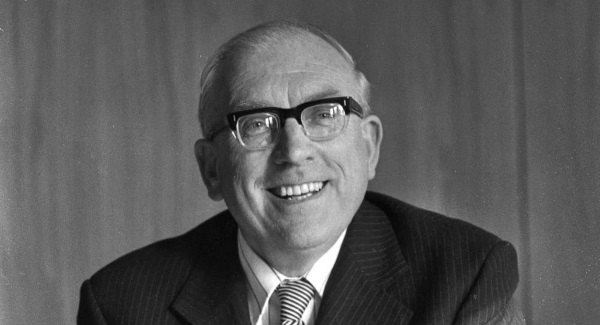
Probably the most phenomenal tribute paid to Thomas Kenneth Whitaker during his lifetime was his selection by RTÉ viewers in 2001 as “Irishman of the century”. He was selected ahead of such iconic figures as Éamon de Valera, Michael Collins, and Seán Lemass. It was a magnificent tribute for having played a pivotal role in the redevelopment of our economy during the latter half of the 20th century.
Whitaker was the epitome of the dedicated civil servant. Born on December 8, 1916, in Rostrevor, Co Down, where his father worked in factory management, he was reared in Drogheda from the age of six. He joined the civil service in Dublin in 1934, but continued his education by correspondence with the University of London, from which he earned a bachelor of arts degree in 1938, at the age of 21.
JJ McElligott, the longtime secretary of the Department of Finance, was impressed by the initiative and drive shown by Whitaker, whom he appointed as a special adviser on monetary matters to the new finance minister, Frank Aiken, in 1945. Aiken — who had strong unconventional ideas on finance — was not considered the sharpest minister in cabinet by either his colleagues or opponents. It was unprecedented for a 28-year-old assistant principal officer to have such access to the minister.
“I was assigned to act as his personal adviser, no doubt in the hope of diverting him from the extremes of heterodoxy,” said Whitaker. He and Aiken got on very well together.
“Keeping a few steps ahead of a ceaselessly inquisitive minister by attentive reading of economic and banking journals was, for me, excellent training,” recalled Whitaker. Aiken was not easily persuaded, but “was prepared to listen”, and Whitaker trained himself in the art of persuasion with Aiken.
“It was best to acknowledge first the good points of any idea he put forward and introduce the caveats only tentatively and gradually,” noted Whitaker. Aiken would then ponder those arguments in silence for extended periods. He actually encouraged Whitaker to continue his studies as an external student at the University of London, from which he earned a master’s degree in economics in 1952.
Despite his relationship with Aiken, Whitaker was recognised as a thoroughly professional civil servant, uncontaminated by party politics. Gerard Sweetman of Fine Gael, the finance minister in the first national coalition, appointed Whitaker permanent secretary of the Department of Finance in May 1956, over the heads of more senior people. He was only 39.
Insisting the department’s primary role should be economic development rather than just balancing the books, Whitaker became the inspiration for a dramatic and much-needed change in the economy, which was in deep trouble.
He
had the economic vision to revise the insular thinking behind the concept of protected economic development.
“Without a sound and progressive economy, political independence would be a crumbling façade,” he bluntly told Jim Ryan, the new Fianna Fáil finance minister, on his first day in office, March 21, 1957. Unless there were new policies, warned Whitaker, “it would be better to make an immediate move towards reincorporation in the United Kingdom rather than wait until our economic decadence became even more apparent.”
Ever since Fianna Fáil first came to power in 1932, protectionism had been a fundamental aspect of its economic approach, but Whitaker recognised that it was condemning the Irish people “to a lower standard of living than the rest of Europe”. Consequently, he suggested a free trade approach and the abandonment of the protectionist policy advocated by Seán Lemass for over 20 years.
Lemass would become the minister that the public would most associate with the economic turnaround. He deserved the credit for recognising the need for change and freeing “the government of the day from the shackles of outmoded self-sufficiency policies and orient them fully towards free trade”, according to Whitaker.
By demonstrating that “dynamic progress” could be made in agriculture, fisheries, and tourism, the government was able to “regenerate confidence in our ability to manage our affairs successfully”. Traditionally, civil servants stayed in the background and kept a low profile, but taoiseach Éamon de Valera, tánaiste Seán Lemass, and finance minister Jim Ryan all agreed Whitaker should be openly credited as the inspiration of the Programme for Economic Development in 1958, by publicly calling it the Whitaker Plan. “It was a deliberate decision, part of our effort to get economic development away from party political tags,” Lemass later explained.
In the process, Whitaker was really being used. He was being credited with the change, but he had the courage and confidence to embrace this departure from the bureaucratic norm.
Whitaker thereby played the pivotal role not only in steering the economic recovery associated with the Lemass years, but also in the normalisation of relations between Dublin and Belfast by helping to set up the first North-South summit meeting since the 1920s.
Over the years Whitaker developed a good working relationship with five different finance ministers, but there was no warmth in his relationship with the sixth, Charles J Haughey. There was little rapport between them because Haughey’s autocratic ministerial sensitivities were affronted by the strong-willed secretary speaking his mind.
In 1969 while Haughey was finance minister, Whitaker retired as secretary of the department even though he was still only 52. He “was not pushed”, he said; he just quit “having accomplished all he could at Finance”. In time that will, no doubt, be recognised as one of the country’s greatest losses.