Enda Kenny manages to dodge the Eighth Amendment bullet
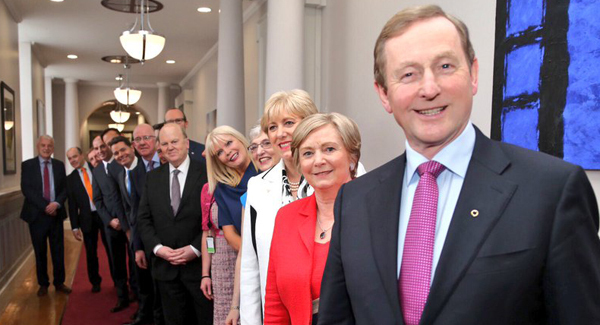
Is it a sensible move by Government fire-proofing against further opposition destabilisation attempts, or a blatant political bid to avoid real leadership just when it is needed most?
That is the question echoing through Leinster House this week after Taoiseach Enda Kenny and senior Fine Gael ministers once again side-stepped a key issue that is increasingly central to Irish political and social debate.
On Tuesday, after days of discussions between the bickering cabinet camps, Fine Gael, the Independent Alliance and unaligned Independent ministers Katherine Zappone and Denis Naughten agreed to block a AAA-PBP abortion bill seeking to remove the Eighth Amendment from the constitution.
Under the deal, work on setting up a previously flagged Dáil committee to examine what abortion law changes — if any — the Citizens Assembly recommends when it makes its findings next June, will begin immediately to ensure there is no delay next summer.
This committee will also have a proposed six-month timeframe to complete its own work before it hands over its separate recommendations to the Dáil to vote on.
In return for the apparent Fine Gael concessions, Independent ministers have agreed to back Fine Gael and shoot down any abortion law bill from the opposition while this 12-month period takes place so that the Citizens Assembly — set up to ensure everyone’s views are heard — can complete its work without political interference.
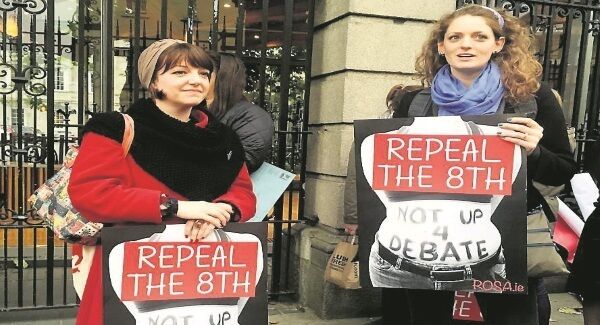
On the surface, the deal is a sensible move by Government to fire-proof against further opposition stunts to destabilise an already shaky coalition with divisive bills, while also putting in place a clear timeframe for when the Eighth Amendment issue will be addressed.
However, while pro-choice Independents Finian McGrath, Shane Ross and Katherine Zappone claimed the deal as a win, four major sticking points strongly suggest it is anything but.
In reality, the only real winners in the debate are conservative elements within Fine Gael and Enda Kenny, who now appears set to avoid making any decision on the deeply divisive issue until at least the middle of 2018 — potentially pushing it past the next election and his own time in power.
Under the terms of the deal, Fine Gael and Independent colleagues have agreed to block any future abortion bill on the grounds the Citizens Assembly — which began a mere 12 days ago — is already examining the issue and its work should not be side-tracked.
This, in effect, means any real Dáil debate has been muted for at least 12 months, as the Citizens Assembly will not report until June next year and the Dáil committee tasked with building on its findings will have at least six months at that stage to consider its own separate recommendations before a Dáil vote at some point in 2018.
The “at least” nature of the Dáil committee timeframe is important, as while the timescale was widely flagged by senior Fine Gael figures and was referenced as a proof of a “victory” by Independent Alliance TD and Disabilities Minister Finian McGrath at his own group’s press briefing on Tuesday afternoon, it is also something of a fudge.
While Mr McGrath and others are correct to say the six-month Dáil committee proposal ties Fine Gael down to a clear timeframe, senior Government figures said after its announcement the committee may drag on longer than planned as although it will be set up by June it is not yet clear if it will work over the summer break. Even if it does, no recommendations to the Dáil and Government will be provided until at least January 2018.
An agreed cabinet position will have to be confirmed before any committee recommendations are put to the Dáil and, given this week’s dilemma and a similar issue posed last June during Mick Wallace’s Fatal Foetal Abnormality bill, it is far from certain any such agreement will be easily reached.
The likely delay caused by an internal cabinet debate at this stage will further push out any Dáil vote on whatever Eighth Amendment recommendations are made, perhaps explaining the reason for the biggest hidden difficulty in Tuesday’s Government deal.
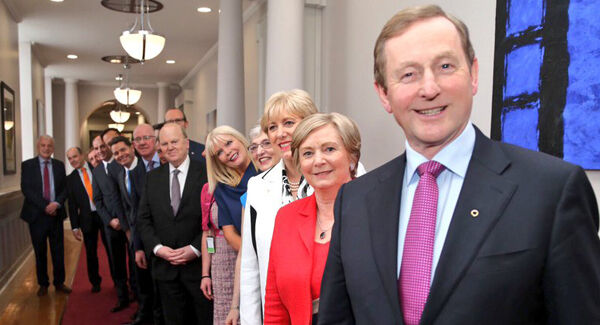
Despite the chest-beating “victory” claims, both the Independent Alliance and unaligned Independent Katherine Zappone admit there is no deal for when any Citizens Assembly-Dáil committee and eventually Dáil-backed legal changes — including a possible referendum — may take place.
Transport Minister Shane Ross said he hopes a referendum will occur “long before 2019” and Ms Zappone that she is “hopeful” for the first half of 2018, but Fine Gael ministers have indicated a post-summer date is more likely.
Given the fact Fine Gael and Fianna Fáil’s deal will be up for renewal at that stage, and a widespread belief an election is destined for this time, the timeline following the abortion deal suggests it is Mr Kenny, not pro-choice Independent ministers, who is the victor.
The date will come at a time when the next election — and Mr Kenny’s planned departure — is most likely, meaning any divisive abortion decision is unlikely to come under his watch. Something that cannot have escaped the long-time politician’s mind as he contemplates the damaging fallout any Eighth Amendment decision will bring.
CONNECT WITH US TODAY



Be the first to know the latest news and updates