The compelling story of how Irish diplomacy saved the life of a man of courage
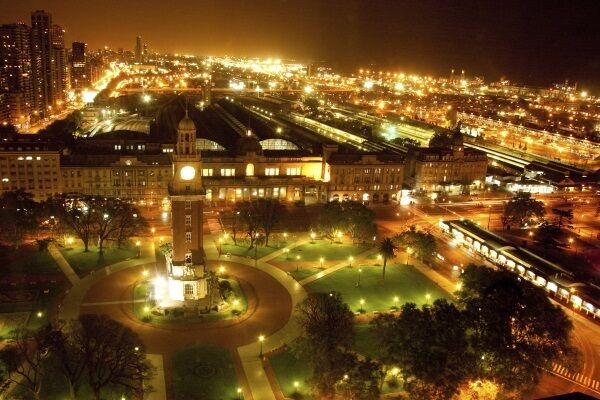
ON MARCH 24, 1976, the Argentine military staged a coup d’etat, overthrowing a civilian government, and setting in train an internal war which determined to eliminate all opposition — including opposition from sections of the Catholic Church identified with progressive thinking.
Patrick Rice was one such target. After coming to the country in 1970 as a Divine Word Missionary, he joined the Little Brothers of Charles de Foucauld and made his living as a carpenter on a building site while working and living as a priest in a shanty town, Villa Soldati, in Buenos Aires. He was also the leader of his congregation in the country.
The military declared all-out war on people like Patrick, of whom there were many priests, nuns and lay catechists working in the shanty towns or villas. They refused to be intimidated into leaving their parishes.
On July 4, 1976, a clandestine military death squad broke into the Pallottine monastery in San Patrick’s, Belgrano, Buenos Aires and murdered three priests and two seminarians.
Two of the priests were Irish-Argentines, Alfredo Kelly and Alfredo Leaden. Nobody was safe.
Many foreign priests left the country in the weeks that followed. Patrick stayed, as did many others. But the systematic killings continued. That summer, the military murdered Bishop Enrique A Angelelli, and two of his priests.
When news of the bishop’s death in mysterious circumstances reached the capital, Patrick, accompanied by a member of the Fraternity, made the long and difficult 24 bus journey during a “state of siege” to the murdered bishop’s diocese in order to investigate the suspicious circumstances in which he had died.
The military claimed that the bishop had died in a traffic accident. Returning to the capital with his findings, Patrick continued his investigations into disappearances and helped produce a report Violence against the Argentine Church, which was published in several languages and enjoyed a wide international circulation.
That report, and Patrick’s refusal to leave Villa Soldati, made him a prime target. On October 11, 1976, he was walking with a 17-year-old catechist, Fátima Cabrera, from a prayer meeting.
Suddenly, a car drew up, a man got out and shouted: “Stop or I’ll shoot”. Patrick explained: “We didn’t know what to do. He fired a shot in the ground. He pointed his gun at us and asked for our documents.
“He seemed very nervous. He fired another shot in the air. Another man came round the corner, also carrying a gun. They bundled the two of us into the back of the van. At no time did they identify themselves. We did not know who they were.”
The two captives were taken to Comisaría 36 de Soldati (Police Station 36), south of Buenos Aires. Patrick explained: “I was taken into a room and my shirt was pulled up over my head and face. They asked my name and where I lived. I identified myself as a priest. I was then beaten up. They told me ‘Now you’ll find out that the Romans were very civilised towards the early Christians compared with what’s going to happen to you’.”
During that beating, Patrick said he was not interrogated.
Later that night, Monday 11, Patrick was put in the boot of an infamous Ford Falcon, the care used to “disappear” people. His hands were tied behind his back and he was hooded.
Fátima, who was put in the back seat, told me they were driven with six other survivors to Garage Azopópardo. Patrick recalled: “The hood made of rags was removed and replaced by a yellow canvas hood with strings round the neck. The man changing the hood said to me ‘Don’t look at me. If you look at me you’re a gonner’. I was beaten again. By this time I was in a bad state.
“I had lived in Argentina for six years and knew about the torturers and what to expect. I was then submitted to water torture. My nose was held and water was poured in my mouth. You swallow a lot of water and it has a drowning effect.
“My interrogators told me that they belonged to the Triple A, a right-wing terrorist anti-Communist organisation. The beatings and the drenching with water continued through Tuesday, October 12, at three or four-hour intervals.”
Later that night, he was escorted to another room: “I knew that electric shock treatment was coming. Electric shocks were applied systematically to various parts of my body. They were also giving electric shock treatment to Fátima in the same room. All day Wednesday, October 13, they tortured Fátima — I could hear her screaming,” he said.
Irish diplomats located and secured Patrick’s release. What Patrick did not know during the early days of his imprisonment and torture, was the swiftness and the decisiveness with which his friends and the staff of the Irish embassy in Buenos Aires had acted once it was confirmed that he had been “disappeared”.
The late Sister Terence, an Irish Dominican nun, may have been the first to get a message to the embassy on Avenida Santa Fe. The first secretary, Justin Harman, acted decisively and with great courage.
He did a tour of the barracks and police stations in Buenos Aires. His search did not yield results. The ambassador, Wilfred Lennon, lodged an urgent inquiry with the foreign ministry.
Both calculated that international publicity was the embassy’s best strategy to force the regime to reveal where he was being kept. The greater the international press coverage, and the stronger the official Irish protests, the better were Patrick’s chances of staying alive.
On October 13, Justin Harman briefed the international press agencies in Buenos Aires on the kidnapping. The strategy paid immediate dividends. The Irish Times, on October 14, carried a front-page story stating that the Irish embassy had contacted the Argentinian foreign ministry to enlist the aid of the local authorities in tracing his whereabouts.
Justin Harman explained Patrick had been abducted while conducting a prayer meeting in a shanty town on the road to the Buenos Aires Ezeiza International Airport when he was seized by unidentified gunmen in civilian clothes who were travelling in two cars
“No word has been heard of him since,” Justin Harman said, adding: “We look on this with extreme concern in view of happenings here over the past years.”
He also said that the Irish embassy had twice contacted the foreign ministry about the matter. The Irish ambassador, Wilfred Lennon, twice called the foreign ministry. He had been assured that machinery had been set in motion to locate Fr Rice.
Justin Harman also said it was understood that local Church authorities had also asked the government to investigate the priest’s kidnapping.
A Reuters report was carried in The Times (London), the following day. It reported that an Irish priest has been kidnapped by unidentified gunmen.
The Washington Post also carried virtually the same report on the same day. It read: ‘Abducted Irish Priest’ and quoted embassy sources.
There was a second news item in the same paper that day — October 14 — about Patrick’s disappearance. Irish embassy sources were again cited as the source of the information.
In the light of the publicity, Patrick was again bundled into the boot of a car on Thursday, October 14, 1976, and taken to the Superintendencia de la Policía Federal, 1550 Moreno Street, the central police station, also known as the Coordinación Federal.
He was placed in a small cell. Patrick mentioned that the place was near the river. The international campaign, and the vigilance of the Irish embassy, meant that Patrick had not been killed quickly. But it did not mean that he was out of danger.
Questions were then raised at the United Nations as to the whereabouts of the “disappeared” Irishman. The Irish embassy confirmed that he had turned up in custody on Thursday, 14th, at federal security headquarters.
The Irish embassy had been assured that embassy staff would be allowed to visit him. On October 16, Friday, the Argentine military authorities were forced to make a public statement that Patrick was in police custody, or, at least, that was the case by the time the press conference was called.
The foreign minister, Admiral Cesar Augusto Guzzetti, said he was being held on suspicion of involvement in subversive activities.
It is not quite clear on what day ambassador Wilfred Lennon and Justin Harman were allowed to see Patrick. He speaks about “a week after my arrest”, It is probable that that they saw Patrick at 1pm (Irish time) on Monday, 18th.
The ambassador told The Irish Press on the 17th that “we have no suggestion from the authorities here as to what subversive activity he is accused”.
The embassy was anxious to ensure that he was either brought to justice or that he be released. “As far as we care concerned there is no justification for the authorities’ suspicions,” an embassy spokesperson said.
That morning, October 18, Patrick found himself being shaved by his captors and that he was ‘perfumed,’ meaning that aftershave was splashed on his face.
His jailers also gave him fresh clothes and a sinister warning that, if he did not want to wind up in a sack at the bottom of the River Plate, he should say to his visitors the bruising on his face and arms occurred when he had fallen down stairs.
At his press conference on December 7, he was quoted as saying: “I was told to say about my black eye and other signs of torture ‘You fell downstairs … if you say anything else, you’ll be found in the river’”. A doctor, he said, had given him injections, bandages etc.
Led into another room by his jailers, Patrick was surprised to find the Irish ambassador, Wilfred Lennon. “I was quite disorientated and the ambassador realised that it wasn’t in my interests to talk about ill-treatment.”
However, when the ambassador noticed the burns on his arms, he inquired indignantly whether they had been done by lighted cigarettes. Patrick replied that cigarette burns were the least of a person’s worries in here.
The ambassador, handing over some practical items, assured him that everything was being done to secure his release and that the embassy would keep in regular contact with him.
On October 22,1976, The Irish Times, quoting an Associated Press (AP) report, confirmed that Patrick had been transferred from a police detention cell to a penitentiary.
The transfer had prevented a scheduled meeting between Justin Harman and Patrick, according to the Irish embassy.
Thanks to the great efforts made by the Irish embassy in Buenos Aires, Patrick was deported from Buenos Aires in early December 1976 and returned to live in Fermoy, Co Cork, for a few weeks before his resuming his work in London, Washington, and then Venezuela.
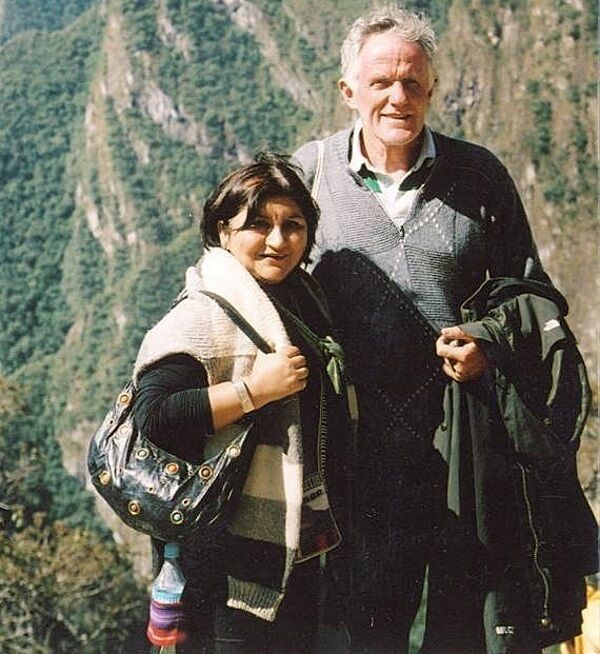
He returned to Argentina briefly after the fall of the military in 1983. There he met again Fátima Cabrera. They went to Caracas where they married and had two children.
Returning to Buenos Aires in 1988, the family had a third child, Blanca. Patrick spent his working life as a human rights activist and opponent of military repression. He was honoured with many peace prizes in his lifetime.
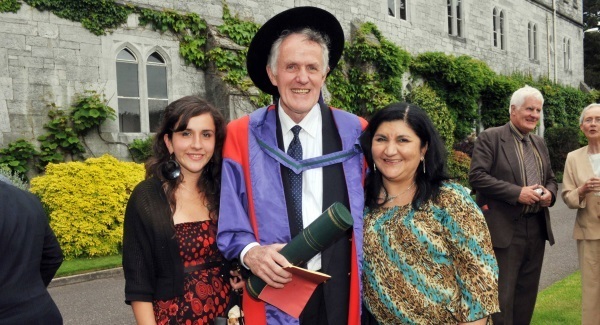
In 2008, University College Cork awarded him an honorary doctorate. He died suddenly in 2010 in Miami airport while on a return journey to Buenos Aires. He is buried in Buenos Aires.
Professor Dermot Keogh was a life-long friend of Patrick Rice and is godfather to his youngest daughter, Blanca.

CONNECT WITH US TODAY



Be the first to know the latest news and updates