Meet the woman at the forefront of the battle with cancer, the biggest killer of them all
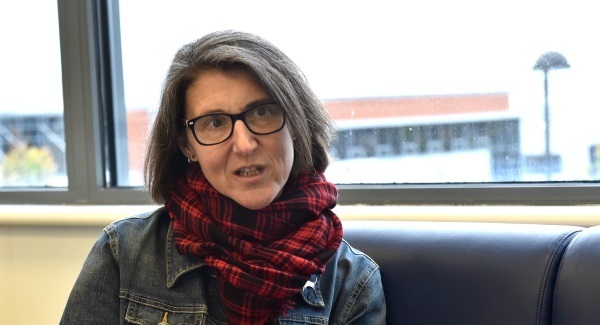
It killed her father’s five siblings and left her a widow but personal brushes with cancer were not the motivation for Prof Kerri Clough-Gorr’s career choice. As Cancer Week Ireland gets underway, the Boston native and the new director of the National Cancer Registry talks to Health Correspondent Catherine Shanahan about vital statistics, unnecessary screening for prostate cancer, and why cancer clusters aren’t always what they seem
Meet the woman at the forefront of the battle with cancer, the biggest killer of them all

Q: Were you always interested in cancer?

A: I always thought I would go to medical school but, like happens to most women, life took hold of me, and I had a family and medicine seemed like it would be inconvenient to my family.

I was an electrical engineer for years. In fact, I used to work for Digital Equipment Corporation, I actually had a team of folks in Clonmel, so the Irish connection has been trickling throughout my history.

When Digital was going to be absorbed by multiple companies, I decided, to the shock and horror of many, to raise my hand and ask if I could be made redundant. I was, of course, a single mom with two tiny children so a lot of people were horrified. But I knew it was time to get back towards the more medical ideas that I always thought I’d follow and that’s when I shifted to epidemiology.

When I made that shift, I wound up in a class with the woman who turned out to be my mentor — Dr Rebecca Silliman at Boston University — and she was into cancer epidemiology.

Q: Did your own experiences with cancer have any bearing on your ultimate career choice?

A: So, I’ve no shortage of personal experiences with cancer. My first husband died of a very very rare form of lymphoma. In fact, it was a form no one had ever seen before. Both my parents had cancer. My father had prostate, my mother had breast. My mother was diagnosed the same year as my husband so it was a good study in contrasts. One went bad and one didn’t, so it was a real learning curve about how cancer plays out in very different ways. And my dad’s prostate was detected early and he’s doing very well now.

Another statistic is that my biological father was one of six children and five of the six died of cancer, so I had a big exposure to cancer in my life. I don’t really think that has driven me to into the area though, it feels more like it happened to me, but I do think there is something about my perspective that’s different. Even if I’m in a population science — which I am here in the registry — that population information is really made up of a whole lot of personal stories and we can’t forget that because that’s where it matters.

Q: Your father was diagnosed by PSA test — what is your opinion of this controversial blood test? (A positive result does not always mean cancer).

A: My father and I have this discussion all the time where he says “if I’d listened to you I wouldn’t have had my PSA done and I would be dead” and I say to him “dear Dad, you wouldn’t be dead”. I told him he was getting way too much screening because, I mean, if you look at all the evidence on the PSA there isn’t the benefit because prostate cancer is a cancer, as we know, that most people live with. And we know from autopsy studies that lots of people lived with it for a very long time and didn’t know they had it. And most people don’t die from it. So he and I have this debate all the time.

Q: You came here from Switzerland where you were a professor at the University of Bern and, also, at one point, scientific director of the National Institute of Cancer Epidemiology and Registration. How does cancer registration in Ireland compare with Switzerland?

A: Ireland is ahead. Cancer registration here compared to Switzerland is quite advanced. You have a national registry here. You get full coverage. That is massive. When you are looking at populations, the one thing you don’t want to do is miss. Because then you don’t have a proper, true, and accurate picture of what’s going on. Switzerland doesn’t do it that way. Switzerland does it by canton. There are 26 cantons [like counties] and everything is done in little tiny pieces. And the Swiss use the registry and give all kinds of data on it even though it’s missing large parts of the country and there’s no way it can be accurate. And I think “wow, a little bit of heaven here for me”, because I’ve come from such inadequate information to a place where I feel very confident about the information that we have.

Q: So we could be used as a role model for the Swiss?

A: Yes, but you’d never get them to do it. Switzerland will never get there because their national structure is very weak.

Q: How did this job come about for you? The former director of the registry, Dr Harry Comber, made several attempts to leave but returned when there were difficulties finding a replacement?

A: I was having some exchanges with the folks from UCC from a research perspective, and entertaining the thought of doing a sabbatical and it came up that this job was going to be posted shortly. And someone who had seen my CV said “hey, you know your CV is a really good match”. And I looked at it and said “no, I’m not looking for a job. I’m perfectly happy in Switzerland.” And then I thought I shouldn’t approach anything by saying “no”. And with that spirit, I am now here, because there was really never a reason just to say “no”.

Q: Why do you think it was so difficult to replace Dr Comber?

A: The salary change for me was rather dramatic and I think that honestly was an issue — let’s say it was close to halved — which wasn’t a problem for me. I’ve never taken a job for money. But I do think for other people applying that was probably a factor. (The starting salary is €104,000.)

I think the job is unique because it is this dual role (Prof Clough-Gorr is also UCC’s first Professor of Cancer Epidemiology) and I think it’s hard to find people who have capacity to do both. Typically people who are professors are academics. I can see there were probably a lot of people who looked at it and said “oh that’s fabulous but perhaps low pay and it’s two jobs” — but that’s pure speculation

Q: How important is it to have a National Cancer Registry and how significant is it for policy makers?

A: I think it’s massively important. You have to take into account that cancer is a major disease and it’s a disease that is not only prevalent; it has high costs, high personal impact, and it has familial impacts. It has that spread effect.

Cancer is not like other diseases in that something happens, it gets fixed and you move on. Cancer happens as a process and it usually involves the whole family and it’s expensive. So, from that perspective, we should be collecting good information on what the cancer experience is and we should be feeding that directly to policy makers. That’s what a cancer registry does.

I think the important thing to recognise here is that we have a relationship with the National Cancer Control Programme (NCCP) and one of the things we are here to do is share and exchange information with them so that when they are developing their strategies their criteria, all the rubrics that they use, that the foundation of that comes from the basis of information. So it’s a direct input into that process.

Q: Sometimes when we report on cancer statistics, we get the occasional letter to the editor saying there are actual people involved here — you can see why people might get upset about it?

A: I think it’s a really valid point. It is about the individual experience. But what people need to remember is we have to deal with it from a population level. The information has to be generated at a population level so that it can be factually interpreted and used properly.

Q: In your opinion, which has a greater bearing on whether you get cancer — lifestyle or where you live? Or your genes?

A: Well, I think we’ve shifted away from just saying “I’ve inherited the gene. I’m gonna get cancer and I’m gonna die.” It’s not that simple and we now recognise that and we do have a fair amount of influence on ourselves and I think that’s a big cancer message. I think the World Health Organisation is making that very clear. Lifestyle — drinking, eating, smoking, obesity — all those behaviours play a major role in our health outcomes, including cancer, and they are in our own control.

Q: Is there such a thing as cancer clusters?

A: I don’t dispute cancer clusters but don’t take me as a source, go to a big source in the USA, to the National Cancer Institute, and go to their website and they have a whole section on cancer clusters.

But the thing is cancer clusters don’t really occur because of an environmental factor very often. Usually when you hear “cancer cluster” it’s actually because of the connection between cancer and the personal experience. Somebody, some small geographical area of people, has personally experienced what they perceive to be a high amount of cancer. But when you take things up to the population level, which we have a responsibility to do, you start to see that it starts to become this game of numbers. It’s affected by which geographic area you chose. If you slip it a little to the left, a little to the right, things will change.

So there are all these things that are done when you are interpreting clusters that influence whether you get a statistically significant effect, which is what we look for. And it really is most of the time a random occurrence of something. So if you just take the numbers game, most of the time it’s going to be random chance, really that’s the truth, like it or not.

Q: In relation to Cobh, Co Cork, there have been claims in the past of a cancer cluster and above-average cancer rates amid fears they were linked to a former steel plant near the town. What’s your take on this? Is it scaremongering?

A: Cancer is a whole bunch of individual diseases and in the case of Cobh there was this “oh, all cancers were higher in Cobh” comparison but “all cancers” doesn’t mean anything as a comparison, “all cancers” is a whole bunch of diseases which can’t all be related to the same environmental factor. And when we crunch the numbers on Cobh and go on this fishing expedition, we come up with prostate (higher than average rates), but is there any evidence anywhere that prostate cancer is linked to an environmental exposure? So then you have to start looking at “what are the diseases in this cluster?”, “does it make sense?”

I can give you a personal story about disease clusters. When I was living in Boston I lived in a little neighbourhood on a peninsula with 177 houses. And in my 15 years living there, there was, to my perception, a high level of cancer, including my husband. I called my local cancer registry and said “hey, I suspect a cancer cluster” — and I mean I study this. And the Massachusetts State Registry very kindly ran the numbers for me and counted them all up and there was indeed a decent number of cancers — but there was no statistical evidence for any kind of cancer cluster. If you just looked at the raw numbers, it looked like there was a lot. But when you actually did the comparison statistically there was nothing. And then when you looked at the type of cancer everybody had, including my husband who had a cancer no-one had ever seen before, there was no logical reason to connect these cancers except that they happened to live in this one geographic space.

When you look at the actual data, the facts, it just doesn’t hold up. And that’s the truth of cancer clusters in general.

Q: The Northern Ireland cancer registry uses an automated system to collect data but in the South there’s a lot of manual collection by tumour registration officers (TROs) — why are we not automated?

A: Welcome to the Irish health system! Honestly, the big thing is we are just not as automated here. They have the NHS in the North, they have access to a whole lot of standardisation and electronic things that we don’t have it.

Q: Are people actually going into offices and going through pathology reports?

A: Sometimes they have to, yes. The unique bit about the Irish system is that we have TROs in hospitals employed by the NCR and everyone of them has a unique work environment — some have paper, some have a lot of electronics, there is no consistency. Where we need to go is to be more in the leading frame of cancer registries, which we could be. Which means emphasising electronic data wherever we can get it — the reason being that cancer is not the same disease it was. A generation or two ago the diagnosis was life-ending. Mortality was a huge issue, so registries started in that vein of collecting information about diagnosis and deaths.

But today, for a lot of cancers, it’s more like a chronic disease. So while incidence and mortality are important, what affects patients now is what happens to them in the long-term after a cancer diagnosis. Do they get a recurrence? Do they get another secondary primary? That information from a patient perspective is more relevant — and we can collect all that data. That’s my goal, to get ever more electronic data in so we can do this type of follow-up.

Q: Will your family join you in Ireland?

A: My second husband is a German living in Switzerland and he quite frankly doesn’t have an interest in coming here. He’s German and he’s very happy in the Swiss-German speaking setting, it suits his sensibilities. We just said “well that’s fine, we don’t have small children, we don’t have any complications”. I know a lot of people find that a little odd, but I think from my perspective it’s a late-life marriage and he’s very used to me popping off.

More in this section

Revoiced

Newsletter

Sign up to the best reads of the week from irishexaminer.com selected just for you.

Cookie Policy Privacy Policy Brand Safety FAQ Help Contact Us Terms and Conditions

© Examiner Echo Group Limited