Budget 2017: Students just won’t connect with language of budgetspeak
However, one of the most stimulating moments of my Budget 2017 experience this year was pressing the wrong button on my RTÉ iPlayer and bringing up Katie Morag on RTÉ Junior. It was so tempting to leave it on.
This budget matters so much for everyone living here for every aspect of our lives. Why couldn’t I concentrate on the speeches? More than anything, I am left disorientated after the budget. Once again, I have been given the incredible opportunity of giving my opinion in a national newspaper and, once again, I find myself having to admit how much I do not understand.
Here are some examples of things that threw me while watching the live coverage of the budget: ‘Economic shock absorbers’ (what are those when they are at home?); the establishment of a rainy day fund; (is this normal for a government to have?); and the fact that there is still a prayer at the start of each Dáil session (just, what?).
Why were the parties congratulating themselves on the new transparency of the budget, when it was simply an inevitable result of the mixed government?
Why are there plans in place to build new hospitals when the existing ones are so poorly managed? Dublin has a disproportionate amount of hospitals for its population in comparison to other capital cities in Europe.
Are the fishermen okay with their new tax credits? I didn’t know the fishermen (fisherpeople?) were in trouble. And how could there have been such a comprehensive cover of the economic impacts of Brexit but no mention of the global refugee crisis? Right, obviously Syria and Lebanon aren’t our strongest trade partners, I understand that, but why was it that the projected costs of the largest mass migration since the Second World War weren’t addressed?
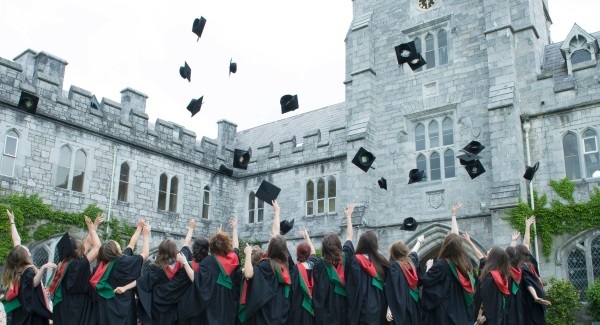
When I tried to discuss the budget with fellow students in the run-up, I was not met with much enthusiasm. I feel that, in many ways, third-level students are marginalised, especially fiscally, so they are unaware of their participation in our economy.
As a result of rising prices of rent and education, young students like myself are increasingly heavily dependent upon the previous generation. And although theoretically this may not be a negative thing — intergenerational socio-economic interdependence — it is certainly portrayed unfavourably in Irish media.
I hate reading all these articles about how inefficient, lazy, or inactive people from my generation are. Due to academic inflation, it is a formidable task for students to find a suitable job in which they can perform as an efficient member of society.
I find we work harder, or as hard as any generation before us. Being perceived as ‘inactive’ as a citizen weighs heavily. How can one be active with limited time between work and study load, with limited resources? This situation will not be ameliorated by this budget. Put simply, although €36.5m may be the “first significant investment of resources in higher education since our economic collapse”, it is not enough.
The Government’ launched an Action Plan for Education in September with the ambition to create the best education system in Europe within 10 years. With Irish higher education institutes seriously underfunded, I feel, as a student, that these measures are too little and perhaps too late.
The only cost that rose, which jumped out at me, was that of cigarettes. That rings strange to me because I hear the word budget and I think of increasing taxes and increasing public services, in promotion of a socialist government.
Now obviously, this is easy for me to advocate because the only tax I have ever paid is the PAYE, PRSI and the USC on the summer work I take.
I can form no true discernable comprehension of what the cuts to the USC mean to a working family, or what an increased income tax would mean to the highest earners among us because I just don’t have the life experience.
So, in this way, I am engaging with the Budget with empirical politics and ideologies as my only tools, with no concept of practical impacts or consequences.
In any case, the budget proves that the Government will not be introducing any radical politics any time soon. They are busy trying to placate a huge scope of communities regarding a wide range of issues.
TDs took such pains to shoehorn themselves into any sort of structure of government this year that the main order of this budget seemed to be to avoid upsetting the balance of the precarious political landscape.
Another election is what everyone is trying to prevent — the introduction of any socially ambitious politics is unlikely.This was highlighted in Fianna Fáil’s initial response — that “as a country” we still fail at “delivering large scale projects on time and on budget”. For these reasons, many students, despite being politically interested, find it hard to connect with the budget.
CONNECT WITH US TODAY



Be the first to know the latest news and updates