Ageism a workplace barrier in demographic doomsday
PANA is a wonderful place to glean the essentials of life. I was walking down Cork city’s central artery the other day when I overheard (read: earwigged) two women discussing the virtues of coconut oil. “It can take 10 years off you,” said one, though I couldn’t get close enough without rumbling myself to hear whether one should apply or ingest it.
I did, however, sneak a surreptitious glance and was rocked to see that my Patrick Street beauty tipsters were still in their school uniforms.
They looked no more than 16. If they were at the oldest end of school-going age, they were 19 at most. I did the sums: 19 minus 10 equals nine. Why would any teenager aspire to look like a nine-year-old? When I was 19, everyone was trying to look 10 years older, not younger.
How topsy-turvy our attitude to ageing has become. Though, you’ll see that attitude everywhere.
People — but women in particular — are celebrated if they are deemed to have beaten the hideous march of time. A woman who can ward off wrinkles — and a creeping roll of flesh around her middle — is a woman who has truly achieved something worthwhile, it seems.
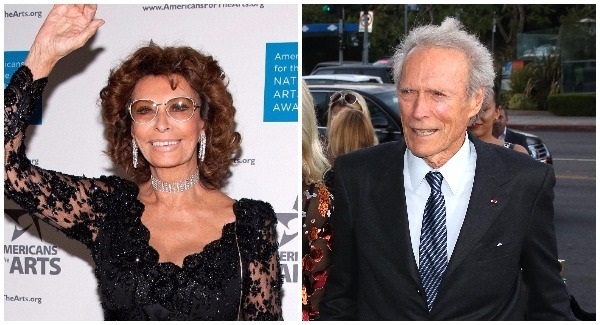
Society will garland you if you reach a Big O birthday without looking too decrepit. Proof, if it were needed, is in those intensely annoying headlines that praise wonderfully talented women such as Helen Mirren and Sophia Loren for looking stunning “for their age”.
In the last few months, Sophia (81) was feted in the press for “looking just as glamorous as ever” when she “enjoyed a girls’ day out” with her sister in Rome.
We were directed to admire her “casual yet chic look”, a billowing grey knit paired with coordinating grey slacks.
Contrast that with a recent Esquire article about Clint Eastwood (86) who was trumpeted as a man who is still “vital and vibrant, still pushing himself creatively”.
The writer gushed: “The guy is an inspiration, a reminder that we should always be evolving.”
Now that I think of it, I don’t recall ever seeing a picture of Clint in his swimming trucks under a caption enthusing about how amazing he looked “for his age”. Of course, all of this is taking place in the starry stratosphere, a world that few of us will ever inhabit.
Equally, few of us will have to worry about looking as good as Sophia Loren does at 81 because we don’t look even remotely like her at 41.
Yet, those messages filter down to the real world where, as a woman who’ll have to work until she’s 68, I’d prefer to embrace the collective attitude to Clint’s advancing years — “that we should always be evolving” — rather than be forced into Sophia’s ever-glamorous straitjacket.
And there’s the thing. Much has been written about our changing demographics; we are all living longer and now we will be expected to work longer, too.
However, we have failed to truly grasp the radical impact that is going to have on Irish society.
In the 2006 census, 11% of the Irish population were aged 65 and over. By 2041, that number will double; some 1.4 million Irish people will be aged 65 and over.
Commentators have pointed out the serious issue of a pension shortfall, but there is much more to consider. We are going to need a seismic shift in our attitudes to ageing if we are to cope with the change.
The average life span in Ireland has increased by nearly 25 years since the 1920s, but our attitude to getting older hasn’t moved with the time.
In the same way that the notion of the teenager was introduced in the last century, we need to start talking about a second middle age that stretches from about 60 to 75.
Some researchers in the UK have even suggested that 70 is the new 50, based on the belief that age should be calculated not on one’s actual age, but on how long people are expected to live after retirement. By that reckoning, you reach old age when you have 15 or fewer years left to live.
This, of course, is all great news, but we need to start talking more positively about middle age first and then think about introducing the concept of a second middle age.
As it is, the focus for women has been on trying to hold all their bits in place as they get older rather than how much they have to contribute to society.
The single inspiring thing about the American Presidential election is that it includes a female candidate older than our current retirement age.
Despite what the knockers say about Hillary Clinton’s health, age and ability, the fact that she is in with a real chance of becoming the first woman in the Oval Office in her seventh decade is a positive message for older people everywhere.
And while this column agrees with the commentator who said Donald Trump (70) might well have been fashioned from a block of cheese, it is inspiring to see a man in second middle age follow such a gruelling schedule without batting a cheesy eyelid.
You have to ask, however, if our attitudes to the older people who run for office translate into the everyday workplace office?
It seems not. Earlier this year, a William Fry employment report ‘Age in the Workplace’ showed that age was seen as a real barrier among those seeking work.
Some 38% said their age had been a negative influence on finding work, and that figure rose to a staggering 87% among the over-55s.
That might seem irrelevant to the teenagers on Pana right now, but they are the ones who are going to have to worry about being on the metaphorical scrapheap when they still have a good 30 years of life to live.
We truly are entering a new age.
CONNECT WITH US TODAY



Be the first to know the latest news and updates