General Election sees key shift away from the two larger traditional parties
Amid all the talk of Fianna Fáil’s miracle resurgence —and the Fine Gael collapse — a key feature of this election is the move away from the two larger traditional parties.
General Election sees key shift away from the two larger traditional parties

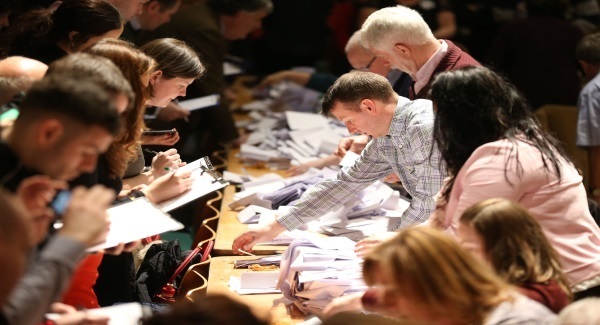
While it’s not all done and dusted yet, it looks like by the time the last seat is filled around one third of the electorate will have voted independent or for the smaller parties.

For the first time in almost a century, the combined Fianna Fáil/Fine Gael vote is under 50%. Whether this is a sea change that is likely to be replicated in future elections, only time will tell. However, it does appear that the Irish voter is starting to vote on broadly on left/right lines rather than with the Civil War parties.

It’s certainly been a good election for Fianna Fáil. After the meltdown the party suffered in 2011, they’re back in the running to potentially form a government. They’ve achieved 24.3% of first preference votes — up from 17.5% in 2011. Their seat number will likely be in the mid-forties, more than double the 20 the party won in 2011.

However, it’s a far cry from the Fianna Fáil heyday of 2002 and 2007 when the party took 41.5% (81 seats) and 41.6% (77 seats) respectively. Its vote is primarily among those over 35 and rural, which must be a concern into the future.

Importantly, it’s made gains in Dublin, winning back a number of seats in the capital. After the death of Brian Lenihan it didn’t hold a single seat in Dublin.

For Fine Gael, it’s nothing but bad news. From the high of 2011, where it took 36.1% of the vote and 76 seats, it took just 25.5% of first preferences this time around and will likely lose in the region of 30 seats.

As political scientist Professor Michael Marsh of Trinity College pointed out on RTÉ, the party’s vote now peaks among those over the age of 50 and among professionals and rural dwellers. This must also be a concern for a party in need of new voters.

Labour has lost almost two thirds of its vote since 2011 from 19.4% in 2011 to 6.6% this time around. It took 37 seats in 2011. It will do well to gain seven seats this time around — just enough to maintain full speaking rights in the Dáíl. If it fails to hit seven, it will be a huge blow for the party who have lost some big names.

Its Galway West base once held by Micheal D Higgins is gone after Derek Nolan lost his seat. Former junior minister Kathleen Lynch, Ciarán Lynch, Alex White, Joanna Tuffy, Eric Byrne, Kevin Humphreys, and Joe Costello have all lost seats.

For Sinn Féin, the trajectory continues upward. In 2002, it took five seats. Since then, its rise has been steady. It took 14 seats in 2011. It will improve on that considerably this time with at least 20 seats. However, while its 13.8% share of the vote is a strong showing, many observers have stated the party probably expected a better result.

x

More in this section

Revoiced

Newsletter

Sign up to the best reads of the week from irishexaminer.com selected just for you.

Cookie Policy Privacy Policy Brand Safety FAQ Help Contact Us Terms and Conditions

© Examiner Echo Group Limited