Two-speed Europe will allow different paths for members
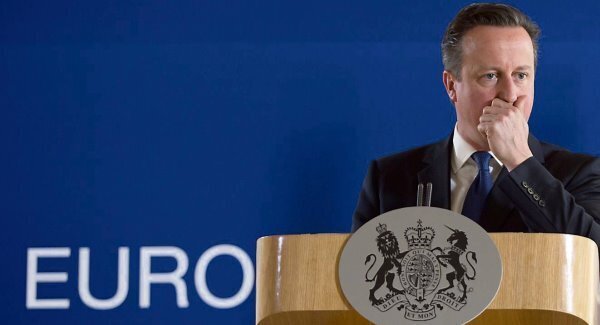
David Cameron’s ‘clarifications’ will make changes to the fundamental nature of the EU, writes Ann Cahill Europe Correspondent

Two-speed Europe will allow different paths for members

THE 50-odd pages of detail that a small cadre of representatives of the UK government and the EU institutions have produced can be seen as thing of smoke and mirrors, offering a typically complicated solution to a multi-faceted problem — or a veritable rewriting of the fundamental direction of the European Union.

David Cameron, doing his best to solve a mirage of the EU that decades of eurosceptic media and politicians have created, has certainly come up with an answer to many of the objections launched against the union.

As much of the main document produced in time for the summit of February 18 makes clear, a lot of what he has said he wants is already in the treaties signed up to by Britain and the rest of the member states.

However the “clarifications” combined with revisions of labour mobility rules the European Commission has been sitting on awaiting the outcome of the Brexit talks, will make changes to the fundamental nature of the EU.

The somewhat rose-tinted spectacle provisions that saw people move freely around the EU to take up a job or look for work in whatever country they wished did have some restrictions — but the British tax allowances for those on lower wages is a unique one not covered by the current rules.

They will, under the draft proposals, be able to exclude new workers from other EU states getting these benefits and introduce them gradually over four years. For how long they can continue to do so is a decision for the EU leaders to make at their February summit.

But in the meantime Britain has announced it is changing its system and introducing a new one that will eliminate much of these issues by 2018, but it will be able to apply them to EU workers from the day after the UK votes to remain in the union.

The changes, however, will be much more far-reaching than this as benefits such as children’s allowances paid to workers whose children live elsewhere can be indexed to that country’s cost of living. This will be optional for member states to introduce — Ireland wanted to do something about it a few years ago but didn’t. It will make workers from the poorest countries much cheaper for the state with, for instance, Bulgaria, at about 50% of the EU average.

The documents also allow discrimination — providing it is justified — to avoid or limit the flow of workers into a country if it has negative effects for both the country they are going to and leaving. It does not refer to numbers of EU nationals. They make up just 4% of the UK population — compared to 8% in Ireland.

The grounds on which a country can shut its gates are being broadened considerably with a definition of the old “overriding public interest” that extends to a country needing to encourage recruitment — presumably of its own citizens, cut unemployment, protect vulnerable workers, as well as undermining the sustainability of its social security systems.

Whether a person receives benefits appears to move away from the idea that all EU workers are equal saying they can be subject to “a real and effective degrees of connection between the person and the labour market of the host member state”.

As usual an unemployed person has to show they can sustain themselves, but they can be refused the social benefits now limited in time, while they search for a job. On the one hand this deviates from the usual British wish to ensure competition between workers for jobs.

EU citizens can be banned from entering another EU country if they are judged to pose a threat to public policy or security — whether or not they have a criminal record. The European Commission is to clarify this. They will also to draw up legislation to allow third country nationals that marry EU nationals in what is believed to be a sham marriage out of the country.

Under the heading of “sovereignty” the proposal is to extend the current “red card” system under which a majority 55% — around 16 — national parliament’s can insist the Commission revisits legislation it believes would be best left to individual countries.

But it makes one very important change — that the Council, the representatives of the member states, will cease considering the legislation unless it is amended. It says nothing about the European Parliament that in much is a co-legislator with the Council, something they carefully guard.

The draft deal sets out clearly, perhaps for the first time, the details of a two-speed Europe, basically defined by euro-ins and outs. It says the “deepening of economic and monetary union” is voluntary for non-euro states.

The reference in the Treaties to ‘ever closer union’ is a reference to “people living in open and democratic societies sharing common values” and not to creating political integration.

But it is compatible with different member states taking different paths and does “not compel all to aim for a common destination”.

It firmly anchors the UK as an out rider: “It is recognised that the United Kingdom, in the light of the specific situation it has under the Treaties, is not committed to further political integration into the European Union.” It adds that this will become part of the Treaties next time they are revised.

More in this section

Revoiced

Newsletter

Had a busy week? Sign up for some of the best reads from the week gone by. Selected just for you.

Cookie Policy Privacy Policy Brand Safety FAQ Help Contact Us Terms and Conditions

© Examiner Echo Group Limited