Policing Authority boss a ‘critical friend’ with soft power
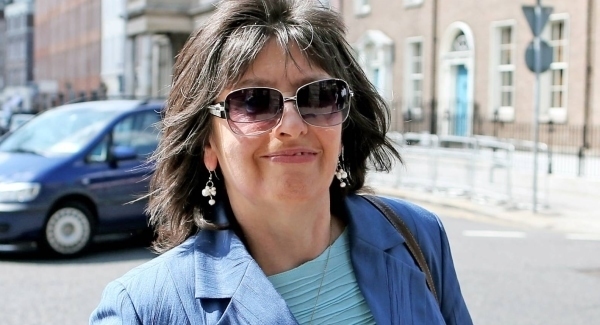
It was, she explained, how the Policing Authority — which she chairs — was going to hold the Garda commissioner to account.
As it turns out, they’re not just words she plucked out of the sky. It is actually a concept developed by Harvard guru Joseph Nye and a tactic used in international relations.
Apparently, it’s the ability to “attract and co-opt rather than coerce” and the “ability to shape the preferences of others through appeal and attraction”.
Why the new authority should have to use soft power rather than legal power to direct, stems from changes to the legislation setting up the authority.
Initially the commissioner was to be “fully accountable” to the new authority. But when the final bill was published, and enacted, that changed to the commissioner “reporting” to the authority.
He or she was still obliged to “assist and co-operate” with the authority.
In addition, a range of its other powers, including drawing up strategy statements and policing plans, were dependent on the minister’s consent.
“The intention of the minister was clear in the scheme published initially,” said Ms Feehily.
“There were some concerns about constitutionality. I won’t go into it because I’m not a constitutional lawyer, but it led to the bill being what it was and the act being what it is.”
A key part — and tool — of the authority will be the public meetings the full board of nine will have with the commissioner and her team. There has to be at least four of these each year.
“Public reporting power is a very strong soft power,” she said.
“I’m not particularly concerned about the constraints in that context. Some pieces where the minister also has a role are at a low threshold, for example the strategy statement and policing plan.”
She said that “transparency and shining lights” on an organisation is a powerful tool in reforming it or, she said, borrowing a phrase, the best “disinfectant”.
Ms Feehily said she was “very much a glass half- full person” and felt the authority has “significant powers”, pointing out that every two years they have to write a report to the minister on whether their powers need to be increased.
A former chairwoman of the Revenue Commissioners, Ms Feehily batted away concerns regarding the process used to appoint her and the eight board members.
The process was conducted “in accordance with the law”, through the Public Appointments Service, she said. What concerned her more was the quality of her team, which she said was “very strong”. She said they were “very keen”, “prepared to do the work”, and qualified to do so.
During a Q&A session lasting over 40 minutes, Ms Feehily dealt with any sticky questions calmly, clearly, and firmly. She thought carefully before replying and, thankfully, did not recourse to management speak.
The authority was, she pointed out, still in its “infancy”, with the board only having its first meeting together the day before, subsequently meeting with the commissioner and her team.
They have all of six staff, but aim to have between 30 and 40 when up and running.
She said that later in the year they would be in a position to nail the authority’s colour to its mast and make a determination “on the adequacy of Garda resources”.
She said the findings of the last Garda Inspectorate report — covering everything from crime recording failures to ingrained cultural problems to archaic equipment — as “fairly stark”.
She said they would wait until the commissioner’s response to the minister in two months, read it, and then tackle the issues with the Garda boss.
Ms Feehily said it would be “foolish not to recognise the potential for an uneasy relationship” with An Garda Síochána, acknowledging there was “a tension” between GSOC and the force.
Really she wanted to be a sort of friend: A “critical friend” she put it.