Whether we like it or not, religion is central to the world order
IT is surely ironic that as indifference to and disengagement from religion grows in Ireland, the need to understand religion, its politico-cultural significance, its enduring appeal, and its role in society is being increasingly recognised by academics, government advisers and policymakers in the major capitals of the Western world.
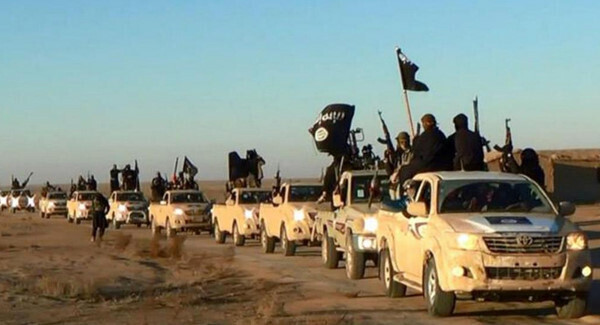
Some of the reasons for this reawakened interest may be negative — a reaction to the rise of radical Islam and, in particular, to the toxic embodiment of this in the emergence of Islamic State (IS) with its cult of death.

In the largely secularised West, where religion has been either pushed out altogether from the public square or largely marginalised where the formation of public policy is concerned, there is a new urgency — driven largely by incomprehension but also by uncertainty and fear — to get to grips with the phenomenon of a religion-driven ideology.
Not that long ago, no policymaker in the West cared very much what a caliphate meant — after all, hadn’t that died with the demise of the Ottoman Empire, being formally abolished by Kemal Ataturk in 1923?
A caliphate is a form of Islamic government led by a caliph, a person considered a religious and political successor to the prophet Mohammad, and claiming to be the leader of the entire Muslim community. The caliph needs a territory or state over which he can exercise jurisdiction.
The man making that claim today is Abu Bakr al-Baghdadi, who declared himself ‘caliph’ in Mosul after its capture by IS last June. He is to IS what Osama bin Laden was to al Qaeda, though the latter never claimed the title ‘caliph’.

Today, we are faced with the establishment of a new caliphate in Syria and Iraq, and the more recent news that a ‘province’ of this caliphate has been set up in a swathe of territory captured in Afghanistan by forces pledging allegiance to IS.
Where will this end? Jason Burke, author of The New Threat from Islamic Militancy, says the “new caliphate depends on continued expansion for its existence”. Expansion needs money, but also brings money.
What is becoming increasingly evident is that we live in a world where religion is very important: Nearly every news bulletin is a reminder of this. In his preface to a collection of essays in a book entitled World Religions, Christopher Partridge, professor of contemporary religion at University College Chester, emphasises the importance of religion today.
“In the small, complicated world of the 21st century, there is a widespread and growing awareness of the significance of religions and beliefs,” he writes. “Not only have religions contributed to the foundation of civilisations throughout history, but also they have directly influenced contemporary international relations and significant world events.”
This is true in 2015 in a way that would have shocked the leading intellectuals of the Enlightenment in the 18th century, who believed they had sounded religion’s death knell. When Marx and Engels came to publish The Communist Manifesto in 1848, they were convinced that God had indeed been banished, and religion would soon be redundant.
In this respect at least, they couldn’t have been more wrong. Even Sam Harris, a leading advocate of the New Atheism, and author in 2010 of The Moral Landscape: How Science Can Determine Human Values, concedes the significance of religion today.
“Since the nineteenth century, it has been widely assumed that the spread of industrialised society would spell the end of religion,” writes Harris. “Marx, Freud, and Weber — along with innumerable anthropologists, sociologists, historians, and psychologists influenced by their work — expected religious belief to wither in the light of modernity. It has not come to pass.
“Religion remains one of the most important aspects of human life in the twenty-first century. While most developed societies have grown predominantly secular, with the curious exception of the United States, orthodox religion is in florid bloom throughout the developing world.
“In fact, humanity seems to be growing proportionately more religious... When one considers the rise of Islamism throughout the Muslim world, the explosive spread of Pentecostalism throughout Africa, and the anomalous piety of the United States, it becomes clear that religion will have geopolitical consequences for a long time to come.”
The findings of the PEW Research Centre, published earlier this year in a survey entitled ‘The Future of World Religions: Population Growth Projections, 2010-2050’, would have dispelled any doubts about the growth of religion in the 21st century.
PEW is a widely respected non-partisan think-tank based in Washington DC. It found in its April survey that “over the next four decades, Christians will remain the largest religious group in the world, but Islam will grow faster than any other major religion. If current trends continue, by 2050 the number of Muslims will nearly equal the number of Christians around the world.”
PEW reported that, as of 2010, Christianity was by far the world’s largest religion, with an estimated 2.2bn adherents, nearly a third (31%) of all 6.9bn on Earth. Islam was second, with 1.6bn adherents, or 23% of the global population.

“If current trends continue, however, Islam will nearly catch up by the middle of the 21st century,” the researchers found. “Between 2010 and 2050, the world’s total population is expected to rise to 9.3bn, a 35% increase. Over that same period, Muslims — a comparatively youthful population with high fertility rates — are projected to increase by 73%. The number of Christians also is projected to rise, but more slowly, at about the same rate (35%) as the global population overall.
“As a result, according to the PEW Research projections, by 2050 there will be near parity between Muslims (2.8bn, or 30% of the population) and Christians (2.9bn, or 31%), possibly for the first time in history.
“With the exception of Buddhists, all the world’s major religious groups are poised for at least some growth in absolute numbers in the coming decades. The global Buddhist population is expected to be fairly stable because of low fertility rates and aging populations in countries such as China, Thailand, and Japan.
“Worldwide, the Hindu population is projected to rise by 34%, from a little over a billion to nearly 1.4bn, roughly keeping pace with overall population growth. Jews, the smallest group for which separate projections were made, are expected to grow by 16%, from a little less than 14m in 2010 to 16.1m worldwide in 2050.
“Atheists, agnostics and other people who do not affiliate with any religion — though increasing in countries such as the United States and France — will make up a declining share of the world’s total population.”
What all of this means is that religion is going to play an increasingly significant role in international relations, and in the decades ahead religion — especially “political religion” — will exercise a potent influence on world affairs. The fear, given the role of Wahhabism, rooted in Saudi Arabia, is that religion will have a destructive influence. Wahhabism is a brutal, medieval form of Islam and is the animating force behind IS, whose religious veneer is a threadbare cover for violent expansion.

The harm is all too evident today in the threat posed by IS. The need to find a means of combating this threat — which, according to a statement this weekend from the former British prime minister Tony Blair, now represents “a life or death struggle” — was further r eflected in the decision on Sunday by the US President Barack Obama, to make a rare address to the nation from the Oval Office. Just recently, the President likened IS to a “junior sports team”; on Sunday he warned the nation against “an evolving terrorist threat”.
The comments from Obama and Blair lend an added relevance to the thesis advanced by Samuel P Huntington nearly two decades ago in his book The Clash of Civilisations and the Remaking of World Order.
Huntington’s thesis first appeared in 1993 in the journal Foreign Affairs, and whoever would have thought that by 2015, religion would have made the world such a dangerous place?