Travelling community can’t have it both ways
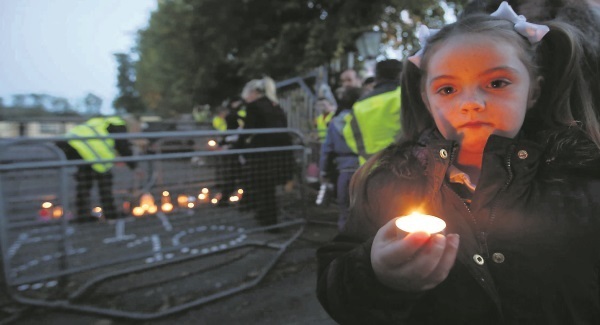
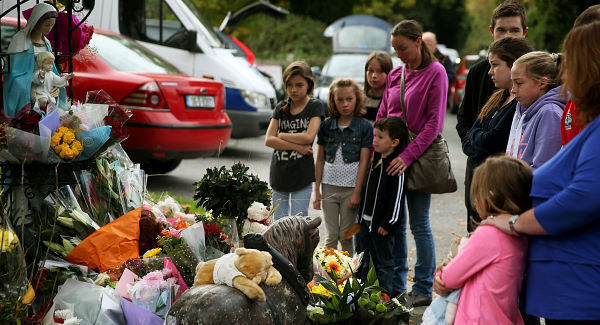
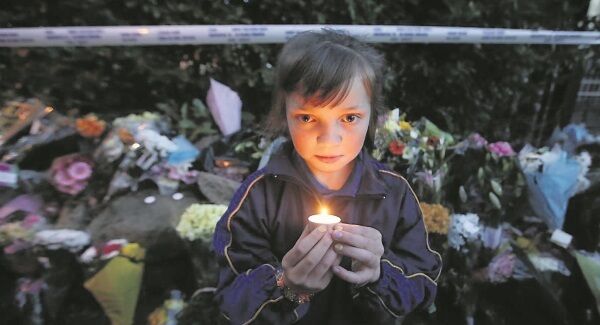
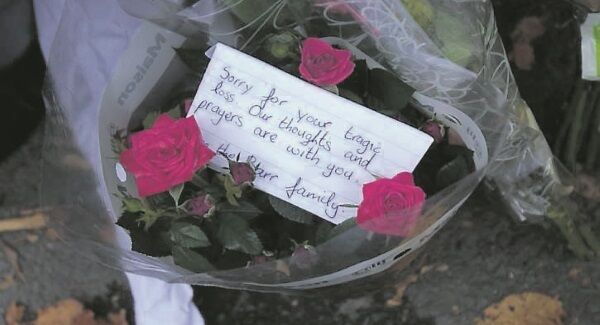
THE appalling tragedy in which five adults and five children lost their lives in a fireball on a Traveller halting site in Carrickmines has drawn appropriate expressions of horror and sympathy from politicians and rights’ groups.
Sympathy, backed up with concrete support and assistance is of course the appropriate immediate response but follow up action must go further. It should look critically at the permanently disadvantaged status of travellers which raises the risk of accidents of all kinds despite many initiatives and much expenditure of public money over several decades.
Across the whole spectrum of disadvantage indicators, Travellers are so far behind the rest of the population as to place them in a different generation to everyone else.
A Department of Health report in 2010 based on a comprehensive survey of Travellers across Ireland established the average life expectancy for females was 70. This was the average life expectancy for the female population as a whole in Ireland during the 1960s.
For male Travellers, the life expectancy in 2010 was 61, something the male population as a whole had attained by 1940. The same survey found that half of adult Travellers smoked and that 15% of deaths were due to external causes like suicide, drugs or drink poisoning. Suicide rates among Travellers were seven times higher than among the population as a whole.
In 2010, only half the Traveller population had completed primary education, placing them almost two generations behind the rest of the population. Perhaps this is one reason why health and safety campaigns in respect of drink, smoking, and depression, which were generally considered effective, did not appear to impact noticeably on the Travelling community.
Underlying and perpetuating this litany of social and educational disadvantage is chronic and endemic unemployment. More than 84% of Travellers were unemployed in 2010 compared with a rate of approximately 15% in the population as a whole.
This perhaps is the most significant statistic in that it allows us to relate the myriad disadvantages suffered by Travellers to the unemployed settled community.
While there are no parallel studies to be cited, it is common knowledge that long-term unemployment is associated with a similar range of health and social problems and educational disadvantage.
Exclusion from work and the working community on a long-term basis is demoralising and marginalising. It is impoverishing materially, socially and culturally.
We hear politicians emphasise over and over again the value of a job as a solution to poverty. Social commentators and psychologists talk as frequently of the dignity and sense of self worth which work confers on the individual. Yet, when it comes to Travellers’ spokespersons, the focus is predominantly on group identity, culture, and welfare.
If it were any other disadvantaged group, such as, say, a community from a troubled, urban area, the focus would be on individual development, personal responsibility, and economic independence.
Travellers see themselves as an ethnic minority though the Government has not granted them that status and it is hard to see a basis for their claim given their nationality, language, religion, and dress are shared with the settled majority.
In fact the Roma community, of which there are about 3,000 in Ireland, have a stronger claim to ethnic status.
Irish Travellers are perhaps more like a very large clan than a sub-culture, socialising and marrying among themselves. Travellers often observe shared customs, interests, and a private language in much the way many families and extended families do.
It is this clan culture that creates the desire for high-density communal living of which the Carrickmines halting site is a good example.
It is perhaps for this reason that around one third of Traveller families opt to live in portable buildings rather than houses.
What makes the Traveller “clan” so unique is that there are more than 40,000 of them and they cherish what makes them distinctive.
They want acceptance and the protection of the wider society without integration. They want equality of access and opportunity while remaining on the political, economic, and cultural fringe.
Recognising social and cultural diversity is a sign of a mature society. Recognising the need of each individual to reach their educational potential, to be economically self-sufficient, to contribute to the building up of their social communities in a way that harmonises with the needs of other groups should not be a rival value.
Better living conditions and pathways to work for travellers should be a priority for policy makers. It is in no one’s interests that a large group of people lag behind general progress.
Of course, finding a way will not be so simple even though the aspiration may be agreed.
Prejudice, suspicion, and unfair discrimination are real blocks but they cannot be overcome merely by denouncing them.
Traveller representative groups and TV producers need to address the exploitative television features on extravagant “gypsy” weddings and other celebrations which fuel prejudice while pandering to voyeuristic fascination.
Negative media coverage of antisocial behavior too needs to be addressed and balanced with positive reports of civic and community action. Not all prejudice is so easily overcome but dismissing prejudice with a victim’s sense of having nothing to defend will only deepen it.
This country sees many tragic deaths and many horrific accidents and usually there is something to be learned from them that helps us at least reduce the likelihood of a a recurrence.
In the case of the Carrickmines tragedy, there may be the usual health and safety lessons to be learned and applied but there is something more here. If we are honest with ourselves, there was a certain lack of surprise when we heard the identity of the victims of the horror.
This is the main lesson perhaps we need to take from the tragedy. We are well aware of the vulnerability of our fellow Traveller citizens — it is just that we normally don’t acknowledge it.

CONNECT WITH US TODAY



Be the first to know the latest news and updates