Role of climate change in refugee crisis has taken a back seat to war and terror
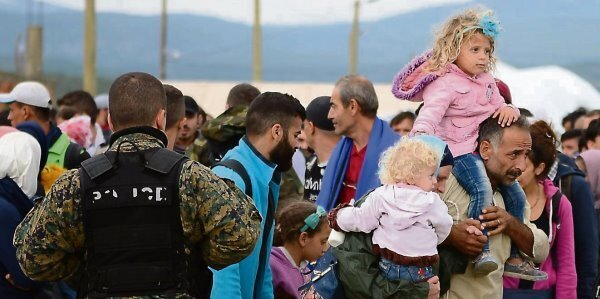
If we are to be true to our hearts and rest the worst fears in our heads, then we need a response to the unfolding refugee crisis which matches the scale of the challenge that exists.
The images which shook the world last week brought home a story which has been breaking for years but which was out of sight and therefore out of our minds. To get our response right we have to expand our thinking out again, so we better understand what is going on and are more effective in what we do.
Our solution has to tackle the root cause of the crisis as well as doing what we can do here at home. We need to think globally and act locally at the same time.
Ireland is well placed to think big about our response. We are a nation of migrants, whose livelihoods are highly dependent on our success in international trade. Recognising that fact, our foreign policy has always been to support international co-operation through active engagement in the European Union and the United Nations.
Last month, the Irish ambassador to the UN played a vital role in helping negotiate seventeen new sustainable development goals, which over time will provide the only real way of tackling the problem of forced mass migration.
Later this month Governments will meet in New York to commit to a bold resolution: “Between now and 2030, to end poverty and hunger everywhere;”
That is no small task but it is not an impossible one. We have made real progress over the last 15 years towards meeting the Millenium Development goals, which set us on this path towards sustainability.
Over the same time we saw how an alternative military approach did not work. Unfortunately changes in background environmental conditions are now undermining the progress that has been made in the developing world. As the UN states: “The survival of many societies, and of the biological support systems of the planet, is at risk.”
This is of real relevance to what is happening in the Mediterranean. Climate Change had a direct effect on the conflict in Syria.
A prolonged drought in the region drove people from rural areas into cities which were already having difficulty providing water, food and shelter for the existing population. These were some of the stresses which pushed people living under an autocratic regime into outright civil war.
This is not to ignore the other political roots of the conflict. No famine has ever occurred in the history of the world in a functioning democracy.
However we cannot ignore the evidence the World Bank is now presenting which shows how climate change will present a particular threat in the Middle east and North Africa. The population of the area is expected to double by 2050, while crop yields will decline by between 30% and 60%.
They can already see the effect that changes in weather patterns are having on the ability of their communities to escape from poverty. Those living in a hand to mouth dependence upon the natural world are forced to move when the natural conditions which supported their farming or nomadic existence no longer exists.
It is important to understand this if we are going to get our response to the crisis right.
We need to enhance our development aid programme to help communities manage their food, water and energy systems so they can adapt to climate change and not just abandon their home.
The final defeat of ISIS and other forces threatening security will not come from drone strikes commanded from thousands of miles away but from resolute commitment to a UN plan which helps people provide for themselves.
Where conflict does continue or where the option of staying is no longer possible because of war, acute drought or famine we are going to have to be prepared to offer people a home, while sticking to the bigger task of reaching the agreed long term sustainability goals.
The Government have moved from their initial position of only taking six hundred refugees to now talking about taking several thousand. In truth when you look at the scale of what is happening and when you consider the environmental stresses that are only going to increase, then we are going to have to open our country up to a far larger number.
The question is whether we will pull together as a nation, maintaining our public and political support for such an eventuality. We will only do so if we have a bigger plan in place which gives us a sense of hope as well as responsibility. We have to win hearts and minds on this for a long time to come.
CONNECT WITH US TODAY



Be the first to know the latest news and updates