Special Report (Rural Ireland): Ballydehob punching above its weight yet again

When Barry O’Brien landed in Ballydehob, there were 11 shops in which you could buy groceries. That was back in 1990. O’Brien was looking for a business that could support his young family, and found it in a pub in the small West Cork village.
There were ten pubs in the hamlet at that time. “There would be somebody in from opening time at 10.30am,” O’Brien says. “Farmers on their way to or from mart day in Skibbereen, a lot of them sheep farmers. And men would drop in for a few pints here and there. There was always some bit of trade.”
Special Report (Rural Ireland): Lively Exchange of ideas about the future in O’Gonnelloe http://t.co/bh69U0w3UB pic.twitter.com/NURSZTS8kV
— Irish Examiner (@irishexaminer) August 13, 2015
The pub was the centre of the community, and allowance was made as such. The main Sunday Mass was celebrated at 11.30am and liberty was taken to open doors for worshippers: Opening time on Sunday was brought forward from 12.30pm to noon, lest anybody get too thirsty hanging about. It’s not clear whether this arrangement had legal sanction, but it’s the kind of detail that shows how rural Ireland ploughed its own furrow, far from the centres of power.
Back then, AIB operated out of the town and, naturally, An Garda Síochána had a permanent presence, as it did in thousands of similar sized settlements across the State.
Yet, for all that, O’Brien had a glimpse of the future. “Change was coming, and I said to myself, this is not going to survive.” How right he was. Today, there is one outlet in the town selling groceries. AIB has left town; after spending years cutting back on its opening days, it shut up shop six years ago. The pub trade has been transformed. There are still eight hostelries in the town, seven of them functioning on a daily basis. No longer though, do they open for the 13 hours that was de rigeur in the old days. Now the opening times are more measured, often with the first pint being poured in early evening.
The farmers don’t patronise the pubs as they used to. There are no more sheep on the peninsula. Small dairy farmers have, to a large extent, been wiped out. The Garda station was officially closed down five years ago at the height of the austerity.
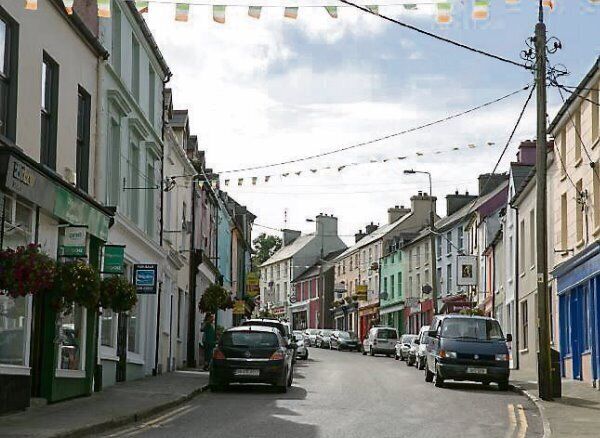
If the depletion of services alone is a barometer for decline, then Ballydehob fits neatly into the category of “rural Ireland dying on its feet”. The traditional staples of a small rural community have systemically been stripped away. However, that is only part of the story of the village over the last two decades.
For, far from declining, Ballydehob has been rejuvenated, drawing principally on that indefinable resource of community spirit.
Balldehob has roots going back centuries. Nestled off the inner reaches of Roaring Water Bay, it was once a trading centre for all the personnel who came in off the islands that dot the West Cork area, such as Sherkin and Cape Clear.
Back then, Ballydehob went where the Skibbereen Eagle could dream about — onto the front pages of world newspapers, when its most famous son, Danno O’Mahony was crowned world wrestling champion in 1935. Danno returned to a hero’s welcome in a procession that legend has it saw the road thronged all the way out from Skibbereen to Ballydehob. He now stands in bronze, arms ready for all comers, bang smack in the middle of the village.
Special Report: Rural Ireland should not be pigeonholed http://t.co/bK80jCYl6F pic.twitter.com/sKEaAzXeJ6
— Irish Examiner (@irishexaminer) August 13, 2015
So the village is steeped in history and legend, and as such, it would seem, was not going to go gently into that night of decline.
The future was glimpsed when tourism began to take hold on the Mizin Peninsula over the last 40 years, primarily benefiting the bigger towns of Schull and Goleen.
For most tourists, it was a hamlet to pass through, 15km out of Skibbereen, and 8km more to Schull. Glimpsing this future, the community got together to fight back, and came up with an answer — festivals.
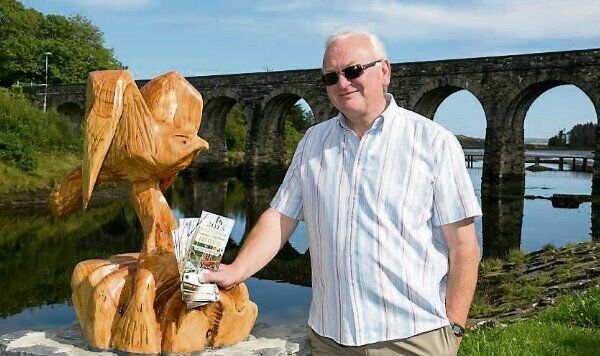
There are now seven festivals annually in Ballydehob, four of them geared towards particular genres of music. There is jazz, country and western, traditional and maritime, or Shanty, the last of which draws patrons from as far away as Newcastle. The village also hosts a threshing festival, an arts weekend, and a summer fest.
“We bring the best,” says Anne Redmond, local woman and community council stalwart. “That’s why the people come to see them. We make an effort to get really good artists and performers and the response if great. It has got to the point where we have a bit of a problem with accommodation. We could do with a few more B&Bs in the general area.”
The gatherings have ensured that businesses in the town, particularly in the services industries, have survived.
“Nobody’s getting rich, but it’s all about survival and we’re managing that,” O’Brien says.
Another cog in the community is John Ford. “The thing is,” he says, “most of the people who live here have a great passion for the place. If anything starts up, everybody goes out of their way to support it. There simply wouldn’t be as many businesses in the town without the festivals. It’s been a big bonus.”
There is one major local employer, Ceramicx, a firm that manufactures and exports industrial heating systems. It employs 60 locally, and while many of those do not live in the immediate area, it still provides a boost.
One of the other big issues in rural Ireland today is depopulation. While past generations saw the flight from the land as a way of life, big families ensured areas were repopulated, temporarily at least. Now, with more European-size families, that regeneration no longer applies.
Ballydehob has managed to beat the depopulation conundrum. There are two national schools in the town, the Catholic Scoil Bhride, and a Church of Ireland St Mathias. Last year they had a roll call of 105 and 40, respectively.
Sons and daughters of Ballydehob do return home. Ann Redmond grew up in the village, left to attend college, did nursing, and took the boat to England. “I came back 20 years ago,” she says. “I met my husband in London and his uncle has married a woman from Horse Island so he had some idea about the place.” Her other half is Steve Redmond, the fabled swimmer who in 2012 became the first person to complete the Ocean’s Seven challenge, the equivalent of the seven peaks for climbers.
When Steve returned to Ballydehob, he was accorded a welcome not seen since the golden days of Danno conquering the world.
Special Report (Rural Ireland): Locals will not give up on Borris-in-Ossory http://t.co/kRK29CJYkM pic.twitter.com/st1XKn5atz
— Irish Examiner (@irishexaminer) August 12, 2015
Ann now works in Cork City, making the 200km round commute daily. She is not alone. The attraction for many of the village’s environs ensures that a number of commuters are willing to make the journey there, and to other closer centres of employment.
The bugbear of rural Ireland — broadband — remains a problem. Ann points out that a number of locals work from home, including herself one day a week. However, the service is slow and sometimes patchy.
The demise of the local bank is another example of grabbing an opportunity from adversity. The community council has bought the building which housed the bank and is paying back a monthly mortgage on it. In time, this is expected to be at the heart of more community activity.
The village is now served by AIB’s mobile community bank which arrives and takes up position outside the community hall on Mondays and Fridays. The hall facilitates a creche, playschool, and afterschool.
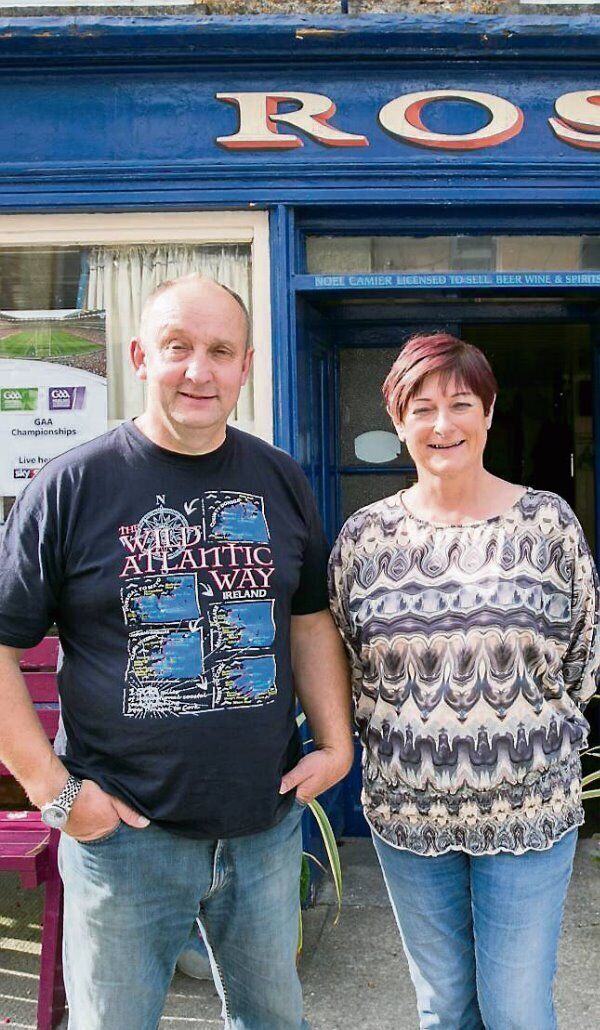
The loss of Garda stations has been a serious blow to rural communities, particularly since the recession. Five years ago, the serving sergeant was retiring in the village and somebody in Dublin saw this as an opportunity to be shot of a station. The locals saw it coming and got proactive. A meeting was arranged with the chief superintendent.
“The chief super was very amenable,” Ford says. “He had to work within constraints, but we have a garda living with his family in the station although he’s attached to Schull. The presence of somebody in the community is good for a sense of security.”
Adjustments have been made where necessary. For instance, the local GAA club has amalgamated with Goleen for some of the underage teams. “We have lost a lot of players,” Ford says. “We’re that bit too far from Cork City for lads to come home twice a week to train, but we still manage to put out underage teams in both football and hurling, he says.
In this as in other ways, it would seem Ballydehob has found a way to beat the dark advance of decline blighting much of rural Ireland.
Special Report (Rural Ireland): Decline has been a political hot potato http://t.co/cMSUWk3le3 pic.twitter.com/UTbfNC8aav
— Irish Examiner (@irishexaminer) August 12, 2015
DAY 1:
Special Report (Rural Ireland): Community makes sure area stays safe despite the lack of a Garda presence
Special Report (Rural Ireland): ‘We would love to be employers, to employ locally and to invest locally’
Special Report (Rural Ireland): ‘Don’t pigeonhole rural communities as a burden’
Special Report (Rural Ireland): ‘We’ll get it up and running again’
DAY 2:
Special Report (Rural Ireland): Galway spirit shines through
DAY 3:
Special Report (Rural Ireland): Locals will not give up on Borris-in-Ossory
Special Report (Rural Ireland): Locals will not give up on Borris-in-Ossory
MICHAEL CLIFFORD: Special Report (Rural Ireland): Decline has been a political hot potato
MICHAEL CLIFFORD: Special Report (Rural Ireland): Decline has been a political hot potato
Special Report: Rural Ireland must define its own vision
Special Report: Rural Ireland must define its own vision
Special Report (Rural Ireland): Post office’s role is vital to rural society
Special Report (Rural Ireland): Post office’s role is vital to rural society
DAY 4:
Special Report: Rural Ireland should not be pigeonholed
Special Report (Rural Ireland): Lively Exchange of ideas about the future in O’Gonnelloe
CONNECT WITH US TODAY



Be the first to know the latest news and updates