Special Report (Rural Ireland): A vision for rural Ireland is needed
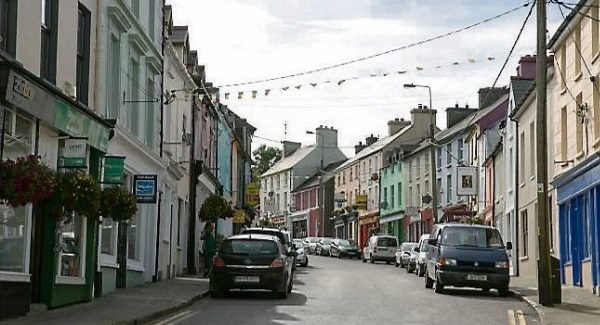
IRELAND has been through a very difficult few years but there are some early signs of recovery.
As often happens though, the recovery starts in urban settings. Recent reports have shown that rural Ireland has been particularly badly hit in social economic terms, not least with unemployment.
Despite this, many rural communities are battling to stay positive and to promote new initiatives. While they struggle with cuts to essential services, they build from the ground up again themselves. A prime example of this is the growing trend in community shops being developed where businesses have closed.
Muintir na Tíre has helped communities to help themselves since 1937. Today we represent over 1,200 community groups and we help them to organise and structure themselves properly, to identify their needs, and to resource those needs. We all like to see positive action, but where essential infrastructure is being stripped away we need to stand up and shout “stop”.
For instance, we are participating in the review of the future of the post office network, a vital service to many communities but one which could probably do more, rather than be downsized. We expect some interesting recommendations, particularly in the areas of social capital and social enterprise. We have lobbied extensively on the proposed changes to the Seniors Alert Scheme (socially monitored alarms) which we feel will negatively affect vulnerable people who rely on the service.
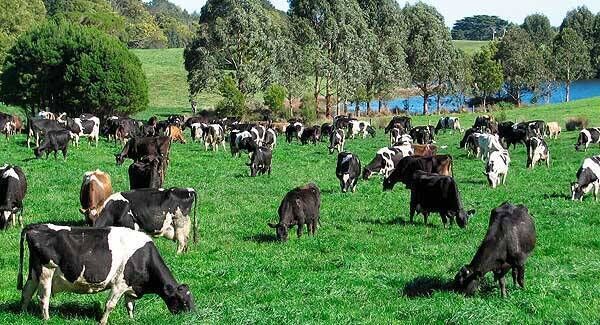
We are co-ordinating the Save Rural Ireland campaign launched earlier this year. A number of national bodies with common interests have come together to fight to protect and improve existing the existing standard of life in rural Ireland. We are highlighting the issues currently affecting the social and economic development of rural Ireland, and seeking change in government policy in these areas. The bodies involved initially are Muintir na Tíre, The Irish Cattle and Sheep Farmers’ Association, The Irish Countrywomen’s Association, the Irish Postmasters’ Union, the Irish National Flood Forum and the Post Office Users Group. Together these bodies represent more than 100,000 members. In its initial meetings the group identified five immediate core issues it wished to have addressed:
- Rural broadband
- Post office viability
- Control of scrap metal
- Insurance in flood areas
- GP cover
It has proposed realistic solutions to these issues. These solutions can be implemented immediately by Government if there is a willingness to protect rural Ireland. The group will continue to publicise issues affecting rural Ireland, propose realistic solutions, and generally lobby to improve the social and economic development of our countryside, villages, and small towns.
Another issue which is having a serious effect on the quality of life in rural Ireland is the reduction in routes being operated by Bus Éireann, with no alternative solutions available. While Bus Éireann has held some local meetings where closures are planned, and indeed have given some routes an extension to prove their viability, there has been little communication of the overall plan. This leaves many communities in fear for the future of their public transport and the implications this has for vulnerable residents. Most people appreciate the need for financial prudence but why for example does Bus Éireann receive a state subvention of 20% to 25% less than Dublin Bus? Perhaps there are good reasons for this, but they are not made apparent to those relying on the services.
These issues are a perfect demonstration of the need for a national policy for rural Ireland. There is no such policy in place now, nor was there by recent previous governments. The Department of Environment, Community and Local Government website still references a 1999 White Paper on Rural Development as its primary reference. White papers are intended as discussion documents, yet this discussion has not led to any conclusions. Indeed the paper stated it was to lead to the establishment of an overall policy strategy but this has not happened. Why is policy so important when practical cuts to vital infrastructure are happening every day? Because we need to know where this will end. We need to have a vision of what rural Ireland will look like, how people will live there, and how its resources will be used, by rural and urban dwellers, Irish residents and visitors, alike. With this vision, we can set out policies — what resources are needed, how can they be funded, and what is their priority. Then people might see the end goal and might even accept that some further cuts are necessary to reallocate resources, but in the context of parallel investment. That has to be better than death by a thousand cuts.
In summary, rural Ireland is in crisis, but it has been before, particularly in the 1980s. The way of life has changed fundamentally, possibly forever. However, this provides opportunities. Firstly, for the forming of a new consensus on what rural Ireland should be like in the future: This process must be State-led. Secondly, for community groups to take responsibility for their own futures: Identifying needs and resources and developing solutions — from community shops, to local transport links, to broadband schemes. We look forward to constructively shaping the new rural Ireland.
DAY 1:
Special Report (Rural Ireland): Community makes sure area stays safe despite the lack of a Garda presence
Special Report (Rural Ireland): ‘We would love to be employers, to employ locally and to invest locally’
Special Report (Rural Ireland): ‘Don’t pigeonhole rural communities as a burden’
Special Report (Rural Ireland): ‘We’ll get it up and running again’
DAY 2:
Special Report (Rural Ireland): Galway spirit shines through
DAY 3:
Special Report (Rural Ireland): Locals will not give up on Borris-in-Ossory
Special Report (Rural Ireland): Locals will not give up on Borris-in-Ossory
MICHAEL CLIFFORD: Special Report (Rural Ireland): Decline has been a political hot potato
MICHAEL CLIFFORD: Special Report (Rural Ireland): Decline has been a political hot potato
Special Report: Rural Ireland must define its own vision
Special Report: Rural Ireland must define its own vision
Special Report (Rural Ireland): Post office’s role is vital to rural society
Special Report (Rural Ireland): Post office’s role is vital to rural society
DAY 4:
Special Report: Rural Ireland should not be pigeonholed
Special Report (Rural Ireland): Lively Exchange of ideas about the future in O’Gonnelloe

CONNECT WITH US TODAY



Be the first to know the latest news and updates