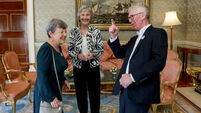
Charlie Flanagan: Determined to leave a legacy of his own
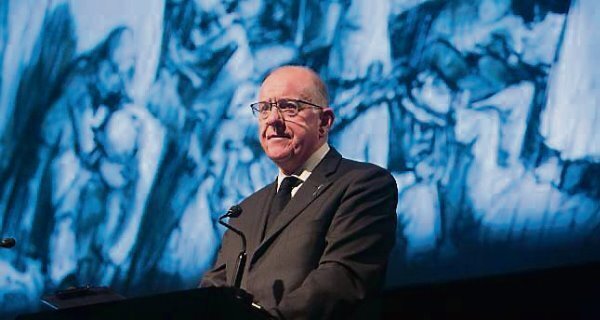
Foreign Affairs Minister Charlie Flanagan speaks to Political Reporter Juno McEnroe about juggling diplomatic sensitivities and his ambitions for the remainder of the Coalition’s term.    

Charlie Flanagan: Determined to leave a legacy of his own

WHEN Charlie Flanagan took office as Foreign Affairs Minister in July last year, he faced two immediate challenges and was forced to hit the ground running, taking on a brand new brief after his move from the Department of Children.

The North’s peace talks on parades, flags and the past had collapsed; the Seanad was recalled over attacks on Gaza; there were calls for action on both fronts and Mr Flanagan was the designed minister left juggling the diplomatic nightmares as the rest of the Cabinet packed their bags for the summer and slipped away from Government buildings. It was a baptism of fire for the new minister, while he was only getting his feet under the table in Iveagh House.

More than a year later and there are still a plethora of issues that come across his desk daily, including some which are integral to the future of Ireland’s prosperity.

In a recent interview with the Irish Examiner, the Fine Gael minister spoke frankly about his ambitions for the remainder of the Coalition’s terms; about sensitive international diplomatic matters; security concerns for the country; as well as internal party matters.

As Fine Gael’s first foreign affairs minister since the former Cork TD and Tánaiste Peter Barry left the post in 1987, Mr Flanagan is determined to leave his own legacy, especially when it comes to matters in the North and the outstanding problems with the peace process.

“It was an issue that Enda Kenny said to me on day one, ‘you know I want you to spend some time in the North’. And really more than anything over the last 12 months, my travel diary has been dominated by Belfast and Brussels.”

While the Stormont House Agreement last September was seen as significant, the talks leading up to and after on approximately 75 outstanding points for the deal gave the new minister an insight into the workload ahead in his new foreign affairs brief.

“I spent 12 Wednesdays, eight Thursdays and three Fridays engaged with the parties... all in all over 100 meetings.”

The most contentious outstanding issues now are areas of welfare reform and keeping the North’s budget under control. However Sinn Féin argues that the harsh budgetary cuts being demanded from London could put the future of power-sharing at risk.

Nonetheless, Mr Flanagan thinks a solution can be found: “Over the summer, while politics might not be as intensive as during the parliamentary term, I would ask the five party leaders [in the North] to engage intensively, to bring about the type of creative thinking that is appropriate, to surmount what is an obstacle in terms of welfare reform and wider budgetary issues.”

He suggests British prime minister David Cameron and the Tory-led administration could be more understanding in pushing through the welfare reforms. This is especially so as the North should be considered as a “special case”.

“It is after all a society emerging from a real and serious fracture, in the form of conflict. It is entirely appropriate that in terms of budgetary issues, that the UK government would treat it as such.”

“I feel that a strong case can be made for Northern Ireland in a way that isn’t applicable to other parts of the United Kingdom. I want London to continue to recognise that it is a post-conflict society, where specific emphasis must be placed on ensuring economic and social progress and equality of opportunity. However, on the matter of the current financial impasse, it is clear under the Belfast Agreement, the matter for budgets will ultimately be resolved by the five parties themselves.”

“It has been a special case in terms of security, in terms of policing and a considerable amount of money will be required to deal with the new institutions for dealing with the past with the investigations unit, the independent commission for information retrieval. These are costly institutions that will require an element of special funding.”

While the future of power-sharing in the North may be facing challenges, an equally pressing matter is being debated across the water about whether Britain should or should not remain in the European Union.

A referendum on the so-called Brexit could take place as early as next June, according to recent reports.

The Irish Central Bank became the latest institution last week to begin assessing the implications of a British withdrawal from the union for Ireland.

A Brexit would have immense consequences for the North and border related matters as well as how Ireland trades with Britain, with over €1bn crossing the Irish Sea every week.

So how are we preparing to oppose any potential Brexit?

While emphasising that it will ultimately be a matter for British voters, Mr Flanagan explains: “I and my colleagues will not shy away from the public debate. As members of the EU we are very much stakeholders in this issue.”

He stressed that Ireland wants Britain to remain “firm and active” members of the EU. Doing so was good for Britain and its economy as well as good for Europe, he stressed.

The Foreign Affairs minister though, as well as the whole Government, are currently awaiting final details of what Britain wants in terms of reforms in the EU, before deciding on how to back or support their calls. Some of the reforms already talked about include giving more power to national parliaments and reducing the bureaucratic nature of processes within the union.

Other expected demands though are more contentious, such as reducing freedom of movement in the union, explained Mr Flanagan: “For Ireland, freedom of movement is a red line issue. We’ve made that clear. We regard it as a fundamental cornerstone of the union.”

There are some common ground issues but the Government here will ultimately await for David Cameron’s wish list before deciding how to lobby or campaign further.

“I don’t countenance a situation where the UK unilaterally departs the EU... This is a matter for the British people,” added Mr Flanagan.

In the meantime, back home, the minister and the outgoing Coalition have an election to focus on.

Mr Flanagan thinks that Fine Gael and Labour should share some common ground, or campaigning issues, when the actual date and run-in period is announced.

Moreover, the Laois-Offaly TD believes that Taoiseach Enda Kenny will call it next spring and thereby let the Coalition go its full term.

While Mr Flanagan, as minister, is quite objective and particular in his remarks about the North and the role of the parties there in the peace process, he pulls no punches when it comes to election issues in the Republic and the matter of Sinn Féin and their leaders trying to get into government here.

“There are serious issues with Sinn Féin. I believe their economic policies would undo all of the good work that has been done over recent times. I don’t believe the Irish people will opt for fairytale economics, especially fairytale economics amplified by Mary Lou McDonald and Gerry Adams.”

x

More in this section

Revoiced

Newsletter

Had a busy week? Sign up for some of the best reads from the week gone by. Selected just for you.

Cookie Policy Privacy Policy Brand Safety FAQ Help Contact Us Terms and Conditions

© Examiner Echo Group Limited