Cork council merger: If the city’s status is diminished in any manner, the entire region could suffer
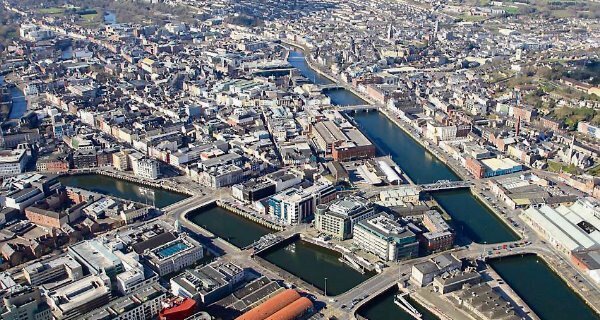
Cork needs to present itself no longer as one of Ireland’s provincial cities but as Ireland’s second city, writes William Brady

Cork council merger: If the city’s status is diminished in any manner, the entire region could suffer

The Cork Local Government Committee, headed by Alf Smiddy and supported by a high profile team of experts, has a hugely important task.

Essentially, it can recommend one of two alternatives; the first involving the creation of a metropolitan-scale City Authority alongside a reconfigured County Authority; the second involving an amalgamation of the city and county into one new large combined entity.

In my position in UCC’s Centre for Planning Education and Research — with specialisms in the areas of urban and regional planning, local government eform, regeneration and economic development — and having also worked in a private sector capacity as a consultant planner in Ireland and abroad, I have had an opportunity to examine this objectively and dispassionately from a wide range of perspectives.

When everything else is considered, this matter can be distilled down to one central question — the role and status of the city and its metropolitan context. The evidence on this is very clear; if the city’s status is diminished in any way, the interests of all of Cork could ultimately suffer.

The impacts of such a decision may not manifest themselves overnight, however, Cork’s status as a serious player on the national and European stage would inevitably be badly affected. A city without power is simply not a city.

From analysing closely the two options, I am certain that the interests of Cork (both city and county) can only be served properly by having two strong councils; an independent and metropolitan-sized city as well as a strong, autonomous county authority.

It is absolutely essential that an urban centre such as Cork retains its own city government with the required legal, financial, political, and civic authority to operate and flourish as a strong European city and to be able to make decisions about its own development, economic and social needs.

Equally, the interests of the county areas, with its diverse and expansive territory of towns, villages, and rural and coastal areas can only be addressed properly if its council can focus on the types of issues relevant to those places.

A ‘combined’ authority cannot provide the required focus to govern the needs of Ireland’s second city as well as Ireland’s biggest county at the same time. It will simply be an oversized, inefficient and undemocratic entity which will be pulled in all directions.

Evidence indicates that local government mergers rarely deliver much in terms of efficiencies. In fact, they tend to promote bureaucracy, while moving decision-makers even further away from citizens and businesses. Why, then, is Cork being told it has to consider this option?

I have not yet seen any persuasive argument or evidence that favours such an outcome, and the only possible beneficiary would be the Government and the civil servants who will have one less Cork authority about whom to be bothered.

Under the amalgamation option, the city would no longer exist as an independent entity and would be governed as a sub-division of a new, so-called ‘super-council’.

It will have fewer powers than even the recently abolished town councils had; just imagine, Ireland’s second city being governed and planned as one of eight ‘municipal districts’ of a county council, with fewer powers than towns such as Bandon or Fermoy once had prior to their abolition as town councils.

Dissolving Cork’s status as a city runs counter to best practice and is something that no other European city would even consider. Would cities such as Bristol, Lyon, Munich, Genoa, Malmö, or Antwerp accept such treatment? Cork’s citizens, Cork’s politicians, and Cork’s business community should be extremely concerned.

The city’s commercial and economic success (and, in turn, the county’s prosperity) is dependent on its ability to function as a self-governing unit with the capacity to make its own decisions.

We are now in an increasingly competitive world, and this means Cork needs to present itself no longer as one of Ireland’s provincial cities of around 100,000 people, but as Ireland’s second city and, more importantly (and accurately), as one of Europe’s dynamic, productive and important mid- sized cities of at least 250,000 people.

This is in fact an issue of national importance; Ireland needs Cork to fulfil its potential as the state’s second city — the country’s only real chance to develop a strong counterweight to the unhealthy over-dominance of the Dublin region. This won’t happen if the city is demoted.

It is particularly ironic that while our urban counterparts (our competitors) across the world are enhancing the role and power of cities in recognition of their role as economic drivers, that Ireland tries for some reason to do the exact opposite. It is possible, for example, that Ireland may soon have only one city with status — Dublin. I fail to see how that is in Cork’s interests, or Ireland’s for that matter.

However, Cork is fortunate to be able to shape this decision, and the short-sighted bureaucratic goals of our national politicians and civil servants in Dublin should not be prioritised over what’s good for Cork’s long- term interests.

Thankfully, in this instance, the dual city and county solution provides a win-win scenario – it satisfies the need for a metropolitan authority with scale and autonomy, whilst securing the county’s interests and its position as Ireland’s biggest and most important county authority. It’s time for Cork to grasp this opportunity, and to persuade the decision- makers that what’s good for Cork City is good for Cork County, which also happens to be good for the nation.

William Brady, Centre for Planning Education and Research, University College Cork

More in this section

Revoiced

Newsletter

Sign up to the best reads of the week from irishexaminer.com selected just for you.

Cookie Policy Privacy Policy Brand Safety FAQ Help Contact Us Terms and Conditions

© Examiner Echo Group Limited