Planet cannot afford a ‘wait and see’ approach
Ireland will need to make substantial cuts in our emissions of greenhouse gases, for our own sake and for the sake of millions of vulnerable farmers around the world. This will not be possible unless we re-think our entire approach to agriculture, writes Hans Zomer

Planet cannot afford a ‘wait and see’ approach

ALMOST 50 years ago, Robert F Kennedy visited Cape Town in South Africa where he delivered his “Ripple of Hope” speech, which many believe was the best public address of his life.

At that time, his plea for more responsible and accountable government was a plea to abandon the injustice of the apartheid system, but many of his words have a resonance in today’s world, too.

For instance, in his speech he said that “few will have the greatness to bend history itself; but each of us can work to change a small portion of events, and in the total of all those acts will be written the history of this generation”. And this year may well be one of those moments where the sum of our actions can “bend history itself”. It is the most important year for global decision-making since the start of the new millennium, because we have the opportunity to end the year with a new global compact — an agreed pathway to a better, safer future for our planet.

In September this year, world leaders will gather at the UN in New York to seek agreement on how best to tackle the biggest global problems of our time. Many of these problems relate to the highly unequal distribution of wealth, income and power in the world, but others are directly linked to the price our planet is paying for our prosperity.

As people around the world are healthier and wealthier than ever before — and as we all are living longer and buying more products — the demand for natural resources continues to increase. Our ever-increasing demand for energy, minerals, water, and food is putting an ever-growing strain on the environment and on our fellow human beings, resulting in deforestation and other environmental damage, as well as the spread of conflicts over decreasing natural resources such as water, arable land, and minerals.

As inequality increases within and between countries and as millions of people are being excluded from the benefits of economic growth, the world urgently needs to find an alternative way of organising the custody of our economies and of our “global goods” such as clean water, clean air, peace, and knowledge.

And this is where the new global agreement expected in September comes in. The summit is an attempt to find a worldwide consensus about meeting the needs of all the people living today, while protecting the ability of future generations to do likewise.

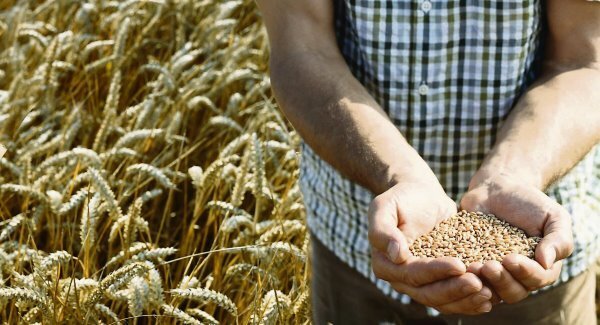
One of the great challenges in this context is that of food. As the global human population continues to grow, and continues to grow richer, we need to increase the production of food around the world.

Food production will need to increase by 70% on a shrinking natural resource base of land and water. This challenge is made greater by climate change, which is already changing weather patterns and growing seasons in most of the major food-producing areas around the globe.

No wonder then that one of the key elements of the new global agreement currently being negotiated — under leadership of Ireland’s ambassador to the UN David Donoghue — in preparation for the UN summit focuses world attention on the question of how to square the circle of increased food production which reduces greenhouse gas emissions.

And no wonder that UN chief Ban Ki-moon has put great pressure on governments, including the Irish Government, to state clearly what they are willing to do to reduce carbon emissions and tackle climate change.

Speaking at a gathering in Dublin Castle on May 25, to mark the 70th anniversary of the United Nations, Ban Ki-Moon acknowledged Ireland’s role in addressing world hunger, saying the country’s imprint has been “huge and historic, well out of proportion to the country’s size and your population”.

He then went on to challenge Ireland to adopt an equally strong position on climate change. “Ireland has been a champion of efforts to counter hunger, but today one cannot be a leader on hunger without also being a leader in climate change,” he said, stressing that we are the last generation that can limit the impact of climate change — and the first generation that can put an end to poverty.

Ireland has a particular role to play in this. On the one hand, our Government and agriculture sectors are convinced that we can substantially increase the amount of food produced on this island, and on the other hand our aid agencies have unparalleled experience of how the current food system is failing millions of poor and vulnerable people the world over.

The Government is committed, under Food Harvest 2020, to a substantial increase in food production by 2020, with further growth expected in the period after that. Much of this growth is going to come from the Irish beef and dairy sectors, responsible for about a third of Ireland’s total emissions of climate change inducing greenhouse gases.

Recognising that sustainable and carbon-efficient production of food is going to be a major challenge for Ireland, the agriculture sector in Ireland has begun to invest in efforts such as Bord Bia’s ‘Origin Green’ project, which aims to map the carbon footprint not just of the sector as a whole, but also of individual farms.

However, it is clear that we need our best and brightest to come up with further ideas and actions to demonstrate our willingness to consider how a changing climate will impact on Irish farmers and at the same time to make a serious contribution to combating the causes of climate change.

And it is encouraging to note that some of Irish “best and brightest” are also working on these questions beyond our shores. Organisations such as Teagasc and Macra na Feirme are teaming up with Irish NGOs working in developing countries, to help small and marginal farmers around the world to reduce the impact of changing weather patterns on their livelihoods.

Irish aid agencies have the data to show that climate change and environmental degradation have already led to a sharp increase in the number of food crises in recent years and that increases in the severity and frequency of extreme weather events have caused the loss of livelihoods — and of lives — among many poor communities in developing countries.

The challenge as aid agencies see it is remarkably similar to the challenges here at home: to protect food producers from external shocks and to transform agricultural systems to make them more resilient and even more beneficial to society as a whole.

Farmers and aid workers are now finding a potential common agenda in the “climate smart agriculture” concept. First developed by the UN’s Food and Agriculture Organisation (FAO), the concept of climate smart agriculture focuses on a trinity of issues relating to food production, adaptation to climate change, and reduction of greenhouse gas emissions.

The proponents of “climate smart agriculture” invite us to consider these three objectives together but at different scales — from farm to landscape — and at different levels — from local to global — over both short and long term perspectives.

They argue that farmers around the world have always adapted to changing climates and are, by their very nature, innovators. What they require is the right support to strengthen their ability to become more effective in applying innovative practices.

Irish NGOs have decades of experience of equipping farmers to better use and manage their natural resources and adopt more efficient methods of producing, processing, and marketing agricultural goods.

In the course of this work, Irish NGOs have learned that their programmes work best if they are accompanied by the right national and local policies. Policies that explicitly set out to support smallholder farmers and family farms, that take a landscape approach to farming systems and that encourage diversified farming practices.

Irish NGOs have come to the conclusion that what is needed — in developing countries and richer countries alike — is a coherent government policy on climate change backed up with credible national commitments on emission reductions and adaptation to changing climate conditions. We simply cannot afford a ‘wait and see’ approach.

To arrive at such a coherent Irish position on climate change and climate smart agriculture will require much more public debate about the issues.

For this reason, the Irish NGOs working together through the DĂłchas network have teamed up with the Institute of International and European Affairs (IIEA), in a bid to bring the Irish experience abroad into the domestic debate about the future of our agriculture.

In the past, this issue has generated intense debate and at times has become almost toxic. But now is the time to accept our difference and look for common ground based on “good science and polite debate”.

We need more voices in this discussion, and we need to sustain Irish leadership internationally as we seek to find new ways to achieve food security for all while mitigating further damage to the planet that sustains us all.

If we can have this debate now, then who knows what we can achieve by the end of this year, as our Taoiseach attends the Climate Summit in Paris in December. Hopefully, we will be able to look back at the year 2015 as the year where all of us, each in our own way, have help to “bend history itself”.

Hans Zomer is director of DĂłchas, the Irish Association of Non-Governmental Development Organisations

More in this section

Revoiced

Newsletter

Sign up to the best reads of the week from irishexaminer.com selected just for you.

Cookie Policy Privacy Policy Brand Safety FAQ Help Contact Us Terms and Conditions

© Examiner Echo Group Limited