Seeking a sensible end to the impasse on Junior Cert reform
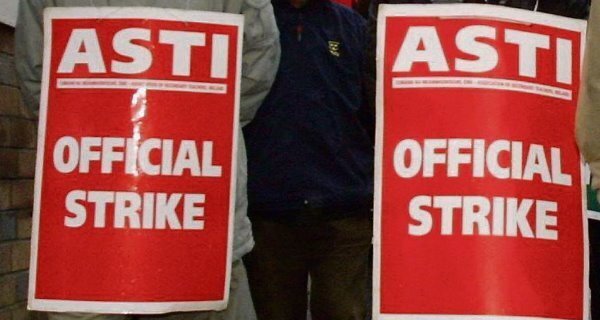
Teachers and Education Minister Jan O’Sullivan are at loggerheads about reforms to the junior cycle. Education Correspondent Niall Murray looks at the background to the dispute

Seeking a sensible end to the impasse on Junior Cert reform

Q: Why did teacher unions decide not to accept junior cycle reform plans put forward over the last two weeks by independent talks chairman Pauric Travers?

The leaders of the Association of Secondary Teachers Ireland (ASTI) and Teachers’ Union of Ireland (TUI) do not trust the department not to fast-track implementation of reforms while industrial action was suspended, having considered the plan until the early hours of Saturday morning.

Q: So is one union or the other leading the hardline approach?

There are deep concerns among both unions’ leaderships, but a tougher approach is probably more dominant among officers of the ASTI. The TUI — and some ASTI figures — may have been more willing to take a chance.

Q: What happened then?

Concerns about reaction at their Easter conferences in five weeks’ time may have had an influence.

Recalling the angry scenes that greeted former education minister Ruairi Quinn a year ago, ASTI leaders, in particular, will not want such emotions directed at themselves if they are perceived to have caved in on key principles.

Q: Would acceptance of the Pauric Travers proposal be a sign of weakness from union leaders?

Absolutely not. They managed to convince Jan O’Sullivan of the validity of many of their concerns soon after she took office last July, prompting her to bow on the question of certification, for example, in November.

Instead of a school-issued certificate proposed by Mr Quinn, she was willing to allow the outcome of junior cycle assessments continue to be certified by the State Examinations Commission (SEC).

Q: But hasn’t she gone much further than that?

Yes, by accepting Pauric Travers’ proposals, she has effectively given way to the unions on the issue of teachers marking their own students for State certified exams.

He cleverly suggested that teacher opposition could be got around by keeping reporting of results on school-based assessment separate from the system for SEC-marked written exams.

Q: But aren’t there other issues of concern?

Yes, union leaders also say practical or project work on some subjects would have no external assessment under the Travers plan.

The focus now, however, seems to have shifted to resourcing the reforms.

Q: Haven’t resources been promised?

Yes, but unions say they need to see what exactly the minister is willing or able to put in place.

There could be costs if, for example, some of the work needs to be done during teachers’ existing contracted hours.

Much of the assessment might be done during time normally associated with in-school exams, but extra middle-management posts could be needed to co-ordinate the work in each school.

Q: What do the Travers proposals say on this issue?

The document is very clear that further detailed discussions with all relevant parties would be needed on resources.

By accepting the plan, unions and the Department of Education would be committing themselves to positive engagement in those discussions, to happen as soon as possible.

Jan O’Sullivan said yesterday she would be happy to engage with the ASTI and TUI on the issue, something school management bodies also signed up for after a briefing from her officials yesterday on the Travers plan.

Q: So where’s the problem?

There are divisions within and between ASTI and TUI on whether they should enter into a process where some leaders fear the issue of resources could be dragged out by the department while the plan is rolled out without the proper supports for schools and students.

Q: If they feel so strongly, why have they not called another strike?

The unions say they do not want to upset students, or their parents, as preparations for the Junior and Leaving Certificate exams are gathering pace.

However, the minister raises questions about whether it would be legitimate to call a third strike day since December, given how different the final Travers document is from what was on the table when teachers were balloted for industrial action almost a year ago.

Q: Is she right to raise those questions?

Yes, not alone did she offer compromises in November, she accepted further concessions to the unions by accepting Mr Travers’ proposals.

Union leaders will say material circulated to members before voting raised concerns not alone about State certification and retaining external assessment, but also about properly resourcing junior cycle reforms.

On that basis, however, they could claim an endless mandate for action until they force the department to reverse various educational cutbacks, justified by claims they were needed to properly implement changes.

Q: What would be a sensible end to the latest impasse?

The minister says she plans to plough ahead with the reforms, albeit with uncertainty how assessment can happen if teachers are directed by their unions not to attend the required training.

That professional development is set to be resumed in the coming weeks, some offered online.

The unions should have nothing to lose by suspending industrial action, as suggested by the Travers plan, while talks on resources take place.

Doing so would give them leverage in any such discussions, the department knowing failure to engage meaningfully could see the training programme stalled again; and with it would fall any realistic chance of maintaining the timeframe for the first set of new junior cycle assessments in a year’s time, when current first-year students are due to be tested on aspects of the new English curriculum being taught since last September.

Q: Should the minister not agree to further talks, as suggested by unions?

Fianna Fáil and Sinn Féin say she should.

However, having already compromised, and accepted the need for talks on resources and to delay implementing a new science course, she could draw a raft of wider industrial relations claims if she shows weakness and bows any further to union threats.

x

More in this section

Revoiced

Newsletter

Sign up to the best reads of the week from irishexaminer.com selected just for you.

Cookie Policy Privacy Policy Brand Safety FAQ Help Contact Us Terms and Conditions

© Examiner Echo Group Limited